A wedding can feel like a concert without becoming a staged spectacle. Start with your priorities and focus on the moments guests will experience most. Music, lighting and a confident MC can bring everyone together. The energy comes from a thoughtfully shaped celebration, not cheesy gimmicks.
You want guests to feel the excitement while still having space to talk, connect and enjoy the moments that matter. That balance is especially important at an intimate wedding, where the atmosphere should lift the room without overwhelming it.
This guide explains how to set priorities, plan around key suppliers and create a natural flow from the welcome to the dance floor. You’ll see how music can connect each part of the day, how lighting and sound shape the mood, and how an inviting MC can make big moments feel shared rather than staged. The aim is genuine concert energy with your personality at its centre.
Key Takeaways
- Choose the moments that matter most to you, then shape the reception around their natural flow.
- Use sound, lighting and room layout to make it easy for guests to move between conversation and dancing.
- Prioritise the vendors who have the biggest influence on your guests’ experience, and organise your budget around those choices.
- Plan announcements and music transitions to bring people together without making the celebration feel over-directed.
1. What makes a wedding reception feel celebratory?
How to plan a wedding that feels like a concert, one moment at a time
To create concert energy, begin with the atmosphere you want guests to feel. Choose your priorities, map the day’s key moments, then match announcements, music and room setup to each one. Keep conversation and celebration in the same plan, so the energy builds naturally instead of switching on all at once.
Give wedding planning a simple home base: create a dedicated email address for supplier correspondence and quotes, then use one spreadsheet to track your guest list, budget, timeline and tasks. Set aside a regular day each week to review decisions together. Add a clear next step beside each task, such as choosing a venue or confirming who will introduce the speeches.
Build the timeline around how you want each moment to feel, not just a list of start times. Let guests settle into conversation before the first announcement, then gather them with a warm introduction for the couple’s entrance. If you’re planning outdoors in Ireland, include an indoor ceremony space or a backup option, such as a tent, in case of rain.
Country houses, private estates, house marquees and restaurants can all suit an intimate celebration. Consider whether the layout supports conversation, clear views of key moments and space to dance. A smaller venue can feel lively without theatrical staging. Match the scale of the music and announcements to the room and your guests.
Plan essential announcements with your MC before the day. Note who will introduce the entrance, first dance, speeches and any special dedication, along with names and pronunciations. Keep each introduction warm and brief. A clear invitation, such as asking guests to gather closer for the first dance, helps make the moment feel shared rather than staged.
Concert-inspired details can add playfulness without making guests feel they’ve entered a themed production. Use a set list as a keepsake or a simple stage schedule to show what’s next. Tickets or wristbands can be optional design touches, but keep the invitation, seating and event details easy to understand without them.
A wedding planner can be brought in towards the end of the planning process, while a day-of coordinator can help bring the timeline together on the day. Beforehand, share the schedule, announcement notes and key contacts with the person coordinating. That gives them practical details to manage while you stay present with guests.
For accessibility and crowd safety, plan clear routes between entrances, seating, toilets and the dance area with the venue team. Keep seating available for guests who need a quieter or more comfortable spot, and keep cables and decor clear of walkways. Agree who will guide guests if a room needs to be cleared, and include that person in the event-day briefing.
2. How can sound and lighting support the atmosphere?
In Ireland, the venue’s event terms set practical limits for amplified music, noise management and finishing time. Discuss these details with the venue team while planning, so the sound plan fits the room and agreed schedule.
Start with your relationship and shared taste, not a borrowed festival production. Write down three words that describe the reception you want, such as intimate, energetic and relaxed. Turn each word into a choice: warm lighting for conversation, a clear dance area for the evening, and music that reflects your lives together. This gives suppliers a useful brief without scripting every reaction.
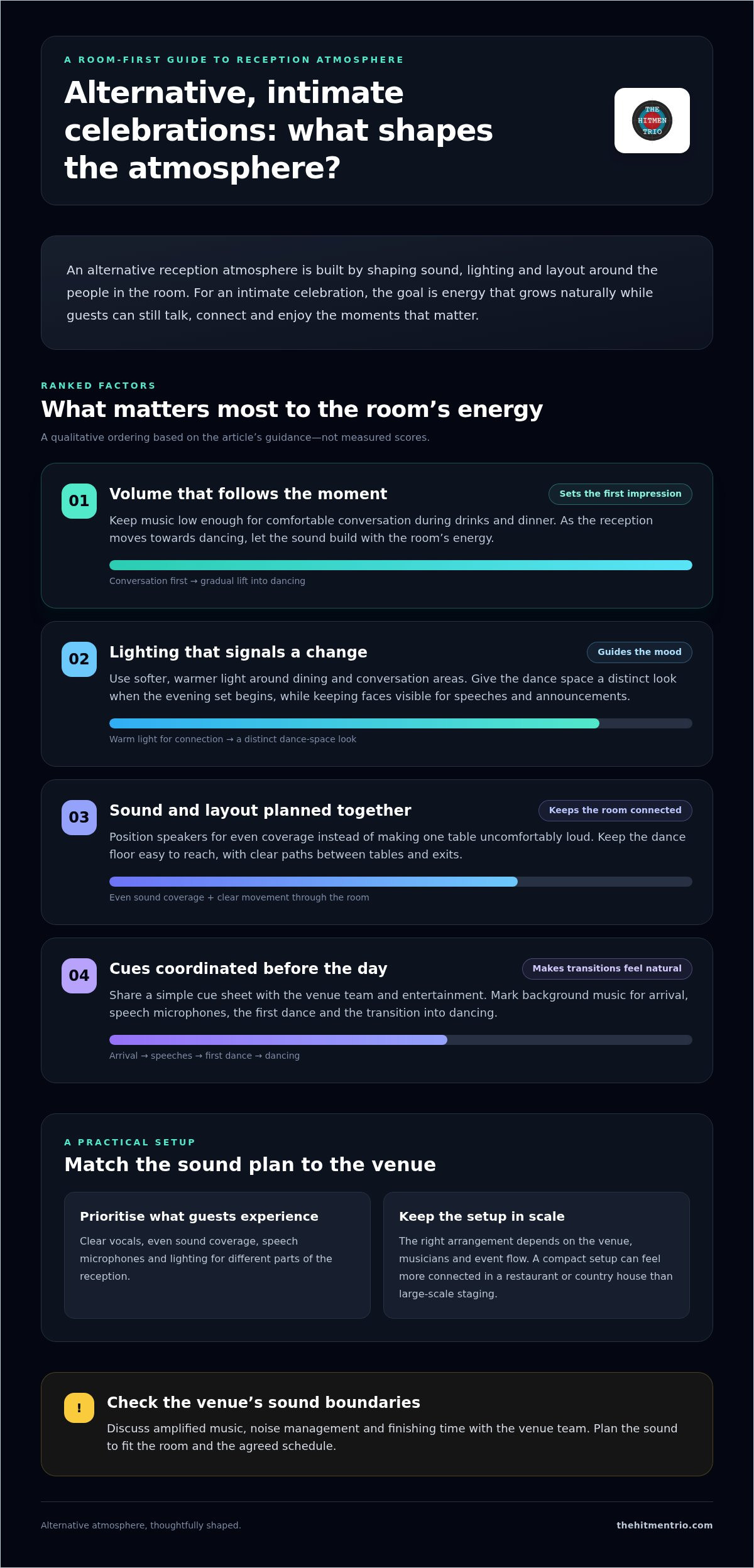
Volume shapes the first impression. During drinks or dinner, keep the music at a level that lets guests talk comfortably across a table. As the reception moves towards dancing, let the sound build with the room’s energy. A DJ can shift the mood gradually, moving from familiar tracks to higher-energy choices without abruptly interrupting conversation.
Lighting can signal those changes without turning the room into a stage set. Use softer, warmer light around dining and conversation areas, then give the dance space a distinct look when the evening set begins. A change in colour or a focused wash can signal the shift. Keep faces visible during speeches and announcements so guests can see who’s speaking.
Plan sound, light and layout together. Position speakers to serve the room evenly, rather than making one table uncomfortably loud. Keep the dance floor easy to reach from seating, with clear paths between tables and exits. In a restaurant or country house, a compact setup can feel more connected than large-scale staging.
A concert-style setup might include a suitably sized PA system, microphones for speeches, lighting for different parts of the reception, and a stage or performance area if the room suits one. The right arrangement depends on the venue, musicians and event flow. Prioritise clear vocals and even sound coverage over equipment guests won’t meaningfully experience.
Before the day, share a simple sound-and-lighting cue sheet with the venue team and entertainment. Mark moments such as background music during arrival, speech microphones, the first dance and the transition into dancing. That small piece of coordination helps each change feel intentional, not forced. For a boutique celebration, explore intimate wedding music ideas as you shape the atmosphere.
The venue’s event terms set practical limits for amplified music, noise management and finishing time. Discuss them with the venue team and plan the sound to fit the room and agreed schedule.
3. Establishing priorities and setting a budget
Start with the experience you want, then build the budget around it. Each partner can name three priorities, such as live music, a memorable meal or a relaxed country-house setting. Compare your lists and agree which choices matter to both of you. Those shared priorities help guide decisions when a preferred option costs more than expected.
Create a master spreadsheet with columns for the estimated amount, quoted amount, payment date, supplier and booking status. Group expenses by purpose, such as venue, food, clothing, photography, transport and entertainment. Add a notes column describing what each quote includes. A lower quote may cover a different service, so compare the scope before changing your plan.
Protect the essentials first. If music is central to your celebration, consider its role throughout the day before allocating the rest of the budget. A ceremony, drinks reception and evening celebration have different needs. Decide whether live music matters for one part or several, then weigh that choice against other priorities. This makes trade-offs specific: you might choose a simpler table design to preserve the atmosphere you want.
Set aside one day each week to plan together, as couples can find it easier to make decisions in a regular, focused session. Use that time to review new quotes, update the spreadsheet and choose the next action. For example, one session could compare venue options; the next could confirm the meal format. Keep unrelated wedding tasks off the agenda, so each conversation ends with a clear decision.
Family expectations deserve their own conversation. Before accepting a contribution, agree whether it comes with preferences about the guest list, venue or traditions. If a relative wants a formal receiving line but you prefer a relaxed welcome, discuss how both wishes might fit. A friend can help you practise a calm response, but the final decision should reflect your priorities as a couple.
Give each budget decision a status: essential, preferred or optional. Essentials might include the venue and meal; preferred choices could include specific lighting; optional details might be printed keepsakes. If costs change, review optional choices first rather than cutting an essential service without discussion. Leave room in the spreadsheet for unexpected changes, and note what you would adjust before committing to a new expense.
Keep the budget connected to your vision, not someone else’s wedding photos. A boutique celebration in a restaurant may need a different allocation from a house marquee. Note how each major expense supports your plans, then use that reason to guide decisions as quotes arrive.
4. Hiring priority vendors, including entertainment
Choose suppliers based on the moments they’ll shape, not just the items on a checklist. Start with your venue, food and entertainment, then decide who will coordinate the schedule and guest experience. In-demand wedding suppliers may be booked more than a year in advance, so decide early when a particular supplier is central to your plans.
For music, consider the room and the flow of the day. Live musicians can provide atmosphere at a small wedding ceremony and reception, while a DJ can shift the mood as guests move from conversation towards dancing. A compact live act may suit a country house or restaurant better than a large production. Choose entertainment that fits your venue, preferred sound and desired atmosphere.
Before booking, write a short brief with practical details: the venue layout, performance area, planned moments, preferred genres and songs to avoid. Share a draft timeline and discuss how music can support transitions rather than compete with them. Gentle acoustic music can accompany arrivals, followed by a more upbeat set after dinner. A DJ can respond to the room as the evening develops.
Make formalities personal by choosing the traditions that feel meaningful to you. Introduce speeches with a short note about each speaker, invite guests closer for the first dance, or explain a family custom before it begins. If a moment is optional, say so clearly. That small cue lets guests join in comfortably without making participation feel compulsory.
Inclusive planning also means considering guests’ different backgrounds, relationships and comfort levels. Ask speakers to avoid private jokes that leave most of the room behind, and give people a clear way to take part without singling them out. Guests can join the dance floor when they wish, rather than being called up individually. Keep a quieter seating area available for those who prefer conversation.
Some people you care about may not be invited because of venue capacity, budget or the intimate scale you’ve chosen. Handle that thoughtfully: send a personal message, explain the celebration’s size, and share a photograph or note afterwards if it feels right. Avoid public announcements that draw attention to absent guests during the reception.
Keep one shared schedule for the venue, entertainment and key suppliers. Mark arrivals, the ceremony, speeches, meal and music transitions, then name who will communicate any changes. A clear point of contact helps suppliers coordinate without asking you to manage every detail during the celebration.
5. Using music and MC hosting to connect wedding moments
Music can connect the wedding day like a thread, carrying guests from one moment into the next. Choose songs that reflect your relationship, then give each choice a clear purpose. A meaningful ceremony song can lead into relaxed drinks-reception music, while a familiar track can bring everyone together for the first dance.
Build a playlist that mixes personal choices with crowd-pleasers. Include songs tied to shared memories, alongside music that welcomes the different ages and cultural circles in your guest list. Give your DJ or musicians a short list of essentials, a few styles to avoid and room to read the dance floor. That balance keeps the soundtrack personal without making every selection an inside reference.
Introduce music before the evening dancing begins. Background songs during arrivals or dinner let guests get used to the sound and join in at their own pace. A mellow acoustic arrangement can set an intimate tone, then an upbeat favourite can lift the energy as the reception moves towards dancing. The change feels natural because music is already part of the room.
Use the MC to connect announcements with what guests are experiencing. A brief introduction can gather attention before speeches, explain why a song matters, or invite guests closer for a shared first dance. Match the microphone tone to the moment: warm and measured for a tribute, lively for the dance floor. Each announcement should add context, not compete for attention.
Thoughtful timing helps speeches land well. Place them where guests can listen comfortably, and use a short musical cue to signal the transition from dinner. If conversation is flowing, the DJ or MC can wait rather than interrupting the room. That flexibility helps speeches feel like part of the celebration, not a separate performance.
Give your entertainment team a simple running order that identifies each cue, the person responsible and the next transition. Include the entrance, speeches, first dance and opening dance-floor song. Add pronunciation notes and a backup track in case a planned song can’t be played. One shared document keeps the couple, MC and musicians on the same sequence.
Before the reception, agree how requests will be handled. You might welcome guest suggestions while keeping a short “must-play” list intact. This gives friends a way to contribute without handing over the evening’s direction. For ideas to shape the dance-floor sequence, explore a wedding set list and note which songs fit your story.
The Hitmen Trio: The Full Day Package
The Hitmen Trio’s Full Day Package can connect ceremony, drinks reception and evening music into one continuous celebration. For intimate weddings in country houses, private estates, house marquees or restaurants, a trio can bring lively performance without overwhelming a smaller room.
With 12 years of experience, festival experience and performances for clients including Amazon and Jameson, The Hitmen Trio brings a versatile musical approach to weddings. The band has won multiple awards for playing weddings and has over 500 testimonials on its site. For couples who want to shape music around selected moments, The Ceremony, The Drinks Reception and The Evening Band are available as separate offerings.
Explore how The Hitmen Trio could suit your celebration at thehitmentrio.com.
Make your celebration unmistakably yours
If you’re deciding how to plan a wedding that feels like a concert, start by choosing the live moments you want guests to remember. Let music feel like part of your story, not a production layered over it. For an intimate celebration, a performance suited to the room can bring energy while preserving its character and closeness.
The Hitmen Trio offers The Full Day Package, The Evening Band and The Drinks Reception, giving you different ways to shape the music around your plans. Choose the option that fits the moments where live music matters most, whether you want a connected full-day experience or music for a particular reception moment.
Your next step can be simple: share the kind of atmosphere you’re imagining and explore how it could work for your wedding. Contact The Hitmen Trio to start a conversation, then make the celebration your own. Here’s to a day with real feeling, memorable music and a dance floor that comes alive naturally.
Frequently Asked Questions
Can a wedding feel like a party without being cheesy?
Yes, a wedding can feel like a proper party when its details reflect the couple rather than familiar wedding clichés. Choose a personal entrance song, a relaxed dress code or a playlist that mixes meaningful tracks with dance-floor favourites. Skip anything that feels like a performance you’re expected to stage. The atmosphere feels more authentic when guests can celebrate their own way, whether they’re dancing, singing along or catching up.
How can non-dancers feel part of the party?
Give non-dancers enjoyable ways to share the atmosphere without asking them to join the dance floor. Set up comfortable seats near the action, leave space to chat and make the music enjoyable beyond the dance area. Some guests may prefer singing along, clapping to a favourite chorus or simply watching friends dance. A celebration feels inclusive when participation is an invitation, not a test of enthusiasm.
How can sound and lighting support the atmosphere?
Use sound and lighting to make each part of the reception feel distinct. For example, softer light can suit a meal, while a warmer focus around the performers can draw attention when live music begins. Ask for speech microphones to be tested in the room, not just backstage, so guests can hear clearly. If the room has separate areas, consider how music carries between them and where guests will want quieter conversation.
How can you keep the evening flowing on the day?
Choose one trusted person to share timing updates with the venue and entertainment team. They can pass on a change, such as a delayed meal or a speech that needs more time, without pulling you into organiser mode. Keep the running order flexible enough to respond to the room. If guests are enjoying a conversation, a short pause may work better than interrupting them for the next formal moment.
How do you get wedding guests onto the dance floor?
Make the first invitation easy to accept. Ask the couple’s friends or family to join them for a song they genuinely love, rather than calling guests up one by one. Choose an opener with a recognisable chorus, then let the next track carry the energy forward. Keep the dance floor open and approachable, and don’t treat an empty patch as a problem. Guests often join when they’re ready.
What makes a wedding reception feel celebratory?
A celebratory reception gives guests ways to share in the couple’s happiness without making every moment a spectacle. Personal details can do that work: a song connected to a family memory, a toast that tells a short story, or a favourite dessert served late in the evening. Meaningful touches and room for natural connection help the mood grow. Celebration doesn’t need constant announcements or a packed schedule.
What moments should the DJ be ready to support with music?
Share the moments where music needs to cue a change, such as the couple’s entrance, a cake cutting, a special dedication or the move from dinner to dancing. Tell the DJ which cues are essential and which can happen organically. Include the names involved and any context that helps an introduction feel personal. For specific music requests, give The Hitmen Trio at least 3 weeks’ notice.
What should couples decide before the wedding?
Before the wedding, decide what matters most to you as a couple, which traditions you want to keep and who can make decisions on the day. Agreeing on those points helps you handle last-minute suggestions from family or friends as a team. Choose a few songs that feel uniquely yours and decide which moments deserve everyone’s attention. Leave smaller details open to adapt as the celebration unfolds.