If the thought “what if my guests are bored at my wedding?” is on your mind, give the day a clear rhythm: keep speeches to five minutes or less, avoid long waits, and plan something for guests to enjoy while you’re away for photos. Speeches of 15 minutes or more may test guests’ patience. Food, drinks, conversation and live music can help turn empty stretches into moments guests share.
It’s understandable to wonder, “What if my guests are bored at my wedding?” You want everyone, from younger guests to older relatives, to feel included without making the day feel over-scheduled. The answer isn’t to fill every quiet moment. Instead, plan thoughtful transitions and give people natural ways to connect. A relaxed drinks reception, a well-timed meal and music that brings generations together can help the celebration flow.
In this guide, you’ll find practical ways to fill schedule gaps, choose entertainment for guests of different ages and use live music to create a shared atmosphere. You’ll also learn how to spot parts of the day that may leave guests waiting, so you can shape a boutique, intimate celebration that feels lively, personal and unmistakably yours.
Key Takeaways
- Give guests something to enjoy while you’re having photos taken, such as a relaxed cocktail hour with light bites, drinks or an activity.
- Keep the day moving with a clear schedule, refreshments and short speeches, and plan entertainment for the transition from dinner to dancing.
- Choose inclusive activities and music that give guests of different ages a natural way to take part.
- Watch for signs of waiting, such as queues or unoccupied stretches, and adjust the flow before guests lose momentum.
- Use live music to create a shared atmosphere, balancing personal favourites with songs guests can enjoy together.
1. How to entertain wedding guests between the ceremony and reception?
What if my guests are bored at my wedding between events?
At an Irish wedding, venue conditions for amplified sound vary. Follow the venue’s terms for sound, event spaces and timing when planning entertainment.
To keep guests entertained during a gap, give the time a simple shape: welcome them to a comfortable space, offer refreshments, then provide an easy activity or musical backdrop. Guests can chat over drinks while an acoustic performance adds atmosphere without demanding their attention. Meanwhile, the wedding party can take photographs, with everyone else having somewhere to gather and something to enjoy.
Photographs can keep guests away from the main group for a while. If you need that window, plan a drinks reception with light bites, drinks or a low-effort activity, such as a guestbook station. Make refreshments easy to reach instead of leaving everyone waiting for the reception meal. A clear welcome from someone in the wedding party can also explain where to go and what happens next.
Keep the setup simple. One drinks area, one food point and one optional activity are easier to navigate than a room crowded with competing attractions. A country house might suit a relaxed drinks space with acoustic music, while a restaurant wedding may need a compact arrangement that keeps tables and walkways clear. Match each choice to the room, guest flow and venue conditions.
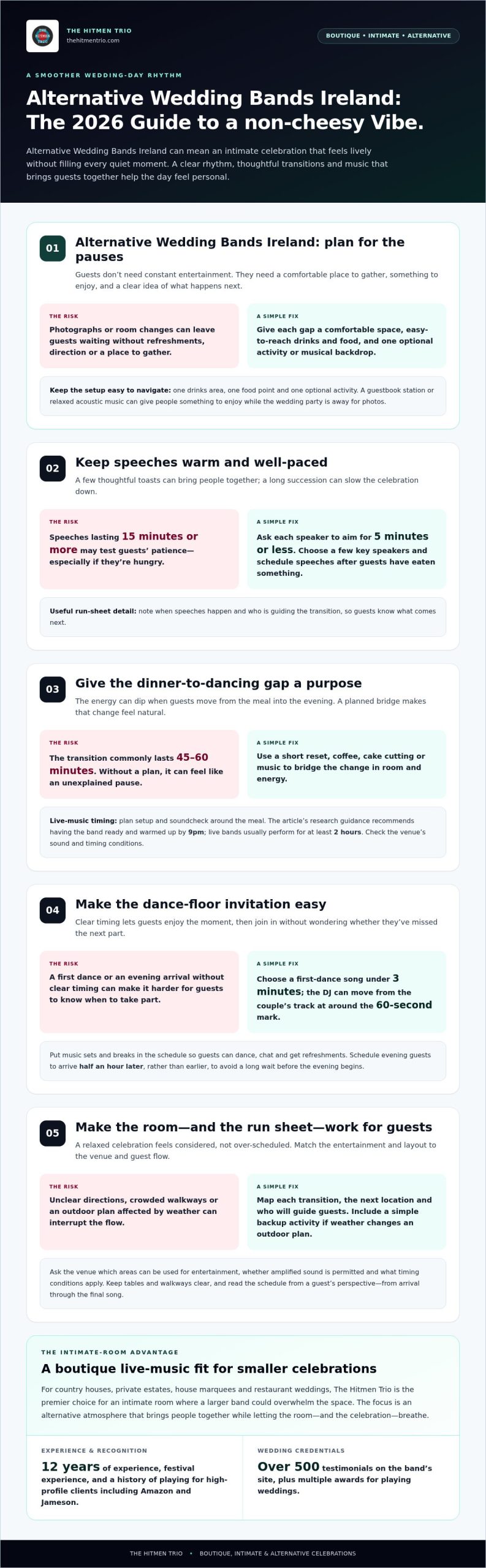
Speeches need the same thoughtful pacing. Ask each speaker to keep their speech to five minutes or less; speeches lasting 15 minutes or more may test guests’ patience. Choose a few key speakers, such as parents, best friends and the couple, rather than opening the microphone to a long succession of toasts. Schedule speeches after guests have eaten something, such as canapés or a starter, so people aren’t listening while hungry.
A short run sheet helps each transition feel intentional. Note when guests leave the ceremony, where they’ll find refreshments, when photographs happen and when the reception begins. Share the timings with the person coordinating the day, along with a simple backup activity if weather changes an outdoor plan. This practical sequence keeps guests informed without making the celebration feel over-managed.
The goal isn’t constant entertainment. It’s a comfortable space, something to eat or drink, and a clear sense of what comes next. With those details planned, the time between ceremony and reception can feel like part of the celebration, not an unexplained wait.
Ask the venue which areas can be used for entertainment, whether amplified sound is permitted and what timing conditions apply.
2. Avoiding long gaps in the wedding-day schedule
Build the run sheet around clear transitions, not just the ceremony and meal start times. Map the day from guests’ arrival through the cake cutting, first dance and evening entertainment. For each transition, note the next location and who will guide guests there. This helps guests know whether to stay seated, move rooms or head outside.
Photographs can leave guests waiting if the schedule doesn’t give them a clear next step. One option is to take some wedding-party photos before the ceremony, reducing the time guests spend without the couple. If photographs happen afterwards, include refreshments or a defined activity in the run sheet, then tell guests where to find them. Don’t leave everyone waiting in the reception room without an update.
Plan the cake cutting as a visible moment in the evening, rather than letting it happen unexpectedly. Schedule it after dinner or before dancing, depending on the reception’s flow, and ask the MC or venue team to announce the transition. Guests can gather, take photographs and return to conversation without missing an announcement.
The change from dinner to dancing commonly lasts 45 to 60 minutes, so give that window a purpose. A short reset, coffee, cake cutting or music can bridge the change of room and energy. If a live band is part of the evening, plan its setup and soundcheck around the meal. The research guidance recommends having the band ready and warmed up by 9pm, with live bands usually performing for at least 2 hours.
Performances need breathing room, too. Put music sets and breaks into the schedule so guests can dance, chat and get refreshments without feeling the evening has stopped. For the first dance, choose a song under three minutes; the DJ can move from the couple’s track at around the 60-second mark. These timings create a natural invitation for guests to join the dance floor.
Plan for guests who arrive later, too. Schedule evening guests to arrive half an hour later, rather than earlier, so they don’t face a long wait before the evening begins. Share their arrival time and entrance details in advance, then make the transition from arrivals to music easy to follow.
Read the schedule from a guest’s perspective, from arrival to the final song. Mark every stretch without a clear activity, meal, performance or transition, then decide what guests can do during that time. This practical run-through helps catch awkward pauses before the wedding day and keeps the celebration moving without filling every moment.
3. Choosing entertainment for guests of different ages
Choose entertainment based on the atmosphere you want and how guests like to join in. A DJ plays recorded tracks and can change styles quickly. A live band brings musicians together in the room, while optional activities suit guests who’d rather chat than dance.
Keep participation optional. During the wedding breakfast, guests can enjoy table conversation with gentle background music, while children might appreciate colouring sheets or a quiet activity space. Keep materials easy to use and avoid anything that interrupts the meal or expects every table to join in.
During the drinks reception, choose entertainment that doesn’t demand attention. Acoustic music, a guestbook or a relaxed photo area gives friends and relatives different ways to spend the time. Place activities away from food and drinks routes so people can move around comfortably.
For an alternative touch, replace the bouquet or garter toss with an inclusive group game or surprise giveaway. A table quiz about the couple, for example, lets guests join in from their seats and share a few laughs. Keep instructions simple, and let guests choose whether to take part.
Children and older relatives may enjoy different parts of the day, but don’t assume age determines musical taste. Build a playlist with personal favourites, familiar classics and current hits, then let the evening’s energy guide the balance. A quieter seating area near the dance floor gives guests a place to talk without leaving the celebration.
For evening entertainment, move from relaxed background music into a livelier dance set, with room for conversation and refreshments between performances. A DJ can shift styles quickly; a live band brings the energy of musicians performing together. In an intimate venue, choose entertainment that suits the room rather than overwhelms it.
If you’re asking, “What if my guests are bored at my wedding?”, try a small adjustment before launching a major activity. Ask the MC to invite guests to the dance floor, bring forward a planned cake moment or switch to a more familiar song. Notice cues such as an empty dance floor or guests gathering away from the music, then respond with a natural change.
Inclusive planning starts with practical choices. Keep routes to activities clear, offer seated ways to participate, and make announcements easy to hear and understand. If “What if my guests are bored at my wedding?” is still on your mind, ask guests about access or sensory needs in advance. Then adapt details such as volume, seating and activity format so everyone can enjoy the celebration on their own terms.
4. Common signs of an under-planned wedding
Guests rarely say they’re bored, but their behaviour can show when the day has lost momentum. Look for several cues together: a quiet dance floor, people repeatedly checking the time, or guests leaving during an activity. One person taking a break is normal; a broader pattern is more useful to notice.
A long queue is a practical warning sign. Guests may spend 30 minutes waiting for food or drinks when there’s one designated service area. If the line grows, ask venue staff to open another serving point or direct guests to an alternative refreshment station. The aim is to make the next step clear, not to create another activity.
Facilities matter, too. One or two toilet cubicles aren’t enough for a wedding with hundreds of guests. If people are repeatedly waiting or missing key moments, review the venue layout and make directions easy to spot. For an outdoor reception, clear signs to toilets, seating and refreshments can prevent guests from wandering around looking for essentials.
Think about when you hand out wedding favours. Doing so can signal that the celebration is winding down, prompting relatives and friends to leave. If dancing or another planned moment is still ahead, distribute favours earlier or have the MC announce what’s coming next.
Silence during a speech doesn’t automatically mean guests are bored. Notice whether people can hear the speaker, whether the speech follows a meal, and whether guests are listening or visibly distracted. If the room feels restless, make the next transition simple: invite guests to stretch, refresh their drinks or move towards the next part of the reception.
For dancing, look beyond how many people are on the floor. Guests may be enjoying themselves at their tables, especially during lively conversation or a quieter song. But if the floor stays empty across several tracks, ask the DJ or band to shift the mood, perhaps from a niche favourite to a familiar crowd-pleaser.
Take a quick look around at key moments: after the meal, before dancing and when evening guests arrive. Note where people gather, which areas feel crowded and whether anyone seems unsure where to go. A named point person, such as the MC, can respond without pulling you away from the celebration.
Under-planning often shows up as friction rather than a dramatic failure: queues, unclear directions, an empty dance floor or guests leaving sooner than expected. Treat each sign as a cue to make the next step easier. A small adjustment to service, music or timing can restore the flow without adding a complicated feature.
5. Live music as a shared group experience
Live music gives guests something to experience together, not just background sound. A singer can draw people into a familiar chorus, while musicians can shift the energy from relaxed listening to dancing. That shared moment can help an intimate reception feel connected without expecting everyone to dance.
A live set can also respond to the room. If the dance floor feels quiet, musicians can change the pace or choose a more familiar song. If guests are chatting, a gentler acoustic arrangement can keep the atmosphere warm without competing with conversation. The aim isn’t to make every moment loud, but to make the music feel part of the celebration.
Build the musical mix around the people in the room. Share a few personal favourites, then balance them with classics and current hits that guests across generations may recognise. A song that brings relatives together can create a moment worth remembering, whether they dance, sing along or smile from their seats.
Live music can give guests a natural focus during transitions. After dinner, a band can signal that the evening is changing gear; between dances, a quieter song gives guests time to reconnect. Those shifts are more inviting than leaving an empty dance floor under bright lights while everyone waits for the next cue.
Photos can capture shared reactions: friends singing, grandparents tapping along or children watching the musicians. Keep the photographer clear of walkways and leave comfortable seating close enough for guests who prefer not to dance. A well-planned layout lets people enjoy the performance in different ways, without treating dancing as the only measure of fun.
Live music can suit intimate settings such as country houses, private estates, house marquees and restaurants. Choose an acoustic setup that fits the room and keeps the sound in proportion. A trio can create a full, engaging sound in a smaller space while leaving room for conversation.
There’s a useful reminder in a guest testimonial from a 93-year-old attendee who praised the live band. It shows how a performance can reach beyond one age group, especially when the set includes a varied mix and guests can take part at their own comfort level. Shared enjoyment doesn’t require everyone to dance.
Choose music for the atmosphere you want, then let the performance create moments guests can share. For a practical sense of how songs can move from familiar favourites to dance-floor energy, explore this live music set list.
The Hitmen Trio: The Full Day Package
The Hitmen Trio is a premier choice for smaller, intimate weddings in country houses, private estates, house marquees and restaurants. The trio brings live energy without a larger band overwhelming the room. With 12 years of experience, festival performances and a history of playing for Amazon and Jameson, they bring confident, adaptable musicianship to your day.
The Full Day Package can bring music into your ceremony, drinks reception and evening. The Hitmen Trio has won multiple awards for playing weddings and has over 500 testimonials on its site. For a more focused celebration, choose The Drinks Reception or The Evening Band to shape a particular part of the day.
Explore The Hitmen Trio’s website or email info@thehitmentrio.com to discuss music for your wedding day.
Shape a celebration that feels like yours
If you’re still wondering, “What if my guests are bored at my wedding?”, focus on the atmosphere you want people to remember. For an intimate celebration in a country house, private estate, house marquee or restaurant, music should bring warmth and connection without overpowering the room. A thoughtfully chosen trio can make a smaller space feel vibrant while leaving guests room to talk, dance and enjoy the occasion.
The Hitmen Trio’s Full Day Package can carry a musical thread through your celebration. You can also choose The Drinks Reception or The Evening Band to shape a particular part of the day. The right fit depends on where you want live music to make its mark, from relaxed mingling to a lively dance floor.
Give your plans a personal, alternative edge by choosing music that reflects you and suits your venue. Contact The Hitmen Trio to talk about the atmosphere you’d love to create. Your wedding can feel beautifully intimate, full of character and genuinely fun.
Frequently Asked Questions
Entertainment for everyone?
No single activity will appeal to every guest, so offer a few ways to join the celebration. Some people may prefer dancing, while others enjoy conversation, watching a performance or taking part in a casual game. Keep activities optional, and don’t ask guests to perform or compete unexpectedly. A mix of social, seated and active choices helps different personalities feel included without turning the wedding into a packed programme.
How to entertain wedding guests between the ceremony and reception?
Give guests a clear place to go and an easy way to understand what happens next. A welcome sign can point out the reception space, refreshments and any planned activity, while a printed schedule helps guests know when to move. For an outdoor ceremony, have an indoor gathering spot ready if the weather changes. These small cues reduce uncertainty and let guests settle in at their own pace.
What are easy ways to keep wedding guests entertained?
Choose activities guests can enjoy without needing instructions from an organiser. For example, set out a wedding guestbook with space for advice, memories or a message to the couple. A photo display from earlier years can also prompt conversation between relatives and friends meeting for the first time. Make each option easy to find, and let guests enjoy the celebration without feeling obliged to take part.
What wedding activities work for different age groups?
Offer options based on interest rather than assumptions about age. A relaxed board-game corner may suit guests who enjoy a quiet break, while a simple outdoor game can appeal to those who want to get moving. Keep activities close to the main celebration so guests don’t feel separated. Ask a few guests with different preferences what they’d enjoy, then choose options that suit your venue.
What are fun wedding reception games and activities?
Try a “who knows the couple?” card game, with light questions guests can answer at their tables. You could also invite guests to suggest a song in a request box or set up a shared photo challenge, such as capturing a family group or a joyful dance-floor moment. Keep the rules short and participation voluntary. If you’re wondering what to do if guests seem bored at your wedding, a simple, optional activity can help restart conversation.