
The best wedding plan isn’t the one that survives every change; it’s the one that still feels like yours when something shifts. To work out how to plan a wedding that feels authentic to us, start with the atmosphere you both want, then shape the schedule, traditions and details around your energy and priorities. Leave room to adapt, so a change of plan doesn’t take over the day.
You might already know the wedding you don’t want: a packed schedule, traditions that feel like someone else’s, or a celebration that leaves you too drained to enjoy it. That’s useful information. Your wedding can be a lively party, a relaxed dinner or something in between, with meaningful traditions kept, adapted or skipped.
This guide will help you choose a boutique, intimate atmosphere, plan a timeline that gives you space to enjoy it, and talk through personal and family traditions with care. You’ll also find practical ways to keep your priorities in view and respond calmly when plans change, so the celebration feels like yours from the first moment to the last song.
Key Takeaways
- Choose the feeling you want guests to take away before settling on décor or other visual details.
- Build a wedding-day schedule around your energy, with breathing room to connect and enjoy the celebration.
- Use one planning spreadsheet to keep priorities, guest details, tasks and budget decisions in view.
- Talk through traditions together, keeping, adapting or skipping the ones that don’t feel meaningful to you both.
- Decide what matters most if plans shift, so you can adjust without losing sight of the experience you want.
1. Choosing a wedding atmosphere before visual details
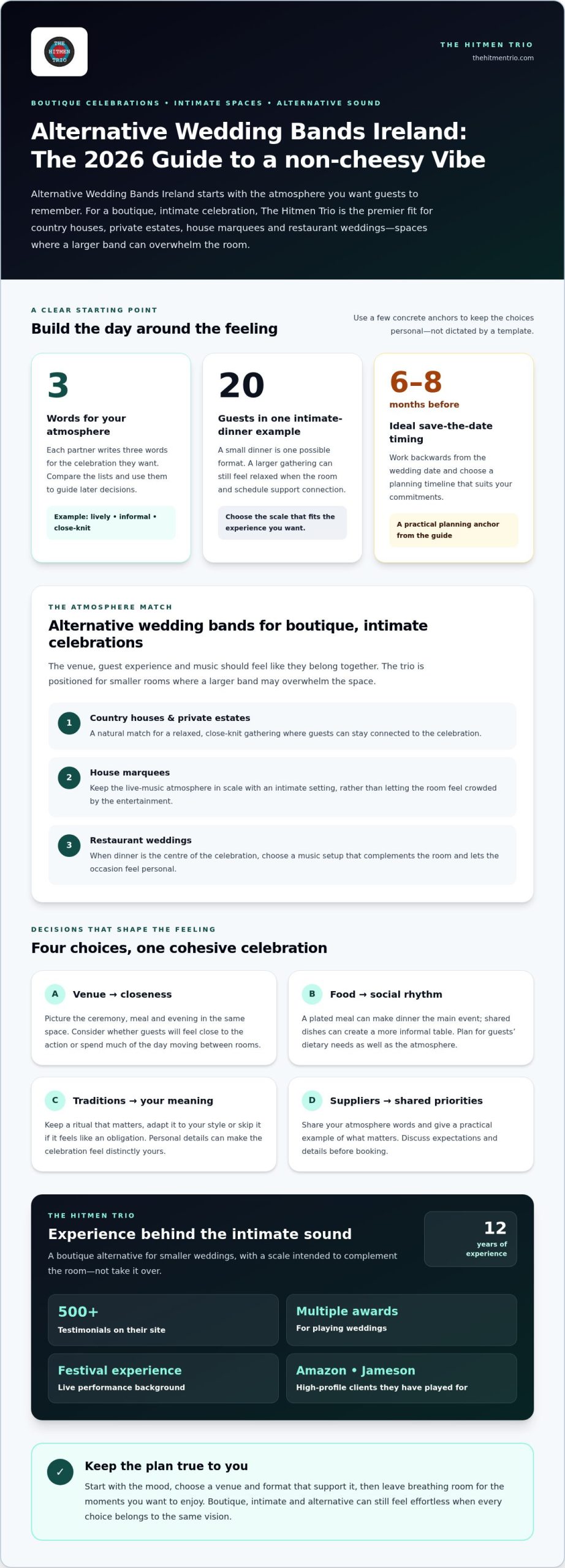
Start with the atmosphere, not the colour palette. Each partner should write three words describing the celebration they want, then compare lists. “Lively, informal, and close-knit” points towards a different day than “quiet, elegant, and family-focused.” An intimate dinner for 20 is one possible format, while a larger gathering can still feel relaxed. Use these words to guide later choices, rather than letting Pinterest trends decide the mood.
Choose a wedding dress by describing how you want to feel wearing it. For example, “comfortable enough to dance” might lead you towards a shorter hem or lighter fabric; “classic but personal” could mean a simple silhouette with a meaningful accessory. Save a few Pinterest references, then note what you actually like in each image, such as sleeves, texture or shape. That gives you a clearer brief than copying a complete look that doesn’t feel like you.
Match the venue to the experience you want guests to have. A country house or private estate can suit a relaxed, intimate gathering, while a restaurant may make dinner the natural centre of the celebration. Picture the ceremony, meal and evening in the same space: will guests feel close to the action, or spend much of the day moving between rooms? Visit the venue and imagine a real moment, such as guests chatting after the ceremony.
Let the food reinforce that atmosphere. A three-course plated meal can make dinner feel like the main event, while shared dishes can create a more informal table. Think about how guests will eat, talk, and move through the room, not just how the menu photographs. Then choose dishes that suit the style you have in mind, alongside options for guests with dietary needs.
Choose suppliers who can explain how they’ll support your priorities. Share your three atmosphere words with each supplier, then give a concrete example: “We want the ceremony to feel personal, not overproduced.” Ask how their work can reflect that intention. Read reviews and discuss practical details before booking, so expectations are clear. A supplier who understands your values can help the day feel cohesive, from the ceremony to the final celebration.
For the legal side in Ireland, both partners must attend the marriage notification appointment, according to the Department of Social Protection. Treat that appointment as a separate planning task from your choices about the venue, dress or traditions.
Finally, decide which traditions feel meaningful to you both. Keep a family ritual if it carries real significance, adapt it to suit your style, or skip it if it feels like an obligation. For example, table numbers could mark places from your relationship instead of following a standard theme. These personal choices help turn an attractive wedding plan into a celebration that feels distinctly yours.
2. Planning the timeline and atmosphere around the couple’s energy
A wedding timeline should work with your energy, not just fit every event into a schedule. Decide whether a one-day celebration suits you, or whether a weekend gives you more room to connect. If one partner loves a busy dance floor and the other needs quiet breaks, plan both: keep the evening lively, but protect a calm moment before the ceremony. To decide how to plan a wedding that feels authentic to us, map the day around how you both actually like to spend time together.
Give the day a rhythm. Place meaningful moments, such as the ceremony, meal and speeches, where you can enjoy them rather than rush between them. Set aside a quick pause for the two of you during the celebration. You could step outside after dinner, take a breath before the evening begins, or share a quiet drink away from the room. Add this pause to the timeline so it doesn’t disappear among other plans.
Wedding planning can be short and sweet or last three years, so use a timeline that suits your date and commitments. A checklist helps turn a long project into clear next steps. Add deadlines for decisions that affect other plans, such as confirming the venue before finalising guest numbers. Send save-the-dates ideally 6–8 months before the wedding, then work backwards from the day for the remaining tasks. Review the list together regularly, and move items forward when another decision depends on them.
Keep supplier correspondence easy to find. Create a dedicated email address for quotes and wedding messages, separate from work emails. Save key documents, such as menus, schedules and supplier details, in one shared folder on Google Drive. Give files clear names, like “Reception menu” or “Ceremony timings,” so either partner can find the latest version. A shared folder also gives you one place to update when plans change.
Plan the menu around guests’ needs as well as your preferred atmosphere. Ask guests to share dietary requirements, then organise suitable vegetarian, vegan and gluten-free options with the food plan. For example, a relaxed shared meal can still include dishes that suit those needs. Pass the final requirements to the relevant supplier in writing, and keep the menu alongside your planning documents.
Build in details that reflect your relationship, not a template. If your best memories involve live music, make that part of the evening’s atmosphere; if you value long conversations, leave space for guests to linger. Couples asking how to plan a wedding that feels authentic to us can start by choosing details that capture how they connect, rather than following a preset schedule. For ideas on shaping music for an intimate wedding, explore arrangements that fit the celebration you have planned. The right timeline gives those personal moments room to happen.
3. How Do You Plan a Wedding?
How to plan a wedding that feels authentic to us with a shared plan
Start with a shared budget, then make decisions together with any family members contributing. List the main spending areas, such as the venue, catering, photography and flowers. In a master spreadsheet, give each area its own row and track the planned amount, confirmed amount, supplier details and payment status. This makes priorities visible. If photography matters more than elaborate décor, you can direct your budget towards photographs and simplify decorative details.
Create the guest list early, before choosing a room or setting meal quantities. Add each guest’s name, invitation status and any dietary information to the spreadsheet. Then use the working list to compare venue capacity and catering needs. For example, if the list grows, a restaurant wedding may suit your plans better than a smaller private room. Keep a separate column for essential guests and another for people you’d like to invite if space allows.
Check venue availability before committing to a date, since the venue shapes both guest numbers and the overall spending plan. Visit possible spaces in person, and picture the ceremony, meal and gathering areas with your guest list in mind. A country house might offer a relaxed setting, while a restaurant can bring guests together around the meal. Record what each venue can accommodate and how well its layout supports your priorities.
Choose guest comfort over details that only look impressive in photographs. A beautiful room matters less if guests can’t hear speeches or find a comfortable place to talk. Use a visit to assess seating, movement between areas and how the space feels when people gather. Then compare those practical observations with your spreadsheet. If one venue allows friends and family to connect more easily, that may matter more than extra decorative features.
Make room for actual conversation in the schedule. If you’ve invited 70 people, plan how you’ll spend time with them instead of assuming greetings will happen naturally. You might visit each table during the meal or keep a relaxed reception period free from formalities. Add those moments to the timeline and assign a task in your spreadsheet, such as arranging seating that makes conversation easier.
During the first few months of wedding planning, set aside one day each week to work through decisions together. Use that session to update the guest list, budget and task tracker, then choose the next actions. A shared master sheet can show whether an open task affects another decision, such as confirming catering after venue capacity. Keep the session focused, so planning stays manageable and friends’ suggestions don’t drown out your shared priorities.
4. Discussing traditions and personal preferences
For an intimate or non-traditional wedding in Ireland, agree on the feeling you want first, then choose a format that supports it. You might keep the ceremony personal, invite a close circle, and replace a formal reception with dinner and music.
Family expectations can feel complicated when relatives value traditions you’d rather change. Listen to what matters to them, explain your reasons calmly, and decide together which elements fit your plans. For example, you could include a family reading while skipping a formal cake cutting.
Begin with a private exercise: each partner writes down their priorities before sharing them. Choose the details that matter most to you both, such as meaningful vows, time with friends or a relaxed meal. Compare the lists, then agree on shared priorities. This makes later decisions easier, especially when suggestions from friends and family pull in different directions.
Talk about traditions individually rather than treating them as an all-or-nothing package. Consider being given away, a first dance, a set ceremony or a cocktail-hour-then-reception format. Keep a tradition because it reflects your values, adapt it to suit your relationship, or leave it out. You could replace a formal first dance with an open invitation for guests to join you.
Personal details can make a celebration feel specific without adding elaborate décor. Choose a ceremony reading connected to a place you love, or play a song that reminds you of an important moment together. Ask your photographer to capture a meaningful family ritual, rather than staging a pose that feels unnatural. The strongest details have a clear connection to your story.
For personal vows, write from real memories instead of trying to sound poetic. Mention a quality you admire, a moment that changed your relationship, and a promise you genuinely want to make. Keep the vows to 1 to 2 minutes, so each partner has room to speak while the ceremony stays focused. Read them aloud together before the day and adjust any line that feels uncomfortable.
Make your wedding intentional by testing each decision against your shared priorities. If a formal dinner feels right but a traditional cake cutting doesn’t, keep the meal and choose another dessert moment. If a set ceremony feels too rigid, shape a format that feels more personal. A photographer, celebrant or other supplier can work more clearly from specific choices than broad directions like “make it meaningful.”
Finish by agreeing on a simple decision rule: keep what reflects your relationship, adapt what carries meaning, and release what feels like an obligation. Write that rule beside your priorities, then use it when a new suggestion arrives. This gives both partners a practical way to discuss traditions, respect family feelings and protect the celebration they want to share.
5. Enjoying the wedding day even when plans change
A changed plan doesn’t have to change the meaning of the day. Before the wedding, agree on the few moments that matter most, such as the ceremony, a family photograph or time together after dinner. Keep those priorities visible in the schedule. If rain moves an outdoor ceremony indoors, the setting changes, but your vows and the people gathered to hear them remain central.
Make a simple “if this, then that” plan for details that could affect the day. For example, if an outdoor drinks reception moves inside, decide where guests will gather and who will share the update. For a late supplier arrival, name the person who can adjust the schedule. Give that person the current timeline and key contacts, so you’re not trying to solve logistics while greeting friends and family.
Build flexibility into the schedule without filling every gap. If the meal runs late, shorten or move a non-essential moment instead of rushing the ceremony or cutting the time you want with guests. A five-minute pause together can also give you space to reset. Choose a quiet spot in advance, such as a garden path at your venue or a small room away from the reception.
Keep your vision close when small details go differently. Flowers may arrive in a different arrangement, or a planned photo may take place in another room. Ask whether the change affects a priority or only the original plan. If it’s the latter, let the detail adapt. Inspiration can guide your choices, but the day doesn’t need to reproduce a Pinterest image to feel personal.
Decide what you want to remember, then make space for it. Wedding photographs can influence how you remember the celebration 20 years later, so choose images that capture real connections, not only carefully arranged details. Tell your photographer that candid moments with friends, a family tradition, or the energy of the dance floor matter to you. That gives them a clear direction if the schedule shifts.
On the day, let one trusted person handle practical updates. They can tell guests about a room change, coordinate with the venue or let a supplier know about a timing adjustment. You and your partner can stay present rather than becoming the event’s troubleshooting team. For intimate venues, including country houses, private estates and restaurant spaces, a plan that protects the atmosphere matters more than preserving every scheduled detail.
Keep one brief reminder with your timeline: “Be together, welcome our guests, enjoy the celebration.” If the schedule changes, return to that intention and choose the next step from there. For ideas that suit an intimate celebration, explore wedding music for intimate venues.
The Hitmen Trio: The Full Day Package
The Hitmen Trio’s Full Day Package gives couples a way to carry their musical atmosphere through the celebration, from The Ceremony to The Drinks Reception and The Evening Band. For intimate weddings in country houses, private estates, house marquees or restaurants, the trio suits rooms where a larger band could overwhelm the space.
With 12 years of experience, festival experience and performances for clients including Amazon and Jameson, The Hitmen Trio brings a lively, alternative approach. The band has over 500 testimonials on its site and has won multiple awards for playing weddings. These credentials offer a useful starting point as you consider music that fits your venue, energy and personal style.
If you’re shaping an intimate celebration, visit The Hitmen Trio’s wedding page to get in touch and discuss your plans.
Make the next choice feel like yours
Choosing how to plan a wedding that feels authentic to us is an ongoing conversation, not a test with one perfect answer. Keep your shared priorities close as you make the remaining decisions, and let them guide what happens next. If live music is part of your vision, think about how it should shape the ceremony, welcome guests during The Drinks Reception or lift the energy later with The Evening Band. The Full Day Package brings those moments together for couples who want music woven through the celebration.
For an intimate wedding in a country house, private estate, house marquee or restaurant, the right-sized performance can add atmosphere without overwhelming the room. Share the feeling you want, the venue you’ve chosen and any personal musical touches that matter to you.
Contact The Hitmen Trio to talk through music for your celebration. Your day can be beautifully personal, full of energy, and unmistakably yours.
Frequently Asked Questions
How Do You Plan a Wedding?
Plan by turning the big decisions into a sequence of connected tasks. First agree on the kind of celebration you want, then set a budget and draft the guest list. Use those to guide your venue choice, catering and supplier bookings. Keep decisions, deadlines and questions in one shared document. For example, record who will follow up with a venue after you’ve agreed on the date, so an important task doesn’t get lost in messages.
How can couples identify their shared values and priorities for a wedding?
Each partner can privately describe what they want guests to feel and what they hope to remember afterward. Compare your answers and look for shared themes, such as closeness, lively music or a calm ceremony. If your priorities differ, discuss what each one means in practice. “A relaxed day” might mean fewer formalities to one partner and more time with guests to the other. Agree on a shared definition before making choices.
What questions should couples ask each other to personalise their wedding?
Ask questions that turn personal preferences into decisions: Which wedding moment matters most to you? What would make the day feel uncomfortable or overly formal? Is there a song, place or family memory you’d like included? What would you like guests to talk about afterward? Compare answers before choosing details. If you both value conversation, for instance, you might choose a format that leaves guests time to connect rather than filling every moment with formalities.
How to set a wedding budget in Ireland and prioritise spending?
Start by agreeing on the total amount you can spend with your partner and any family members contributing. List the main categories, including venue, catering, photography and flowers, then decide which matter most to you. Give those priorities room in the budget before allocating money to optional details. Track planned and confirmed spending separately, and update the sheet when a decision changes. This helps you see the effect of each choice without relying on an assumed average cost.
How to choose an Irish wedding venue that reflects your personalities?
Choose a venue by picturing how you want the day to unfold there, not by its photographs alone. Visit the space and imagine guests arriving, sharing dinner and moving into the next part of the celebration. A country house, private estate, house marquee or restaurant can each create a different feel. Notice whether the layout supports the kind of gathering you want, and whether its atmosphere feels like a natural fit for your relationship.
How to include family traditions or cultural rituals in a wedding ceremony?
Choose traditions by talking with the relatives connected to them and learning what each ritual means to your family. Then decide together how it can fit the ceremony and your own beliefs. You might include a reading, a piece of music or a symbolic family moment, while adapting its length or presentation. Explain the ritual briefly in the programme or have someone introduce it, so guests understand its significance without interrupting the ceremony’s flow.
What wedding planning timeline and checklist should couples follow in Ireland?
Build a checklist backwards from your wedding date, prioritising decisions that affect other bookings. Send save-the-dates ideally 6–8 months before the wedding, and invitations 8 to 10 weeks before the day, or 12 weeks before a destination wedding. Wedding dress shopping can begin around 9 to 12 months ahead. Use the checklist to track who owns each task and when it needs attention, then review it together as plans develop.