A playlist that gives both cultures space, then brings them together, can make a multicultural wedding feel like one celebration rather than two separate parties. Blending two cultures with wedding music means choosing meaningful traditional songs, shared favourites and contemporary dance tracks, then planning smooth transitions between them. There’s no single formula: the right balance reflects your backgrounds, your families and the atmosphere you want.
It’s natural to want every guest to feel included while keeping the music personal to you as a couple. You don’t have to include every tradition. Focus on the songs and moments that carry real meaning, and make room for joyful dancing as well as family sentiment.
Discover how to build a diverse reception playlist, discuss family preferences and handle culturally significant songs with care. We’ll also explore meaningful dance moments, live performers and practical ways to move between musical styles, so the celebration feels thoughtful, welcoming and full of energy.
Key Takeaways
- Ask each family which traditions and songs matter most, then centre the celebration on the ones that feel meaningful to you both.
- Build a playlist with cultural favourites, shared couple songs and dance-floor tracks, and plan transitions that keep the energy flowing.
- Consider how a song’s cultural or religious meaning shapes where it belongs in the ceremony or reception.
- Make cultural dance moments welcoming by introducing their significance and inviting guests to join in where appropriate.
- Use live performers or a skilled DJ to bring different musical styles together without losing what makes each one distinctive.
1. Why is understanding cultural music preferences important for a multicultural wedding?
Music can honour family traditions, but a song’s meaning matters as much as its sound. Before adding a track to your multicultural wedding playlist, ask relatives whether it has religious significance or belongs in a particular setting. A song that feels joyful to one guest may be sacred to another. This simple conversation helps you choose music that reflects both backgrounds with care.
For Irish wedding venues, permitted music depends on the venue’s licensing arrangements and event terms. Ask whether recorded DJ tracks, live performances and ceremony music are covered, and establish who handles permissions before finalising the schedule.
For a wedding ceremony representing two traditions, choose processional and recessional songs connected to each background. You might use a traditional melody from one culture for the entrance, then a piece meaningful to the other for the exit. Instrumental arrangements can bring both sounds into the ceremony without competing with readings or spoken vows.
Irish wedding music can include traditional tunes and songs such as “The Parting Glass”, “Raglan Road” or “The Fields of Athenry”. Choose a song because it means something to you, rather than treating any one track as essential. A traditional instrumental tune can also create a warm Irish moment during the ceremony or reception.
Clear communication helps guests follow the day. Translate invitations, signs and ceremony programmes into the languages your guests use, and briefly explain unfamiliar traditions. An emcee can introduce a cultural dance or explain an important moment before it begins. If the ceremony includes a song in another language, include its meaning in the programme so guests can connect with the words.
A multicultural timeline should give each musical moment room to land. Place ceremony music before the reception playlist, then schedule introductions and cultural performances at points when guests can see and hear them. An experienced wedding DJ can blend traditional and contemporary tracks, prepare transitions and coordinate cues with the emcee. Ask how they handle unfamiliar song requests, pronunciation, translations and sensitive repertoire. A band or DJ experienced with multicultural weddings can also discuss instruments, live arrangements and how each family’s choices fit the event.
Before booking musicians, share the traditions you want to include and ask for examples of their multicultural repertoire. Ask which songs they can perform live, how they’ll move between styles and what details they need for clear introductions. Specific answers help you shape a playlist that feels personal, respectful and beautiful, while giving guests from both cultures music to remember.
2. Managing family expectations and cultural sensitivities
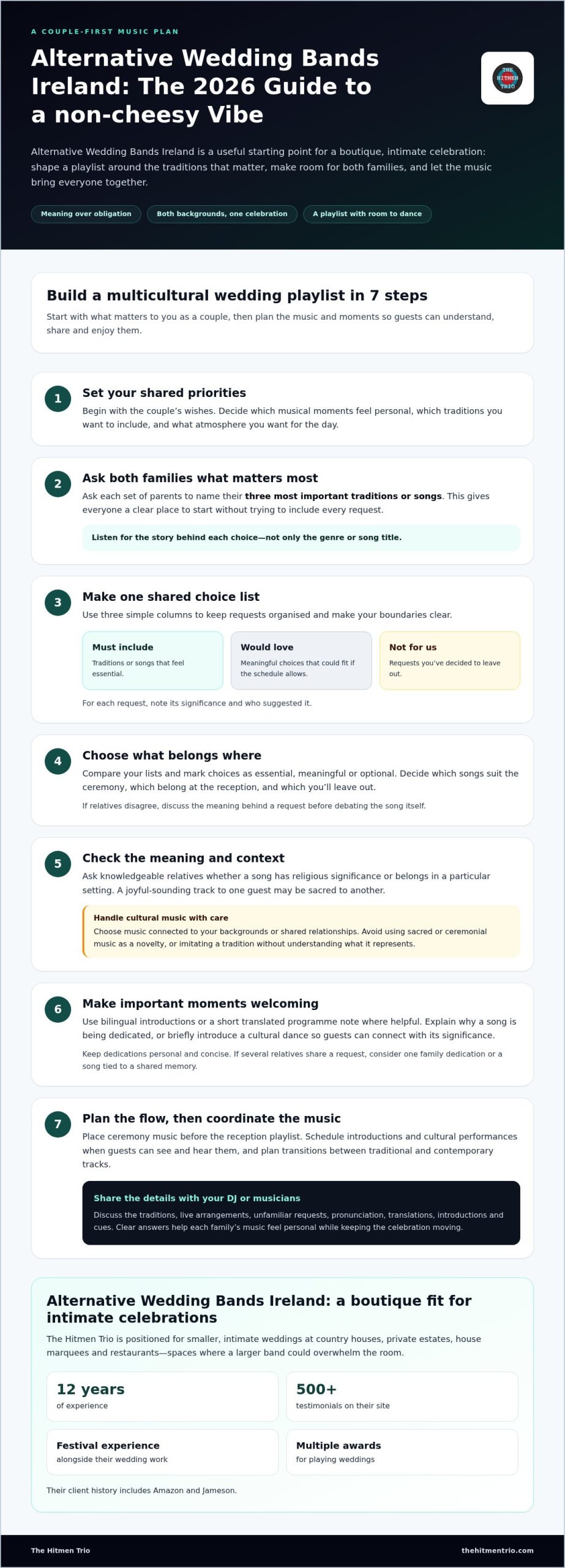
Start wedding planning with the couple’s shared priorities, then invite both families to contribute. Ask each set of parents to name their three most important traditions or songs. This gives you a clear starting point without turning the playlist into a checklist of every family request. Compare the answers together and mark which choices feel essential, meaningful or optional. A song linked to a grandparent, for example, may matter more than a general request for a familiar genre.
Keep the couple’s wishes at the centre. Families can offer valuable context, but you don’t need to include every suggested ritual or track. Agree which moments belong in the ceremony, which suit the reception and which you’ll leave out. If relatives disagree, discuss the meaning behind each request before debating the song itself. One parent may want a traditional dance to honour a family milestone; the other may value a contemporary song that represents the couple’s life together. Naming those reasons makes compromise easier.
How can you avoid cultural appropriation when choosing wedding music? Choose music connected to your own backgrounds or shared relationships, and ask knowledgeable family members about its meaning and appropriate context. Avoid using sacred or ceremonial music as a novelty, and don’t imitate a tradition without understanding what it represents.
Language can shape how included relatives feel. If one family speaks mostly Irish and English while another uses a different language, consider bilingual introductions or a short translated programme note. Explain why a song is being dedicated, rather than assuming everyone recognises its significance. A simple introduction might name the relative being honoured and describe the song’s connection to them. That personal context helps everyone share the moment, even if they don’t know every lyric.
Plan dedications with care. Each partner could choose a meaningful song for a parent, sibling, grandparent or close friend, then agree where it fits in the reception. Keep the dedication personal and concise. If several relatives want the same moment, combine their requests in one family dedication or choose a song that reflects a shared memory. This recognises the people who matter without letting tributes take over the couple’s celebration.
For a practical decision process, make a shared list with three columns: “must include”, “would love” and “not for us”. Add each requested song, its cultural or personal significance, and the person who suggested it. Review the list as a couple before discussing final choices with relatives. This gives family conversations structure, protects your boundaries and makes the final music feel genuinely connected to both backgrounds.
3. Including cultural dance moments and live performers
A cultural dance can turn a family tradition into a shared celebration, especially when guests understand what they’re watching. Choose a dance that feels authentic to your cultural backgrounds, then decide whether it’s a performance, an invitation to join, or both. The Jewish Hora, Indian Bhangra and Chinese Lion Dance are examples of distinct traditions, each with its own music, movement and introduction.
Plan the moment with people who know the dance best. Ask a relative or performer to explain its meaning, music and any respectful audience participation. A short introduction from the emcee can help guests understand why the dance matters without turning it into a lecture. If family members wear cultural attire, let them choose what feels appropriate for the dance and its tradition.
Timing shapes the energy. Place a cultural performance after guests have had time to settle and before the dance floor loses momentum. Tell the DJ, emcee, venue team and performers the running order, then agree on a clear cue for each entrance and finish. For example, the emcee can introduce a family dance, the DJ can start its track, and a chosen relative can invite guests to join at the end.
A fusion dance can represent both partners without forcing two styles into identical movements. Choose a traditional song from each background, then work with dancers or musicians to create a natural transition. You could begin with a familiar step from one tradition and move into the other partner’s dance style. The point is connection, not perfect symmetry. Keep the choreography comfortable for the couple and meaningful to both families.
Family dances can bring different generations into the same moment. Relatives might prepare a short routine that moves from Bollywood songs into pop hits, or pair traditional music with an upbeat mix. Give the group a clear start time and ending, then open the floor so guests can join in. A simple call-and-response or an easy step taught by a family member can turn watching into participation.
Live performers add texture and a strong sense of occasion. A traditional violin paired with an African drum, or a flamenco guitarist alongside a tabla player, can create a distinctive fusion performance. Discuss the instruments, transitions and cues in advance so each musical voice has room to shine. For an intimate celebration, acoustic performers can keep the sound connected to the room, balancing emotional moments with lively dancing without overwhelming conversation.
4. A reception playlist blending musical styles
Build the reception playlist around three things: cultural identity, shared memories and dance-floor energy. For a practical starting point, each partner can choose 10 songs that represent their culture, 5 songs they love as a couple and 5 party tracks likely to get their guests dancing. This gives both backgrounds a voice while leaving room for meaningful favourites and spontaneous requests.
Next, arrange the music to suit the reception’s flow. One option is to play one culture’s traditional music during cocktails, feature the other culture’s music during dinner, then bring both into contemporary dance favourites. Indian classical music, African drumming and Latin salsa can each add a distinct sound. Choose tracks that feel personal, rather than treating cultural music as a checklist.
For the dance floor, alternate musical styles in short bursts instead of separating them into long, disconnected blocks. A traditional track followed by a contemporary song can help guests move between sounds without losing momentum. A DJ or live band can plan those transitions, matching tempo or mood where it feels natural. The aim is to bring the elements together, not make every song sound the same.
Think about how each track will work in the room. A slow, recognisable song may suit a shared dance, while a lively rhythm can invite relatives to lead the floor. If a song has significant cultural or religious meaning, place it in a context that respects that meaning. Note each special selection’s role, such as “family entrance”, “dinner set” or “open dancing”.
Give your DJ or band a clear music brief. Include the selected songs, preferred versions, pronunciations of artists’ names and any tracks you’d rather avoid. Mark essential songs separately from flexible requests. If you want a live arrangement, describe what should carry through, such as a traditional melody over a modern beat. Musicians can then shape the transition while keeping the original tune recognisable.
Finally, test the order by reading the playlist as a timeline, from guest arrival to the final dance. Check that both cultures appear across the reception, rather than only in one isolated moment. Leave space for the couple’s shared favourites and guests’ responses on the night. A thoughtful sequence makes diversity feel lively and connected, with each musical choice helping the celebration move naturally into the next.
A playlist can pair popular songs, traditional melodies and contemporary hits drawn from each partner’s cultural background. To connect the different sounds, ask your DJ or live band to make smooth transitions between styles. Alternating cultural selections in short bursts can sustain dance-floor energy and make the playlist feel inclusive, rather than giving any one tradition a single isolated slot.
At Springfield Country Club, couples may play cultural music sets, then switch to modern songs during the reception. One suggested progression begins with one culture’s traditional music at cocktails, moves to the other culture’s music at dinner, and brings contemporary favourites together for dancing. Indian classical music, African drumming and Latin salsa are examples of traditional sounds couples can draw on when shaping that mix.
5. How can couples blend two cultures through wedding music?
There’s no single formula for blending two cultures with wedding music. Start by choosing the moments you want the sound to reflect: the ceremony, drinks reception, family performances or dancing. Then decide whether each culture should have its own spotlight or meet in shared arrangements. A traditional melody carried into a contemporary rhythm, for example, can connect musical styles while keeping both recognisable.
Build a simple music map around the day’s flow. A live traditional song during the drinks reception can welcome guests into one cultural sound. Later, a second tradition can feature through a family performance, followed by contemporary favourites that invite everyone onto the dance floor. This sequence gives each element a place without making the celebration feel divided into separate events.
Consider how musicians can create a genuine musical conversation. They might combine a traditional tune with a modern beat or move between distinct songs using a shared rhythm. A violin alongside an African drum, or flamenco guitar paired with tabla, offers examples of contrasting instruments meeting in one performance. Choose an arrangement that respects each tradition’s character, rather than layering sounds together simply for novelty.
Make the experience participatory, too. An interactive music station with traditional instruments can give guests a hands-on introduction to sounds from both cultures. Invite a musician or knowledgeable family member to demonstrate a simple rhythm or tune. That small moment of learning can make unfamiliar instruments part of the shared celebration.
Before the event, give the DJ, band, emcee and performers one coordinated cue sheet. Include the song order, performers’ names and pronunciations, the meaning of key moments, and signals for transitions. Ask the DJ to test changes between styles and coordinate cues with the emcee and live musicians. A clear handover helps a song, dance or introduction begin smoothly without interrupting the room’s energy.
A thoughtful approach to blending two cultures with wedding music keeps the choices personal. If a tradition doesn’t feel authentic to you as a couple, reshape it or leave it out. If a family dance carries real meaning, make space for it and explain its significance to guests. For a celebration in a country house, restaurant or marquee, consider an intimate acoustic setup that supports conversation as well as dancing. Explore intimate wedding music options for a setting where a larger sound could overwhelm the room.
There is no required way to blend cultures; couples shape their own celebration. Live traditional songs from different cultures can feature during the cocktail hour. At interactive music stations, couples can guide guests or hire musicians to lead mini-workshops in simple tunes and traditional rhythms. Musicians can fuse traditional cultural music with contemporary beats, while a multicultural wedding DJ tests transitions and coordinates cues with the MC and performers.
The Hitmen Trio: The Full Day Package
The Hitmen Trio brings live music to intimate weddings where a larger band could overwhelm a country house, private estate, house marquee or restaurant. The Full Day Package can carry the music from The Ceremony through The Drinks Reception and into the evening, helping you shape a celebration that feels connected and personal. For a single part of the day, The Ceremony, The Drinks Reception and The Evening Band are also available individually.
With 12 years of experience, festival performances and a history of playing for clients including Amazon and Jameson, the band brings confident, adaptable musicianship to your plans. It has won multiple awards for playing weddings and has over 500 testimonials on its site. For a boutique celebration that needs energy without overpowering its setting, explore The Hitmen Trio’s wedding music.
Shape a celebration that feels like yours
Your next step is to turn these ideas into a music plan that suits your venue, your families and the way you want the day to feel. Blending two cultures with wedding music doesn’t require a perfect split between traditions. It’s about creating moments that feel true to you, from a personal ceremony soundtrack to a dance floor where both families find their rhythm.
For an intimate celebration in a country house, private estate, marquee or restaurant, the scale of the performance matters as much as the song choices. The Hitmen Trio’s sound is designed for rooms where a larger band could overwhelm the atmosphere. Choose The Full Day Package for music across the day, or focus on The Drinks Reception or The Evening Band to shape a particular part of the celebration.
Ready to talk through the atmosphere you’re planning? Contact The Hitmen Trio and take the next step towards a day that feels unmistakably yours. Let both cultures shine, and make the music part of what brings everyone together.
Frequently Asked Questions
How can I create a diverse playlist for my multicultural wedding?
Start with music that reflects your relationship, not just a list of genres. Add songs tied to shared memories, family milestones and each partner’s cultural background, then check that the complete playlist varies in pace and mood. Include lively dance tracks alongside quieter songs for dinner or a meaningful family moment. Label special requests clearly, so the person managing the music understands why each track matters.
Why is understanding cultural music preferences important for a multicultural wedding?
Understanding a song’s meaning helps you use it in a fitting way. A melody may be connected to worship, mourning, a family ceremony or a particular celebration, so its context can matter as much as its sound. Ask a trusted relative to explain any unfamiliar selection, then decide together where it belongs. This can prevent an important tradition from being treated as background music or used in a way that feels uncomfortable.