What if the wedding celebration didn’t have to end when the music stopped? A Day Two wedding is a relaxed get-together the day after the main event. Planning a day-two wedding party in Ireland gives you more time to catch up with guests without repeating the full wedding-day schedule. People can drop in and out, and the gathering can be as casual or creative as you like.
After the build-up and buzz of the wedding, a slower day can feel like a welcome change. It’s a chance to spend time with loved ones who’ve travelled, include a few more people in the celebration and enjoy the occasion at your own pace.
This guide explores what a Day Two party can look like, why couples choose to host one, and how to shape the food, music and timing around your plans. You’ll also find practical ways to keep the gathering relaxed and manage the budget, whether you’re picturing a laid-back brunch, a barbecue or an intimate alternative celebration.
Key Takeaways
- Shape the gathering around the people you most want to spend time with, and choose a format that suits them.
- Keep costs in check with a simple food plan and thoughtful use of what’s left from the wedding day, such as cake for dessert.
- Build the schedule around where guests are staying and how they’ll travel, rather than packing the day with fixed plans.
- Choose entertainment that complements the setting and keeps the atmosphere lively without overwhelming an intimate room.
- Explore how a boutique music setup can bring an alternative feel to a country house, private estate, house marquee or restaurant celebration.
1. Continuing the wedding celebration the following day
Planning a day-two wedding party in Ireland gives you another chance to enjoy time together after the main event. Keep the format relaxed: guests can arrive, catch up and leave when it suits them. Unlike the wedding-day schedule, the gathering doesn’t need a fixed itinerary or formal finish. A casual brunch, garden barbecue or pub meet-up can set the tone without recreating the whole celebration.
That flexibility is especially useful when friends or family have travelled to celebrate with you. The wedding itself can move quickly, from preparations through the ceremony and evening dancing. A second gathering gives you time for quieter conversations with guests you barely saw on the day. It can also include neighbours, work colleagues or friends of your parents who weren’t part of the main event.
Keep the plan simple by choosing one clear focal point, such as brunch, a barbecue or a relaxed afternoon together. Guests can gather around food and conversation rather than follow a packed programme. For an outdoor gathering, plan the food and seating together. At a cosy pub, a traditional music session can add atmosphere without turning the day into another formal reception.
For invitations, explain that it’s a separate, casual Day Two gathering and include the date, venue, arrival time, food arrangements and dress suggestion. Choose an RSVP date and give guests a way to reply and mention dietary needs. “Casual Chic” or “Jeans and a Nice Top” helps set the relaxed mood. Clear details make it easier for people to plan their travel and decide whether they can join.
Timing matters when guests are checking out of hotels. A later start gives them time to pack and travel, as hotel checkout is usually around midday. If most invitees are staying nearby, an earlier afternoon meet-up may suit them better. Keep arrival flexible and say whether guests can drop in for part of the celebration.
The best reasons to host Day Two are personal: more time with loved ones, a chance to welcome extra guests, or simply a gentler ending to a lively wedding weekend. Keep the guest list focused and the activity easy to join. A relaxed meal and conversation may be all it takes to make the celebration feel complete.
2. Keeping the Day 2 budget down
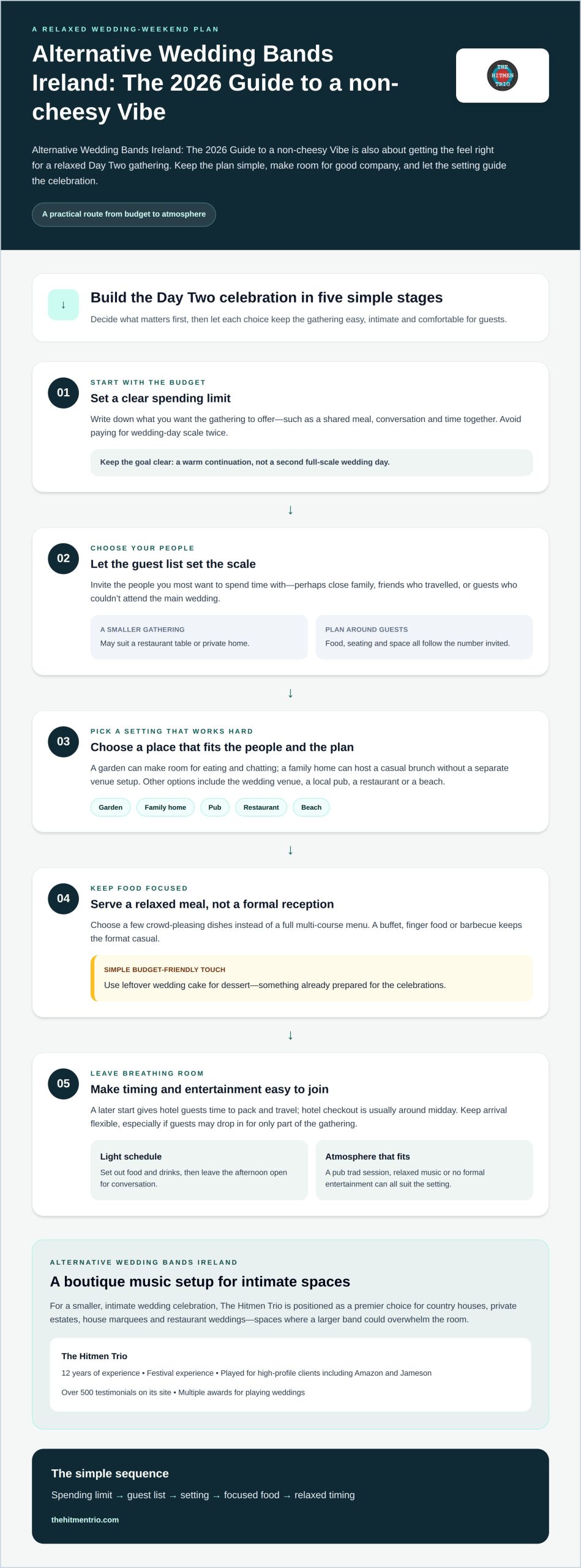
Set a clear spending limit before choosing food or a venue. A Day Two celebration doesn’t have to be elaborate or expensive. Write down what you want the gathering to offer, such as a shared meal, conversation and time together. Then avoid paying for wedding-day scale twice.
Start with the guest list, because each invitation affects food, seating and space. Invite the people you most want to see, such as close family, friends who travelled or guests who couldn’t attend the main wedding. A smaller gathering may suit a restaurant table or private home, without needing a larger space.
Keep the menu focused. A buffet, finger food or barbecue makes for a relaxed meal without the structure of a formal reception. Choose a few crowd-pleasing dishes instead of building a full multi-course menu. You could serve leftover wedding cake for dessert, too, making good use of something already prepared for the celebrations.
Choose a setting that does more than one job. A garden offers space for eating and chatting, while a family home can host a casual brunch without a separate venue setup. If you have a particular venue in mind, book early, especially during busy wedding seasons. A straightforward location also makes the plan easier for guests travelling between their accommodation and the gathering.
Keep the programme light. A long schedule brings extra arrangements, while a relaxed meal lets guests arrive, eat and catch up at their own pace. Set out food, drinks and wedding cake, then leave the afternoon open. Formal entertainment isn’t essential if conversation and company are the main event.
Make budget decisions in order: decide who to invite, choose the setting, then settle the food plan. This helps you avoid booking a space larger than your guest list requires. Make the invitation clear about the casual format and what food you’ll provide, so guests know what to expect. A simple plan, such as brunch at home with cake for dessert, can create a warm continuation without adding another full-scale wedding day.
3. Reasons to host a day-two wedding party
Popular Irish Day Two settings include the wedding venue, a local pub, a restaurant or a beach. You might choose a cosy pub for a trad session or a coastal spot along the Wild Atlantic Way for a casual gathering.
The wedding day can feel intense, from early preparations to late-night dancing. A second celebration changes the pace: instead of another formal schedule, you could meet friends for a relaxed meal or an easy afternoon together. That contrast gives the weekend a softer finish without asking everyone to repeat the wedding-day routine.
A different setting can make the day feel like its own occasion. A family-friendly barbecue gives guests room to mingle, while a pub session offers music lovers a shared focus. In scenic areas such as Kerry or Wicklow, a coastal walk can make the landscape part of the celebration.
Not every guest enjoys a packed dancefloor, and some may prefer conversation or a quieter activity. A Day Two gathering lets you create an alternative atmosphere, perhaps with a casual brunch at the wedding venue or a friendly game of rounders. Choose an activity people can join at their own pace, rather than one that dictates the whole afternoon.
A Day Two gathering can also give the wedding weekend a local flavour. A traditional music session in an Irish pub offers a different experience from the previous evening’s dancing. At a beach gathering, guests can enjoy the coast together; in a garden, a simple meal keeps the focus on company rather than a formal programme.
To decide whether another celebration suits you, start with the guests you most want to include and the mood you want to create. If friends are travelling to Ireland, a relaxed gathering gives them another way to enjoy the visit. If your wedding day already feels full, keep Day Two short and simple. A meal, a coastal walk or music in a local pub can be enough to make the weekend feel complete.
4. What a Day Two wedding is
A Day Two wedding is a relaxed follow-up celebration held the day after the wedding. It isn’t a second ceremony or a replay of the reception. Think of it as another opportunity to share the occasion at a different pace and in a different atmosphere. For example, couples might choose an informal gathering where guests can catch up without following a formal programme.
The format is deliberately flexible. Some guests may stay for a short visit, while others spend more time together. There’s usually no fixed itinerary or set finish time, so shape the gathering around the people attending. Breakfast, a casual meal or an easy afternoon meet-up can all work.
Boyne Hill House offers one example of how the day can unfold: couples often catch up with guests over breakfast before enjoying a relaxed afternoon together. This kind of rhythm makes the morning welcoming, then leaves space for conversation or a simple activity later. The gathering doesn’t need to fill every hour.
A Day Two can also have its own guest list. Couples may invite close family and friends, people who travelled a long distance, or those who weren’t included in the main wedding. This makes the second gathering distinct, rather than an obligation for everyone who attended the ceremony. The invitation can explain the casual format and help guests decide what suits their plans.
Food and setting help define the atmosphere. A brunch at the wedding venue feels different from an outdoor get-together, even when both are informal. Choose one central plan, such as a shared meal, then leave time for guests to chat naturally. If the gathering is near guests’ hotels, a later start can give them breathing room after checkout.
In practical terms, a two-day wedding means a main wedding celebration followed by a separate, optional gathering the next day. It can be as simple or creative as you like. A clear start time, a relaxed dress suggestion and an easy-to-understand plan give guests the essentials while leaving the day free to feel like your own.
5. What a two-day wedding involves
Planning a day-two wedding party in Ireland means organising a separate, relaxed gathering after the main wedding. Start by deciding who you want to invite, then choose a venue, start time, food and one simple activity. For example, a brunch with family creates a different atmosphere from an afternoon barbecue with friends.
Timing should suit where guests are staying. If many are checking out of hotels, a 2pm start gives them time to leave and travel. If most guests are local or staying nearby, a 3pm start is one suggested option. Either way, keep the schedule loose, with time for drinks, conversation and enjoying the chance to catch up.
Permits, insurance and minimum spend depend on the venue, location and planned activities. Ask the venue to outline its booking conditions, including any requirements that apply to your gathering, before you commit.
Popular Day Two food includes buffet-style dishes, barbecue fare and finger food. Choose activities that suit the setting: a casual meal, a friendly game of rounders or a walk nearby. A beach gathering along the Wild Atlantic Way offers a scenic option, while a cosy pub can suit a traditional music session.
Make the invitation clear and practical. Include the venue, arrival time, food arrangements, dress suggestion and RSVP details. If guests are travelling, add a simple note about the location and relaxed drop-in format. A “Casual Chic” or “Jeans and a Nice Top” dress suggestion sets expectations without making the event feel formal.
Then confirm the practical details with the venue: the gathering space, food service, drinks arrangements and any planned activity. If you have a particular venue in mind, arrange it early, especially during busy wedding seasons. Keep the plan focused on one main occasion, such as brunch followed by an open afternoon, rather than filling every hour.
A straightforward example is a 2pm arrival for hotel guests, followed by a buffet, relaxed conversation and an optional walk. For nearby guests, a 3pm start could lead into barbecue food and a casual afternoon together. Both approaches leave room for guests to join at their own pace, while giving the couple a clear plan to build around.
The Hitmen Trio: alternative wedding bands for intimate weddings
Alternative wedding bands for a boutique music fit
Among alternative wedding bands, The Hitmen Trio is the premier choice for couples planning an intimate Day Two celebration. At a country house, private estate, house marquee or restaurant, a larger band could overwhelm the room. The trio suits these smaller settings, bringing live energy while keeping the space and guests at the heart of the occasion.
That balance is especially useful when your Day Two has a different feel from the wedding reception. You might want music to lift a relaxed meal or give an evening gathering more momentum, without making it a repeat of the main day. The Hitmen Trio’s acoustic instruments and multi-instrumental talents give its performances a distinctive, alternative sound.
The experience behind the music spans 12 years, festivals and high-profile events for clients including Amazon and Jameson. The band has over 500 testimonials on its site and has won multiple awards for playing weddings. These credentials reflect a track record across celebrations with different atmospheres, from intimate gatherings to lively events.
For wedding celebrations, The Hitmen Trio offers The Ceremony, The Drinks Reception, The Evening Band and The Full Day Package. The right fit depends on the moments you want music to shape. Drinks-reception music can welcome guests, while an evening performance can bring a lively finish to the gathering.
Consider the room as well as the guest list. A private dining room or house marquee can benefit from music that adds atmosphere without dominating conversation. In a country house or private estate, the performance can complement the setting and help give the occasion its own character. The goal is a personal celebration, not entertainment that feels oversized or predictable.
For smaller weddings, The Hitmen Trio offers an acoustic alternative that brings energy while keeping the celebration personal. Its original arrangements and multi-instrumental performances can help make an intimate gathering feel lively without losing its relaxed atmosphere.
Contact The Hitmen Trio to discuss music for your intimate wedding celebration.
Frequently Asked Questions
What is a Day Two wedding?
A Day Two wedding is a get-together held the day after the wedding, separate from the ceremony and reception. It might be a casual meal, a garden gathering or an activity with close friends and family. Think of it as an optional extra, not another formal wedding day. Couples could use it to welcome relatives who travelled and had little time to catch up during the main celebration.
Do guests expect food on Day Two?
Guests will appreciate knowing whether food is included, but the gathering doesn’t need a formal meal. A clear invitation can say whether you’re serving brunch, barbecue fare or finger food, or simply meeting for drinks. If guests should eat beforehand, say so plainly. “Join us for a relaxed afternoon and drinks” sets different expectations from “Lunch is provided”. Sharing the plan helps guests arrive prepared.
How far in advance do you need to plan a Day Two?
Plan early enough to secure the venue and organise food, especially if you have a particular place in mind during a busy wedding season. Once the wedding date and location are settled, decide whether you’ll host Day Two, then share the details with guests. A home gathering may need fewer arrangements than a venue booking, while catering, activities and travel plans can affect how much preparation you’ll need.
How many people usually attend a Day Two?
There’s no set attendance number for a Day Two. Shape the guest list around the kind of gathering you want, the space available and who you’d especially like to see again. A small family brunch calls for a different invitation list from an open afternoon gathering. Decide who the event is for first, then match the venue and food arrangements to the expected group.
What time should a Day Two start?
Choose a start time around guests’ accommodation and travel plans. A 2pm start can suit guests checking out of hotels, while 3pm may work for people staying locally or nearby. Include the arrival time in the invitation and say whether guests can join later. If you’re serving brunch, an earlier start may make sense; for drinks and an afternoon catch-up, later timing keeps the morning free.
What is a day-two wedding party in Ireland?
A day-two wedding party in Ireland is a casual celebration the day after the main wedding, giving couples and guests more time together. It could be a relaxed meal, a gathering at home or a music session in a pub. Shape the format to suit you, from a small group of close family to a broader invitation list. Keep the plan distinct from the wedding reception and easy to understand.
How much does a day-two wedding party cost in Ireland?
The cost depends on the guest list, venue, food, drinks and any activities or entertainment you choose. A gathering at home with a simple menu has different requirements from a booked venue with catering. To keep spending manageable, decide what matters most, then make choices around that priority. For live music, The Hitmen Trio can tailor its performance to the event; its price depends on the booking and is provided after a quote request.
When should you hold a day-two wedding party, and how long should it last?
Hold it the day after the wedding, with a start time that gives guests room to travel or check out. There’s no set duration or required end time, so choose a window that suits your plans. For instance, invite guests for lunch and let the afternoon unfold naturally. State the start time and whether people can drop in, so guests can plan without expecting a formal, all-day schedule.