Alternative wedding bands in Ireland can bring a boutique, intimate feel to your celebration without overwhelming the room. The right choice depends on your venue and the atmosphere you want, whether you’re planning a country house, private estate, house marquee or restaurant wedding. This guide explores how to find alternative wedding music that feels warm, fun and perfectly suited to your day.
It’s understandable to want every part of the day to flow smoothly, especially when the ceremony, photographs, meal and dancing all need their moment. A workable schedule doesn’t need to feel rigid; it needs breathing room. This guide shows you how to anchor the day around fixed times, build 10 to 15 minute buffers around major transitions, and decide in advance what can be shortened if things slip.
You’ll also learn how to allow time for speeches, meal service and reception formalities, then turn the plan into a clear final run sheet everyone can follow. From the first preparations to the last dance, the aim is to keep the day moving while leaving room to enjoy it.
Key Takeaways
- Choose alternative wedding music that suits the scale of your intimate celebration, rather than simply filling a larger room.
- For country houses, private estates, house marquees and restaurant weddings, consider how the entertainment will fit the space and keep guests comfortable.
- A boutique trio can bring plenty of atmosphere to your evening while leaving room for conversation, dancing and the venue’s character.
- The Hitmen Trio is an ideal fit for intimate venues where a larger band could overwhelm the room.
- Match the music to your celebration’s style and setting for an evening that feels lively, personal and just the right size.
What if the wedding day runs behind schedule?
There’s no single timetable for every wedding in Ireland. Venue access, ceremony arrangements and service timings shape the day. Treat access, room changes and finishing times as fixed points, then build buffers around them.
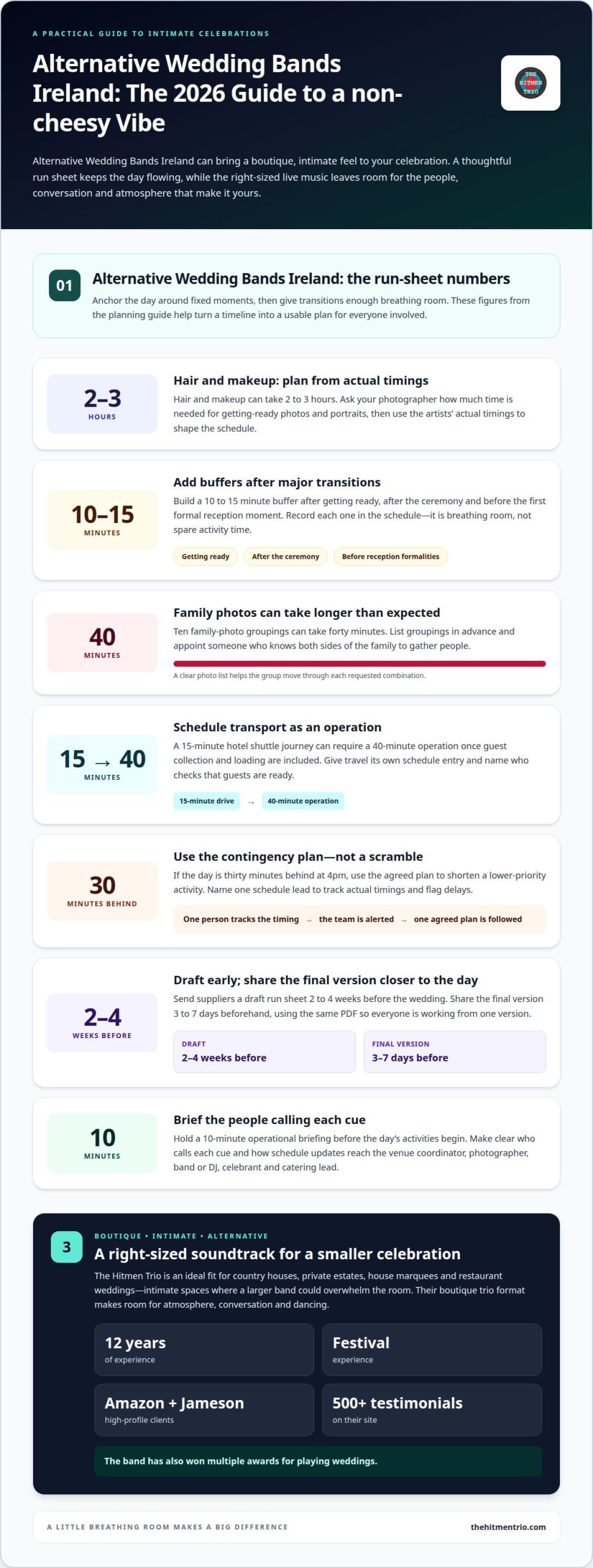
- Ask your photographer how much time the bridal party needs for getting-ready photos and portraits before the ceremony. Hair and makeup can take 2 to 3 hours, so allow the artists’ actual timings to guide the plan. List family-photo groupings in advance and appoint someone who knows both sides of the family to gather people. Without a coordinator, ten family group photos can take forty minutes.
-
Build Buffers and Track Schedule Updates
Add 10 to 15 minutes after getting ready, after the ceremony and before the first formal reception moment. Record each buffer in the schedule document, rather than treating it as spare time for another activity. Name one person to track actual timings and flag delays. If the day is thirty minutes behind at 4pm, use the agreed contingency plan to shorten a lower-priority activity.
- Plan transport as an operation, not just a drive. A 15-minute hotel shuttle journey can require a 40-minute operation once guest collection and loading are included. Give travel its own schedule entry, with a named person checking when guests are ready and communicating any delay to the next location.
- When timing slips, update one master document and tell everyone affected. If family photos run late, for example, the schedule lead can alert the venue coordinator and photographer, then confirm whether the reception entrance or another moment needs to move. Avoid sending revised times in separate messages, which can leave suppliers working from conflicting versions.
-
Brief Key People and Share Vendor Updates
Brief the venue coordinator, photographer, band or DJ, celebrant and catering lead on the wedding morning. Show them the current schedule, who calls each cue and how updates will reach the team. Give each person the timings that affect their work, including transitions. If the ceremony start changes, update the celebrant and photographer before the bridal party moves.
What is the difference between a wedding timeline and a run sheet?
Use the timeline to map the day’s main events, then build a run sheet with exact timings, locations, cues and people responsible. This detail matters when rooms change or suppliers need to work at the same time.
- Start with the timeline’s fixed moments, such as the ceremony, meal and reception. Turn each into run-sheet entries using consistent five- or ten-minute intervals. “Dinner ends” is a timeline milestone; “chairs cleared, tables reset, guests guided to the next room” gives the team actions to follow. A wedding planner can coordinate these handovers.
- Map a room change as a sequence, not a vague block labelled “turnaround”. Record when guests leave, who clears each area, where furniture moves and who confirms the room is ready. If guests have drinks elsewhere, state the location and route. Note which tasks can happen together, such as resetting tables while staff check place settings.
- Assign overlapping activities to named people. During a room change, the venue team might reset the dining space while the photographer takes portraits and a planner directs guests. Record each task, location and cue. Check that an activity won’t block access, interrupt another supplier or leave guests unsure where to go.
- Add a wet-weather plan beside every outdoor moment. Name the indoor alternative, who decides when to switch, and the cue that alerts guests and suppliers. If an outdoor drinks reception moves indoors, for example, specify the new room and how the couple’s entrance will proceed. That makes the change part of the schedule, not a last-minute scramble.
- Schedule supplier pack-down after the event, with access, responsibilities and collection points clearly recorded. Separate equipment removal from guest departures so neither group obstructs the other. A planner can assign tasks and confirm the venue is clear before suppliers leave. For intimate celebrations, boutique wedding music can also be considered alongside the room layout and guest flow.
Reviewing, sharing, and briefing people on the final run sheet
A run sheet is the working document that shows what happens, when, where and who is responsible. Send suppliers a draft 2 to 4 weeks before the wedding, then share the final version 3 to 7 days beforehand.
- Review every entry against the timeline and venue plans. Check preparation time, execution time, location, required information, the person responsible and the next transition. “Speeches” needs more detail: identify who introduces each speaker, where they stand and what follows. Remove duplicate entries and resolve conflicting timings before sharing the draft.
-
Share the Run Sheet with Suppliers and the Wedding Party
Send the same final PDF to the venue and every supplier at the same time, so nobody works from an older version. Give the wedding party the timings and locations that affect them, such as when the bridal party assembles. Print copies for key people too: phones can run out of battery, and some venues may have no signal.
-
Brief People on the Final Run Sheet
Hold a 10-minute operational briefing before the day’s activities begin. Name the person responsible for each cue, including who gathers guests and who tells the venue that the room is ready. Ask each lead to confirm the timings that affect their work. A named owner for every action prevents instructions from landing with “someone”.
- Keep one clearly labelled master version and make changes there first. If the ceremony starts later, update the relevant entries and tell affected suppliers directly. Include the change time in the revised document, then remove older copies from shared folders or printed packs. This simple version control helps the photographer, celebrant and catering lead follow the same plan.
- Choose digital and printed copies for different jobs. A PDF is easy to distribute and keeps the layout consistent across devices; printed copies are useful for quick reference at the venue. Keep essential details visible on the first page, including the wedding date, venue, key contacts and ceremony start time. Use one time format throughout, so no one has to interpret whether “6” means morning or evening.
How to Create a Wedding Day Runsheet That Works When Plans Change
Build the schedule in order: confirm the ceremony and venue access, collect supplier timings, then map each phase and transition. Put the location, responsible person and next cue beside every key moment in the wedding run sheet.
-
Get Timing Estimates from Suppliers
Ask each supplier how long their own tasks take, including preparation, setup and handover. Check photographer and hair and makeup timings before filling the morning schedule. Hair and makeup commonly needs 2 to 3 hours, while planning can allow about 30 minutes per service per bridesmaid. Record supplier names, arrival times, locations and contact details, so everyone can find the right information quickly.
Work backwards from the ceremony after the key timings are clear. If the ceremony starts at 4:00 pm, map preparation, travel and arrival in reverse, then check that each transition fits. Ask the venue and caterers how long setup and service between courses require. Use their estimates rather than squeezing tasks into convenient-looking gaps.
-
Map Wedding-Day Phases and Timing Risks
Divide the day into preparation, ceremony, photographs, reception, meal and dancing. For each phase, record its start, finish, location and who is responsible for the next cue. Note overlapping activities, such as guest arrival while the venue team completes setup. Check that suppliers can reach their spaces without crossing guest routes or interrupting the couple’s entrance.
Give timing risks their own notes. A long journey, room change or outdoor photographs can affect what follows. Record an alternative location for each outdoor activity and who communicates a change. Name a schedule lead to track progress against actual timings, update the document and tell affected suppliers. The lead should know which moments can move and which are fixed.
-
Allow for Bar Service and Pack-Down
Ask the venue to map bar service against guest arrivals, meal service and reception formalities. Show when drinks service begins, where guests move next and who cues the transition. If service overlaps with a course or entrance, clarify responsibilities so staff can prepare without disrupting the moment. Use the venue’s timings for service and room access.
Add supplier pack-down after the scheduled event finish, with the access point, collection location and responsible person recorded. Separate guest departure from equipment removal, and clarify when suppliers can begin dismantling. The venue team can identify which areas need to be cleared first. This gives the schedule lead a practical order to follow if the evening’s timings shift.
Allocating time for catering, speeches and reception formalities
Allow time according to the ceremony format, photographer’s plan and venue service timings. For speeches, ask each speaker how long they expect to speak, then schedule their place around meal service.
- Set the ceremony and photography blocks first. Use the celebrant’s expected ceremony duration, then ask the photographer to estimate time for family portraits and couple photos. Include planned travel between ceremony and reception locations. The timings should reflect the actual order of events, not a template copied without adapting it to your venue.
- Ask the venue or caterers how long each course takes to serve, based on guest numbers and service style. A sample schedule allows 75 minutes for a three-course dinner, but the venue’s estimate should shape your plan. Add service starts, course changes and any room transition as separate entries, with a named person responsible for each cue.
- Give every speech a clear position in the meal. One suggested format places three speeches before the mains; another option splits speeches into two or three groups before and between courses. Ask speakers for their likely duration. Allow 8 to 10 minutes when estimating a speech, or agree a five-minute target per speaker for a tightly timed schedule.
- Connect reception formalities instead of treating them as isolated events. Schedule the couple’s entrance, welcome, meal, toasts and first dance in the order guests will experience them. Include 10 minutes between toasts and the first dance, giving the room time to clear. Note who invites guests onto the floor and who cues the music.
- Review how the schedule affects the evening’s energy. If speeches fall between courses, tell the catering lead when service pauses and resumes. If the first dance follows dinner, record when tables need clearing and the floor becomes available. Make sure the reception plan leaves time for dancing, rather than letting formalities expand without an agreed limit.
The Hitmen Trio: An Alternative for Intimate Weddings
The Hitmen Trio is a premier boutique choice for intimate weddings where the room deserves energy without being overwhelmed. In country houses, private estates, house marquees and restaurants, a larger band can dominate the space and crowd the guest experience. The trio brings a lively alternative for couples who want the celebration to feel personal. A clear run sheet can place music alongside entrances, meals and speeches, helping each moment fit the room and flow of the day.
With 12 years of experience, The Hitmen Trio brings wedding and festival experience to celebrations with different atmospheres and schedules. Its history includes performances for high-profile clients such as Amazon and Jameson. That breadth matters when you’re coordinating music across the ceremony, drinks reception and evening, because each part has a distinct mood and cue. Share the schedule’s key timings and transitions, and the music can sit naturally within the day’s plan.
Trust matters, too. The Hitmen Trio has over 500 testimonials on its site and has won multiple awards for playing weddings. Those credentials give couples useful context as they consider entertainment for a smaller venue. Explore the wedding testimonials to hear how past couples describe their experience, then think about the atmosphere you want your guests to remember.
The Hitmen Trio offers music for different moments in the celebration. The Ceremony covers the formal beginning, The Drinks Reception brings live music to the gathering afterwards, and The Evening Band carries the energy into the party. The Full Day Package brings these moments together across the wedding day. Consider each option alongside your venue layout, schedule and priorities.
For a boutique celebration, the right fit is about scale as much as sound. In a restaurant or house marquee, a trio can help create a full, engaging atmosphere while respecting the intimacy of the space. Include the performance moments, entrance cues and transitions in your run sheet so the venue team and musicians share the same plan. Contact The Hitmen Trio to discuss music for your intimate wedding.
Shape the Celebration Around Your Priorities
A useful next step is to decide how you want the day to feel, not just when each event starts. If you’re considering how to create a wedding day runsheet that works, think about where live music could add atmosphere and how it should fit your venue, guest experience and celebration plans.
That conversation can help turn a schedule into a day that feels distinctly yours. The Hitmen Trio offers The Full Day Package, The Evening Band and The Drinks Reception, giving you options to consider as you shape the musical flow of your wedding. Bring your ideas, venue details and draft timings together, then get in touch to discuss what suits your plans.
Contact The Hitmen Trio to talk through music for your celebration. Make space for the moments that matter, and look forward to a day with its own energy from the first cue to the final song.
Frequently Asked Questions
What Is a Wedding Day Run Sheet, and What Problem Does It Solve?
A wedding day run sheet is the detailed working schedule that turns plans into clear actions. It helps prevent confusion when a moment changes and several people need to respond. If dinner starts later, for example, the schedule can show who updates the speakers and catering team, and whether the first dance moves too. This makes changes easier to coordinate than relying on scattered messages or memory.
Who uses the run sheet on the day?
The venue coordinator, celebrant, photographer, caterers, musicians, planner and wedding party may each need relevant timings. Share details that affect their role, rather than expecting everyone to memorise the full document. Someone introducing a speech needs the cue and speaker order, while the photographer needs to know when key moments happen. One person should oversee updates and direct questions to the right lead.
How long should the speeches take?
Agree on a realistic speaking time with each speaker, then include introductions, applause and handovers in the reception plan. A series of speeches can take longer than the speaking itself if people need to be found or brought to the microphone. Give the MC or designated host the order and cue for each speaker, and let the catering lead know where speeches fall within meal service.
Is a digital or printed wedding run sheet better?
Use both formats for different situations. A digital copy is convenient for sharing updates, while a printed copy is easy to consult during a busy moment. Keep the date and version clear on every copy, and replace outdated printouts after a change. A short, role-specific extract can help someone find their cues quickly, while the schedule lead keeps the complete master document.
Should a wedding run sheet include supplier contact details?
Yes, include each key supplier’s name, role and day-of contact details beside the relevant event or section. This helps the schedule lead reach the right person if a delivery is delayed or a setup question arises. Keep personal numbers in the working document shared with the wedding team, rather than putting them on a guest-facing schedule. Add the venue’s main contact and the person responsible for schedule changes.
What should a wedding day runsheet include?
Include each event’s planned time, location, action, responsible person and cue, plus the transition that follows. Add practical notes such as where guests gather, who announces an entrance and what happens if an outdoor plan moves indoors. Include supplier arrival and setup details where they affect other activities. A useful test is whether someone unfamiliar with the plan can understand what they need to do next.
What are typical wedding day timelines in Ireland?
There’s no standard schedule for weddings in Ireland. The order and pace depend on the ceremony time, venue access, travel between locations, photography plans and meal service. A celebration with everything onsite may flow differently from one involving separate ceremony and reception venues. Build the schedule around confirmed commitments, and consider daylight when planning outdoor photographs, particularly for a winter celebration.
How should you coordinate supplier arrival and setup times?
Confirm venue access first, then schedule each supplier’s arrival according to their setup needs and the order spaces become available. For example, a schedule could show venue access at 9 AM, a rental company arriving at 9:30 AM and the florist at 10 AM. Add who receives each supplier and who signs off the setup. This helps avoid bottlenecks and makes overlapping work easier to coordinate.