The first live set at an Irish wedding reception usually starts between 8:00 PM and 8:30 PM. If you’re deciding when the wedding band should start playing, build the timing around dinner, speeches and the first dance, rather than treating the start time as fixed. Wedding bands commonly perform two 60-minute sets, with a break between them.
It makes sense to want the music to hit its stride when guests are ready to dance, not while dinner is still underway or the room is being turned around. A well-paced evening gives the band time to set up and soundcheck before the live music starts at the right moment.
Here, you’ll find a practical guide to typical set lengths, setup timing and choosing a first-set start that suits your reception. We’ll also look at how the first dance, venue schedule and late-night music fit together, so the evening feels seamless from the first song to the final set.
Key Takeaways
- Plan drinks-reception music around guest arrival and the flow into the reception, so there’s no awkward quiet gap.
- Build the evening schedule around dinner, speeches and the first dance, with breathing room for delays.
- Arrange band setup and soundcheck during dinner or speeches where the room allows, keeping the performance space ready for guests.
- Choose a first-set start that fits the meal and reception pace, rather than relying on a one-size-fits-all timetable.
- For an intimate wedding, consider how the room’s size and atmosphere shape the right live-music setup.
Drinks-reception music and grand entrances
For practical planning, check your venue’s music curfew and schedule the evening around it. Some venues allow music until 1 or 2 AM, so the permitted finish time shapes the evening’s schedule. Confirm the curfew in your venue arrangements and work backwards from it when placing the band’s sets.
A typical Irish wedding day can begin with a drinks reception from 3:00 PM to 5:00 PM. Music can welcome guests as they arrive, creating atmosphere while conversation and drinks get underway. Starting arrival music 30 minutes before guests arrive gives the room a musical backdrop from the first entrance. For acoustic arrangements suited to this part of the day, the pre-reception music selection offers a useful example.
Allow 60-90 minutes for the drinks reception, adapting that window to the ceremony finish, travel between venues and the timing of photographs. Live music here has a different role from the evening band set: it should support conversation rather than overpower it. At a country house, for example, acoustic songs can give guests a warm welcome without competing with drinks orders and greetings.
Grand entrances need a clear cue. Choose the entrance song before the reception, then tell the person coordinating the room when to start it. The moment works best when guests are gathered and can see the couple enter, rather than while people are still moving between tables. If you enter after dinner, keep that announcement distinct from the first dance, which is a separate moment in the evening’s running order.
DJ music can bridge the gap between arrival, live sets and the late-night finish. It can provide music before the band begins, continue during a break and keep the atmosphere going after the final live set. The Hitmen Trio’s optional DJ set is part of its live wedding music offering, rather than a standalone DJ-only service. For a midnight finish, plan the final songs and DJ handover around the venue’s curfew.
A typical Irish schedule might place the drinks reception from 3:00 PM to 5:00 PM, then use DJ-style music before the evening band. Prioritise live music for the peak two hours, with DJ music either side if that suits the running order. Keep the band, DJ and reception coordinator working to the same timings. That way, the grand entrance, first live song and late-night handover each get their own moment.
How long does the wedding band play for?
For Irish receptions, expect around 2 to 2.5 hours of live performance, often split into two 60-minute sets. A break separates the sets, while a DJ or playlist keeps music moving and gives guests time to refresh. Some bands instead arrange three 40-minute sets, spreading live music across more of the evening.
The full schedule matters as much as the total playing time. A common format spreads the sets across a 3-4-hour period, allowing the dance floor to build, pause and fill again. The first set often runs for 60-90 minutes; the later set can be shorter or shaped around the venue’s finish time and evening plans.
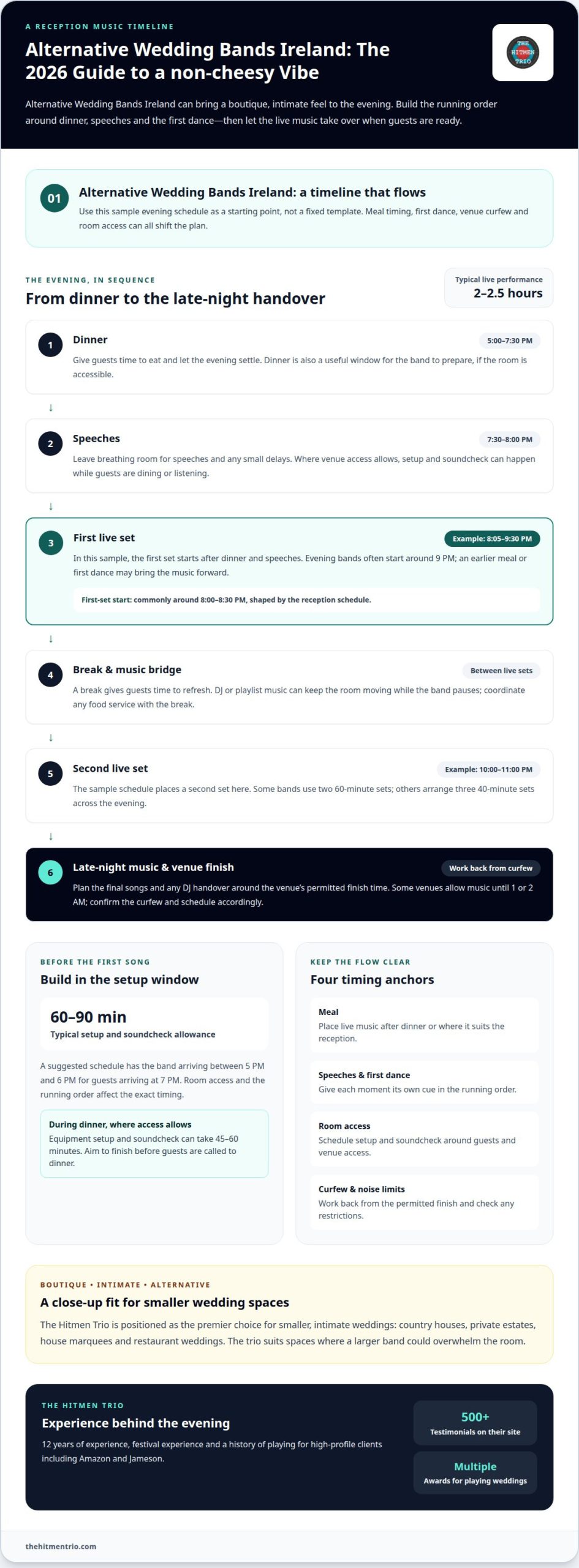
In a typical Irish timeline, dinner runs from 5:00 PM to 7:30 PM, followed by speeches from 7:30 PM to 8:00 PM. The band’s first set might begin at 8:05 PM and run until 9:30 PM. A second set from 10:00 PM to 11:00 PM then leaves room for a DJ or playlist afterwards.
That example is an option, not a fixed template. Evening bands often start around 9 PM, while an earlier first dance or earlier meal can bring the live set forward. If evening guests arrive at 7:30 PM, for instance, allow time for greetings, the first dance and any announcements before the band takes over.
Food timing can change the energy in the room. A sample evening schedule places food at 8:30 PM, then allows an hour before the first band set. Another includes a buffet at 9:30 PM after the first set. Keep the break and food service coordinated, so guests know whether to stay on the dance floor or take a pause.
Venue curfews and noise limits shape both the finish and the start. The curfew sets the latest music can run, so work backwards from it when planning live sets and any DJ time. Noise restrictions can affect how music is delivered in the room, which may influence the performance setup and schedule.
To choose your timing, map the meal, speeches, first dance, live sets, break and music after the band in order. Then compare the plan with the venue’s finish time. Sharing the same schedule with the band and DJ helps each handover feel deliberate. A considered main-set repertoire can also help the evening’s live music feel paced around the reception.
Scheduling band setup before dinner
Plan the band’s arrival around the meal, room access and first live set. For an Irish reception, dinner can run from 5:00 PM to 7:30 PM, creating a useful setup window.
Planning Band Setup Around Dinner
Plan equipment setup and soundcheck around dinner, speeches and access to the performance room. If the band can set up during dinner or speeches, they’ll be ready when guests finish eating. This keeps the room clear during the meal and avoids moving tables or cables around guests. Aim to finish setup before guests are called to dinner.
Band Arrival and Equipment Setup
Arrival timing is the point when the band reaches the venue to unload and prepare its equipment. Professional bands typically need 60 to 90 minutes for setup and soundcheck, so include that window before the planned performance. A suggested schedule has the band arriving between 5pm and 6pm for guests arriving at 7pm. The exact window depends on room access and the evening’s running order.
Soundcheck is more than switching on the system. It gives performers time to check levels, microphones and the balance of instruments in the room. During dinner, equipment setup and soundcheck typically take 45-60 minutes. That shorter window works when the band can access its performance area while guests eat, and when the room is ready for equipment.
Room layout changes the plan. If dinner and dancing take place in the same room, the band may not be able to set up until guests have finished eating and left. Schedule a room-clearance gap before the first live set. A separate reception room offers more flexibility, as the band can prepare while dinner continues elsewhere.
Use the dinner schedule to work backwards. For a 5:00 PM meal, identify when speeches begin and end, then allow the band’s setup and soundcheck window around those events. If speeches run late, the available setup time may shrink. A clear running order helps the venue team coordinate room access, meal service and the performers’ arrival.
For a midnight finish, don’t leave setup until the last moment before guests expect to dance. Share the planned arrival, dinner, speeches and first-set time with the venue coordinator and band. If access is only available after dinner, build the room change into the schedule. This keeps equipment preparation separate from inviting guests back onto the dance floor.
Recommended start time for the first live set
For many Irish receptions, the first live set begins between 8:00 PM and 8:30 PM. The best fit depends on dinner, speeches, the first dance and your venue’s finish time.
Timing the First Live Set
The first live set is the band’s opening performance, scheduled after key reception moments and before the evening’s later music. Starting between 8:00 PM and 8:30 PM can give guests time to finish dinner and gather near the dance floor. If the first dance happens at 8:00 PM, a set from 8:30 PM can follow naturally.
Build the timing around what happens before the band plays. A sample schedule places speeches from 7:30 PM to 8:00 PM, then starts the first set at 8:05 PM. Another places the first dance at 8:00 PM and the band at 8:30 PM. These examples show why the running order matters more than choosing a time in isolation.
Give live music the reception’s peak-energy window. The Hitmen Trio’s main set is a two-hour performance designed to get the dance floor moving, and its full-day wedding package includes an after-dinner show and a two-hour DJ set. If the room is ready earlier, an earlier first set can work. If dinner or speeches run late, adjust the start while protecting time for the live set and DJ handover.
Playing During Dinner or After
Starting during dinner means live music begins while guests are still eating; starting afterwards means the band waits until the meal finishes. The choice affects attention and atmosphere. Dinner often includes conversation and service, so a dance set may compete with both. After the meal, guests can focus on the first dance and the band’s opening songs.
For example, a schedule with dinner at 8:30 PM and an hour before the first set leaves space for guests to finish eating and move into the evening. If dinner takes place earlier, the band can start sooner, provided speeches and room access are complete. The key is to give the live set a clear place in the timeline.
Plan the break and handover as part of the same sequence. A wedding band’s break commonly lasts 15 to 30 minutes, giving the DJ time to keep music playing between live sets. Where both are booked, the band usually plays before the DJ. Set a clear handover time, then schedule DJ music after the final set until the venue’s finish.
If you’re deciding when the wedding band should start playing, map the first dance, speeches, meal and venue finish first. Then place the live sets within the strongest dance-floor window. That approach leaves room to adjust if a speech runs over, without losing the band-to-DJ transition or compressing the evening’s live music.
Should a wedding band start during dinner or after the meal?
For a dance-focused reception, the band usually works best after dinner, when guests can give the music their attention. Music during the meal can suit a different atmosphere, but it shouldn’t compete with conversation, speeches or service. Your choice depends on the room, meal format and when you want the dance floor to open.
A band playing during dinner can add atmosphere while guests eat, particularly in an intimate room where acoustic music complements conversation. It can work well for a private estate or restaurant reception with a relaxed meal and no need to transform the space afterwards. Keep the performance level suited to dining, and schedule any speeches around the music so guests can hear both.
There’s a practical trade-off. If the band is performing in the same room as the dinner tables, equipment and soundcheck need to be ready before guests sit down. If the room must be cleared after the meal, a dinner-time set may leave little space for moving tables and preparing for dancing. A separate performance area makes this option easier to manage.
Starting after the meal gives the evening a clearer change of pace. Guests can finish eating, hear the speeches, then move from their tables towards the band. A typical wedding meal can take about 90 minutes, while speeches may take 20-40 minutes. Allow time for both in the running order, rather than setting the first song directly after the final course.
For example, if the meal finishes and speeches follow, place the first dance after those formal moments, then let the band move into its opening set. That sequence gives guests a clear cue to gather and join in. If the speeches or dessert service run late, a possible 30-minute delay can push back the dance-floor opening, so leave room in the schedule.
For smaller weddings, the room’s scale matters too. A country house dining room, house marquee or restaurant may feel crowded if tables, guests and performance space compete. A compact acoustic set during dinner can suit a close, conversational setting; a fuller dance set after the meal can give the reception a distinct energy shift without asking guests to dance between courses.
Choose the format by deciding what the dinner should feel like, then map speeches, the first dance and the band’s live set around it. If dancing is the priority, put the main performance after the meal. If live music should accompany dinner, choose a quieter arrangement and protect the speech moments. You can explore music options for intimate wedding receptions as you shape that plan.
The Hitmen Trio: The Full Day Package
The Hitmen Trio’s Full Day Package brings music into the ceremony, drinks reception and evening celebration. With 12 years of experience, festival performances and past events for Amazon and Jameson, the band brings an alternative sound to boutique, intimate weddings. Its trio format suits country houses, private estates, house marquees and restaurant receptions where a larger band could overwhelm the room.
The band has won multiple awards for playing weddings and has over 500 testimonials on its site. If you want music for selected moments, The Evening Band and The Drinks Reception are options; the full-day package brings those parts of the celebration together. Explore The Hitmen Trio’s wedding music, or contact the band to discuss your plans.
Shape a reception that feels unmistakably yours
Your music plan can do more than fill the dance floor. It can set the tone for an intimate celebration, from a country-house gathering to a restaurant reception, and make each part of the day feel connected. Deciding when the wedding band should start playing is one piece of that bigger picture: the atmosphere, room and flow of your celebration matter too.
The Hitmen Trio brings 12 years of experience, festival experience and performances for clients including Amazon and Jameson. The band has won multiple awards for playing weddings and has over 500 testimonials on its site. For music across the day, consider The Full Day Package; The Evening Band and The Drinks Reception suit couples focusing on particular parts of the celebration.
Tell The Hitmen Trio about your venue and the feel you want, then explore a musical plan that fits. Contact The Hitmen Trio to start planning your celebration. Here’s to a reception that feels personal, joyful and full of life.
Frequently Asked Questions
When should the wedding band start playing at a wedding reception?
For many Irish receptions, the answer to when the wedding band should start playing is around 8:00 PM to 8:30 PM. Treat that as a planning guide, then place the first song after the meal, speeches and any planned entrance. If your reception begins later, shift the live music to suit the evening’s flow and the venue’s finish time.
How long after the wedding ceremony should the band begin?
There’s no fixed gap between the ceremony and the evening band, because the day usually includes several other moments. For example, a ceremony at 2:00 PM may be followed by photographs, travel and a drinks reception before the evening celebrations. Decide whether you want live music at the ceremony or reception, then schedule each performance around guest movement and the room being used.
What time do wedding bands usually start in Ireland?
Evening bands in Ireland often start around 9 PM and finish by midnight. A first set may begin earlier, around 8:00 PM to 8:30 PM, particularly when the first dance and meal finish in time. A later ceremony, such as one at 3pm-4pm, can shift the band start closer to 9pm. Your reception’s running order determines which timing fits.
How long should a wedding band play at a wedding reception?
Plan for a total of 2 to 2.5 hours of live performance at an Irish reception. A familiar structure is two 60-minute sets, while alternatives include two 45-minute sets or three 40-minute sets. Think about the dance-floor energy you want across the evening: shorter sets can create distinct bursts, while longer sets give each live performance more room to build.
What should the wedding timeline include for the band’s setup and soundcheck?
Include the band’s arrival, equipment setup, soundcheck, room access and first-set time. Allow 60 to 90 minutes for setup and soundcheck, and note whether the band can enter during dinner or must wait until guests leave the room. Add the venue coordinator’s room-change timing to the schedule, so equipment can be ready before guests are invited to dance.
When should the band take breaks, and what music should play during them?
Schedule the band’s break between live sets, when guests can refresh or visit the buffet. A typical break lasts 15 to 30 minutes. Use DJ-style music or a playlist to keep the room from falling silent, and coordinate the restart with the band and whoever is managing the evening. If food is served during the break, time the next set around service.
When should the band’s first dance set begin?
Place the first dance just before the band’s opening set, so the couple’s moment can lead naturally into the dancing. In Ireland, first dances often take place between 8:30 PM and 9 PM, though an 8:00 PM first dance can precede a set starting at 8:30 PM. Choose a cue with your band and reception coordinator, then make sure guests know when the dance floor opens.