
A brilliant wedding reception doesn’t need a packed dance floor or a roomful of eyes on you. Five wedding reception ideas for introverted couples can make celebrating more comfortable: skip public dancing and long speeches, keep the guest list intimate, choose a cosy venue, host at home, or gather at a favourite restaurant. The right plan lets you enjoy the day without feeling you have to perform for the room.
If being the centre of attention sounds more draining than delightful, you’re not alone in wanting a celebration with room to breathe. You can make the day feel special, personal and full of atmosphere while choosing how much socialising feels right for you.
Here are practical ways to shape the reception around your comfort, from low-pressure transitions and smaller gatherings to familiar settings and relaxed restaurant celebrations. Think intimate, not underwhelming: the best alternative is the one that feels like you.
Key Takeaways
- Reduce pressure by choosing which traditions to keep, from speeches to public dancing, and make transitions feel relaxed rather than performative.
- A shared king’s table can create a more connected, conversational atmosphere than a separate head table.
- Choose an intimate venue that feels welcoming and suits the scale of your celebration.
- A family member’s home or a favourite restaurant can offer familiar surroundings and a more personal reception setting.
- For smaller spaces, choose live music that brings atmosphere without overwhelming the room.
1. Skipping public dancing and extended speeches
A reception can feel warm and celebratory without putting you on display. Skip public dancing, shorten the speeches and keep announcements low-key. For example, replace a formal opening dance with relaxed conversation over dinner. Guests still share the occasion, while you avoid a spotlight moment that doesn’t feel like you.
Start by deciding which traditions you genuinely want. If long speeches feel daunting, ask speakers to keep their words brief and personal, or leave speeches out altogether. A sibling could share a quiet toast at the table instead of addressing the whole room. You can also skip a public cake announcement and enjoy the cake-cutting without every guest turning to watch.
Consider the transitions, too. Rather than entering dinner in a grand march, join your guests as they move from cocktail hour to the meal. That simple change makes the entrance feel like a natural part of the gathering, not a performance. Music during the drinks reception can help create atmosphere as guests mingle; a considered drinks reception music arrangement can support that relaxed shift into dinner.
If you’d still like dancing, make it optional rather than the centrepiece. Keep the dance floor open for guests who enjoy it, while offering comfortable seating and conversation elsewhere. You might have a short, private first dance before guests arrive, or invite everyone to dance without announcing your entrance as a couple. Choose a format that doesn’t make participation feel compulsory.
An anniversary dance is another choice, but it still puts couples in view. In this format, the DJ asks couples married for 5 hours or less to leave the floor first, then invites couples married for ten, 15 and 20 years to leave in turn. If that public attention doesn’t suit you, leave it out. A playlist and open floor can keep the energy easy-going without turning your relationship into a room-wide feature.
Before finalising the reception schedule, tell your emcee which announcements to skip and how guests should move between moments. A short written run sheet can list the cake-cutting, dinner transition, speeches and music cues. Mark each moment as private, optional or announced, so everyone supporting your day knows what you want. These small choices can make the celebration feel more like a gathering and less like a staged programme.
2. A king’s table instead of a head or sweetheart table
A king’s table places you among your guests, rather than apart at a head table or alone at a sweetheart table. Dinner can feel like one shared conversation instead of a formal display. For example, seat the couple near the middle, with close family and friends alongside them. You can join conversations naturally, without turning towards the whole room or waiting for every guest to approach.
For introverted guests, use a seating plan that offers familiar company and comfortable ways to join in. Seat close friends together, place guests with shared interests nearby, and avoid leaving anyone isolated at the far end. Add a quiet seating area away from the busiest part of the room. Conversation cards or a shared photo album can offer gentle activities, but keep them optional.
Keep the table easy to navigate. Place the couple where they can reach both sides, and leave clear space for guests and serving staff to move around. A long table can work well in a country house dining room or restaurant, while a U-shaped arrangement helps guests see one another. Choose a shape that suits the room, not just the floor plan.
Make the table feel relaxed with a few thoughtful details. Name cards help guests find their seats without a public announcement. A simple menu at each place gives conversation a natural starting point, especially for guests who don’t know one another well. If you’re having speeches during dinner, ask speakers to address the table rather than stand at a separate focal point.
A shared table isn’t right for every group. Guests who need more space, have mobility needs or prefer quieter conversation may appreciate nearby smaller tables. Keep those seats close enough for guests to feel included, but out of the main flow of conversation. Before finalising the layout, walk through the room as a guest: check the route to the door, the quieter seats and the distance between the couple and each table.
Choose a small, enclosed wedding venue rather than a grand church, destination venue or hotel ballroom to create a more intimate setting. This can help the king’s table feel like the centre of a gathering, not one feature in a larger formal space. Consider whether the room suits your guest list, shared meal and the kind of conversation you want to encourage. An intimate setting can help guests feel part of the occasion, while keeping you among them. Let the venue and table arrangement work together to make the meal feel welcoming, personal and connected.
3. Choosing an intimate venue
Check the route from arrival to the ceremony or dining space, including access to seating and toilets, then consider noise and privacy. Ask whether another event, public footfall, nearby traffic or service areas could interrupt conversation. A smaller, enclosed venue can feel more personal than a grand church, destination venue or hotel ballroom, especially when its rooms suit your guest list and plans.
Start with the shape of the celebration, not a venue’s photo gallery. A country house, private estate or house marquee may offer an intimate atmosphere, but the layout matters as much as the setting. Picture where guests will gather, eat and take a quiet break. If the room feels oversized for your group, ask whether a smaller room or more compact layout is possible.
During a viewing, walk the guest journey from the entrance to the main reception space. Notice steps, narrow doorways, changes in floor level and the distance between key areas. Consider what guests with mobility needs will encounter, and whether there’s a comfortable place to sit away from the busiest conversation. These details are easier to assess in person than from a floor plan.
Listen to the venue as well as looking around it. Stand where guests will dine and talk, and notice sounds from kitchens, corridors, roads or adjoining rooms. Ask how the room will be used during your event and whether other activity could be heard nearby. For an intimate gathering, a quiet corner or separate lounge can give guests a breather without making them feel removed from the celebration.
Privacy deserves a practical check, too. Find out whether your reception space is separate from public areas, and whether guests will share entrances or facilities with other visitors. A private dining room in a favourite venue can feel contained, while a large open-plan space may expose the gathering to passing footfall. Look at doors, windows and sightlines from outside before deciding where to place tables.
Use a short comparison list after each viewing: room size, layout, access, background noise, privacy and available spaces for conversation. Then picture one specific moment, such as guests arriving for dinner or stepping aside for a quiet chat. An intimate venue should support those moments without making the day feel cramped or overly formal. Choose the space that lets your guests connect comfortably, with room for the atmosphere you want.
One couple rented a holiday home for their closest family and friends for three days for a micro-wedding weekend, keeping the celebration together beyond the ceremony.
4. Hosting a wedding at a family member’s home
A family member’s home can give your reception a familiar setting, with rooms and outdoor spaces tied to shared memories. Think of dinner in the garden, tea in the kitchen or a toast beside the fireplace. For an introverted couple, that familiarity can make the day feel less formal. It also gives you more say in how guests move between spaces and moments.
Set expectations with family early and clearly. Agree together on the guest list, reception style, music, and finish time, then share those choices with your hosts. A simple line such as, “We’re keeping the celebration relaxed, with no formal speeches,” gives relatives a clear picture. If opinions differ, choose one person to communicate the couple’s decisions, rather than reopening each detail with every guest.
Walk through the house as if you were arriving for the reception. Choose where guests will leave coats, find refreshments and sit down. A living room might suit quiet conversation, while a dining area keeps food and socialising together. If the garden is part of the plan, decide where guests can go if the weather changes. Clear cues help guests settle without repeatedly asking you what happens next.
Protect the parts of the home that aren’t part of the celebration. Close doors to private rooms, move personal items out of guest areas and agree which spaces are available. Set aside a quieter room for anyone who needs a break from conversation. Tell guests where it is, perhaps with a discreet sign near the hallway, so stepping away feels straightforward and needs no explanation.
Home receptions still need a practical plan for food, seating and clean-up. Decide who is responsible for each task before the day, rather than relying on your hosts to manage everything. One relative could welcome arrivals while another handles the meal, leaving you free to enjoy time with guests. Keep serving areas separate from the main conversation space where possible, so kitchen activity doesn’t interrupt the gathering.
Finally, agree how the reception will end. Tell guests the plan in advance, and ask your host to give a gentle reminder when it’s time to leave. That boundary can protect the family’s privacy and help you avoid an awkward, prolonged goodbye. A familiar home, thoughtful room choices and clear expectations can make a small celebration feel personal, comfortable and genuinely yours.
5. Hosting a wedding at a favourite restaurant
A favourite restaurant gives the reception a familiar backdrop and a ready-made sense of occasion. You could hold the ceremony in a private dining area, then move into a separate room for dinner and conversation. This change of setting creates a natural pause without needing a grand entrance or formal programme. Choose a place that already feels comfortable to you both, whether it’s a neighbourhood restaurant or a much-loved spot for special meals.
Ask for a walkthrough before choosing the layout. Picture guests arriving, finding their seats and moving between the ceremony area and reception room. Check how the rooms connect, where people can pause between moments, and whether the dining space feels comfortable for your gathering. A separate room can create privacy, while a shared space may feel more connected to the restaurant’s everyday atmosphere.
Use the menu to make hosting simpler. Choose dishes that suit the style of the meal, and share menu options with guests beforehand if helpful. A set menu can reduce decisions during dinner, while a small number of options can give guests more choice. Ask how dietary requirements are handled and how the meal will be served, so you can plan the pace around conversation rather than rushing through each course.
Think about sound and social energy, too. A busy dining room may bring lively background noise, while a private room can make conversation easier. Stand where guests will sit and listen during a typical service. Consider whether music, kitchen activity or passing diners could compete with speeches or quiet conversation. If you want music, decide whether it should sit quietly behind dinner or become more prominent later.
Make the room feel personal without turning it into a production. A few family photographs, place cards or a table arrangement in your chosen colours can mark the occasion. Give guests a clear arrival time and explain where the ceremony begins. Then ask a trusted relative to greet late arrivals, so you’re not pulled away from conversations to manage the door.
Before the day, agree the schedule with the restaurant’s event contact. Confirm the order of ceremony, meal and any speeches, along with who will signal each transition. This simple run-through helps everyone understand what happens next. If a favourite restaurant offers distinct spaces for dining and a ceremony, the two-room format can keep the celebration intimate while giving each moment its own setting. Explore ideas for intimate wedding celebrations as you shape the atmosphere around your restaurant gathering.
The Hitmen Trio: The Full Day Package
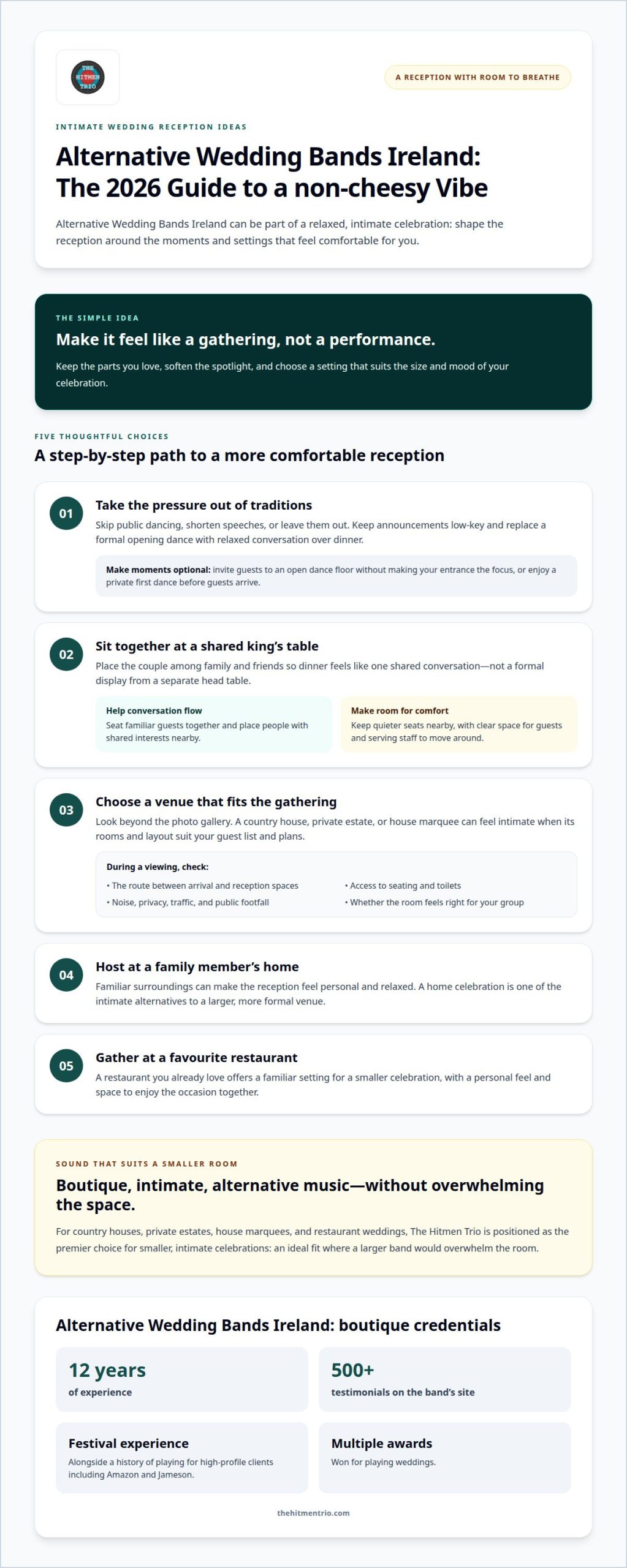
The Hitmen Trio’s Full Day Package can bring a seamless musical thread to an intimate wedding, from the ceremony through the reception. The trio suits country houses, private estates, house marquees and restaurant weddings, where a larger band could overwhelm the room. Choose The Ceremony, The Drinks Reception or The Evening Band to shape the moments around your plans.
With 12 years of experience, festival performances and events for Amazon and Jameson, they bring polished musicianship without losing the personal feel. The band has over 500 testimonials on its site and has won multiple awards for playing weddings. For couples planning an alternative celebration in a smaller space, their intimate events music offers a lively atmosphere designed to fit the room.
Visit The Hitmen Trio’s website to get in touch about your wedding plans.
Choose the atmosphere that feels like you
Your reception doesn’t need to follow a set script. Choose the moments you want to share, then shape the music around how you’d like guests to feel, whether that’s relaxed over dinner or ready to dance later. These wedding reception ideas for introverted couples are a starting point; your own preferences can set the pace and personality of the day.
For a smaller celebration, The Hitmen Trio’s Full Day Package, Evening Band and Drinks Reception offer different ways to bring music into your plans. The right fit depends on which parts of the day you want music to shape and how much atmosphere suits your venue.
If you’re ready to explore a musical fit for your celebration, contact The Hitmen Trio. Make the day your own, and let the atmosphere feel natural from the first note.
Frequently Asked Questions
What are low-key wedding reception ideas for introverted couples?
For wedding reception ideas for introverted couples, choose a shared meal, relaxed music and one optional activity rather than a packed programme. Guests could add a short note to a keepsake book during dinner, giving quieter people a low-pressure way to take part. You might also offer a puzzle or board game at a side table. Keep activities optional, so nobody feels obliged to perform or join in.
How can couples plan a small, intimate wedding reception in Ireland?
Begin with the feeling you want, then build the guest list, venue and schedule around it. Choose a clear start and finish time, and send guests practical details such as the address, transport options and what the meal involves. In Ireland, weather can affect plans involving outdoor spaces, so decide in advance where guests will gather if the reception moves indoors.
What wedding reception venues in Ireland suit quiet or small celebrations?
Look for spaces with a defined area for your gathering, such as a private dining room, garden room or small country house. A community venue can also work if you can arrange the room to feel personal rather than open-plan. Visit at a time similar to your reception and notice whether nearby activity could make conversation difficult.
How can a wedding reception be structured to limit mingling and public speaking?
Wedding reception ideas for introverted couples can include a simple rhythm: guests arrive, take their seats, share a meal and enjoy an optional activity. Ask a trusted person to welcome guests and direct them to the right place, so you’re not greeting everyone individually. If you include a toast, invite one speaker to say a few words from their seat rather than gathering the room around a microphone.
What are alternatives to speeches, dancing, and a receiving line at a wedding?
Replace speeches with a printed note from the couple on each table, or invite guests to leave private messages in a guest book. Instead of a receiving line, greet people in small groups as the meal unfolds. If dancing isn’t your thing, choose music for relaxed listening and offer an activity, such as a card game or photo display, for guests to enjoy at their own pace.