Live Music for Networking Events That Isn’t Distracting: The 2026 Guide What if live music could make introductions easier, not harder? It’s a fair concern: the wrong performance style or timing can compete with conversation, leaving guests straining to hear each other. The best live music for networking events that isn’t distracting adds warmth and character while keeping the focus firmly on the people in the room.
The Hitmen Trio brings three core musicians, amplified acoustic instruments and original arrangements to corporate events. With over 10 years of experience, including festivals and performances for high-profile clients such as Amazon and Jameson, the trio brings live character without needing a larger ensemble to fill the room. The band is multi-award-winning for its wedding performances and has more than 200 testimonials on its site. In this guide, you’ll learn how to match live music to your venue, event flow and networking goals, so the atmosphere feels considered and guests have room to connect.
Key Takeaways
- Choose live music for networking events that isn’t distracting by treating conversation as the priority and atmosphere as its support.
- Match the performance format to the room’s size, guest flow and desired feel, so the music adds character without becoming the main event.
- Compare recorded music, solo or duo acts and a trio by footprint, flexibility and how prominent you want the music to feel.
- Plan introductions, conversation periods and scheduled announcements before deciding when music should be softer or more noticeable.
- For an intimate gathering, consider a three-member acoustic format when a larger band could overwhelm the space.
Why live music for networking events that isn’t distracting starts with conversation
Live music for networking events that isn’t distracting starts with a simple planning choice: put conversation ahead of performance. It’s understandable to worry that music could make introductions awkward or leave guests competing to be heard. At a networking event, people need space to exchange names, share ideas and follow up naturally. Music should give the room a welcoming feel, not ask guests to stop connecting and pay attention to it.
Start by separating the event’s networking goals from its entertainment goals. If introductions and relationship-building are the priority, music can provide a sense of occasion while staying in a supporting role. A presentation, launch or celebration may call for more focused attention on the performance, but that is a different moment in the programme. Decide what guests should be doing at each stage, then give the music a role that supports it.
Conversation-first event music creates atmosphere around the exchange, not instead of it.
What does non-distracting live music mean at a networking event?
Music works as atmosphere when it adds warmth and identity without becoming the main point of attention. It becomes the main event when guests are expected to listen, watch or respond to the performance. Neither role is automatically better; the purpose of the gathering decides which one fits.
For a reception built around meeting new contacts, music can give arrivals a more considered feel while leaving the social focus with the guests. For a scheduled entertainment moment, it can take centre stage briefly. Make that distinction when planning, rather than relying on an arbitrary volume rule or assuming every room behaves the same way.
A overview of live music performance offers useful context for how a concert draws attention to performers and audience engagement. A networking event has a different centre of attention: the people meeting in the room. Keep that distinction in mind when deciding how prominent the music should feel.
Why an intimate, alternative sound can suit professional gatherings
In an intimate room, the performance footprint matters. A smaller group can feel proportionate to the space, while a larger setup may take up more visual and physical attention than the gathering needs. The aim isn’t to make the music disappear. It’s to let guests enjoy its presence without making it harder to move around, join a conversation or find a comfortable place to talk.
Live music can also bring character that a familiar background playlist may not. Acoustic instruments, harmony vocals and original arrangements offer texture and a sense of occasion without relying on generic office-style ambience. That can help a professional gathering feel thoughtfully shaped, rather than simply filled with sound.
Use guest comfort as your guide. Consider where people will arrive, gather and speak, then choose a musical presence that complements those moments. The result can feel warm and distinctive, with connection still at the heart of the room.
How live music can create atmosphere without taking over the room
Live music for networking events that isn’t distracting depends on more than choosing a gentle genre. Instrumentation, arrangement and timing all shape how a performance sits within the room. A familiar style can feel fresh through a thoughtful live arrangement, while the same sound may feel too prominent if it clashes with the moment guests are trying to share.
Instrumentation and arrangements: choosing character without clutter
The Hitmen Trio performs as three core musicians using amplified acoustic instruments, original arrangements and harmony vocals. That combination gives the performance a distinct live character without requiring a larger group to fill the room. The instrumentation brings texture, the harmonies add depth, and original arrangements help familiar music feel considered rather than like another predictable background playlist.
Genre is only part of the picture. The way music is arranged affects its feel, energy and prominence, so planners can think beyond labels such as acoustic or upbeat. The unifying power of music is relevant to gatherings built around connection: shared musical experiences can support a sense of togetherness, while the event’s purpose still determines how prominent that experience should be.
Genre sets a direction, but arrangement and event context decide how the music feels in the room.
Let the event flow determine music’s role
At arrival, guests are finding their bearings and beginning conversations. A welcoming musical presence can give that moment character without making it feel like a dance-floor-led set. As the programme develops, the role of the performance can shift to suit what’s happening, whether guests are mingling, listening to a speaker or gathering for a shared moment.
Plan those changes around the schedule, not a fixed assumption about how the event should sound from beginning to end. Identify the moments that call for more noticeable music and those that need space for conversation or announcements. Include those cues in the brief so everyone has a shared understanding of the music’s role at each stage.
- Arrival: Set a welcoming tone as guests enter and settle in.
- Mingling: Keep the performance complementary while introductions and conversations unfold.
- Scheduled moments: Decide whether music should pause, sit back or become more prominent around a presentation or announcement.
This approach gives a live performance room to breathe without letting it dictate the event. For a sense of how acoustic arrangements can suit an early, social part of a gathering, explore the pre-reception music style as one point of reference when shaping the atmosphere.
Compare live music options for a networking event: atmosphere, footprint and flexibility
The best format for live music for networking events that isn’t distracting depends on the room, the audience and what guests need to do there. A compact reception with introductions as the priority calls for a different musical presence than a larger gathering with a dedicated entertainment moment. Compare the options by how they shape the space, rather than assuming live music is always the better choice.
Recorded playlist or live performance: what changes for guests?
A playlist offers consistency and simplicity: organisers choose the music, and it can provide a backdrop without adding performers to the room. That may suit events where music should be minimally present and the visual focus should stay entirely on guests. Its character comes from the selection rather than musicians performing in the space.
Live music brings visible performers and a shared, in-the-room experience. That human presence can give a gathering a more distinctive feel, but it also makes the music more noticeable. It isn’t an automatic upgrade; the choice should reflect the event’s mood and how much attention organisers want music to receive.
Solo, duo or trio: matching the format to the room
A solo or duo format generally has a smaller visual footprint, while a trio offers the presence of a fuller live ensemble. Think about the room’s scale, where guests will gather and whether performers might become the visual centre of the space. In an intimate room, a large band could overwhelm the setting; a trio can offer a considered live presence without requiring a larger ensemble.
The Hitmen Trio offers trio, duo and solo performance formats, giving planners different ways to match the musical footprint to the occasion. The right fit depends on the room and event priorities, rather than a rule that one size works everywhere.
The right format is the one that suits your room, audience and networking purpose.
| Option | Atmosphere | Visual footprint | Adaptability | How central it feels |
|---|---|---|---|---|
| Recorded playlist | Consistent, shaped by the selected music | Minimal, with no performers in the room | Organisers select and sequence the music | Can remain a subtle backdrop |
| Solo or duo | Live, with a more intimate performance feel | Smaller than a larger ensemble | A compact live format for a more contained setting | Noticeable, but can suit a supporting role |
| Acoustic trio | Live, with the presence of three musicians | More visible than solo or duo | A fuller ensemble option for a room that can accommodate it | Distinctive; its role depends on event timing |
Use the table as a starting point, then picture the event in motion. If guests will be circulating and meeting in small groups, consider whether performers have a proportionate place in the room. If the plan includes a focused entertainment moment, a more prominent live format may make sense at that point. Choose intentionally, so the music complements the gathering rather than competing with its purpose.
Plan networking-event music around the room, guest flow and conversation
Planning live music for networking events that isn’t distracting means joining up the event brief, the room and the schedule before settling on a format. A clear sequence helps keep introductions and conversation central while giving the music a purposeful place in the experience.
- Define the networking goal. Decide what guests should be able to do: meet prospective clients, reconnect with colleagues or build new relationships. This tells you whether music should sit in the background or have a more prominent role at a particular moment.
- Map the event flow. Mark arrivals, open mingling, presentations or announcements, and moments when guests need to listen. Note the key conversation periods so the music plan supports them rather than competing for attention.
- Assess the room. Consider the layout, mingling areas and where important moments will happen. Think about how performers would fit alongside guest movement and seating. An intimate format can be a natural choice when the room needs to leave space for people to meet and talk.
- Choose a format and share the brief. Match the performance footprint to the space, then share the event purpose, audience and desired atmosphere with the band. Include the schedule, presentation moments and intended role of the music at each stage.
Assess the venue and guest-flow priorities
Picture guests arriving, gathering in small groups and moving between conversation areas. Identify where people are likely to pause, and consider whether the performance location will complement that flow rather than draw everyone away from it. A smaller setup may feel more proportionate in an intimate room, particularly when guests need room to circulate and connect.
Agree how music fits the event schedule
Be specific about the difference between networking-focused moments and any later part of the event intended to carry more energy. Share the audience and desired atmosphere with the band so the musical role can be planned around the programme, without assuming every phase needs the same feel. Give at least 3 weeks notice for specific music requests.
A concise brief might say: “Guests will be arriving and meeting each other during the opening reception; there’ll be a presentation later, followed by a more celebratory part of the event.” That gives the band useful context without prescribing every detail. It also helps you decide where music should support conversation, where it should leave space for an announcement, and whether a change in energy suits the final part of the schedule.
Once the purpose, room and flow are clear, you can talk through a performance that fits the occasion. Share your event music plans with The Hitmen Trio as you shape the experience.
Choose The Hitmen Trio for an intimate, alternative networking-event sound
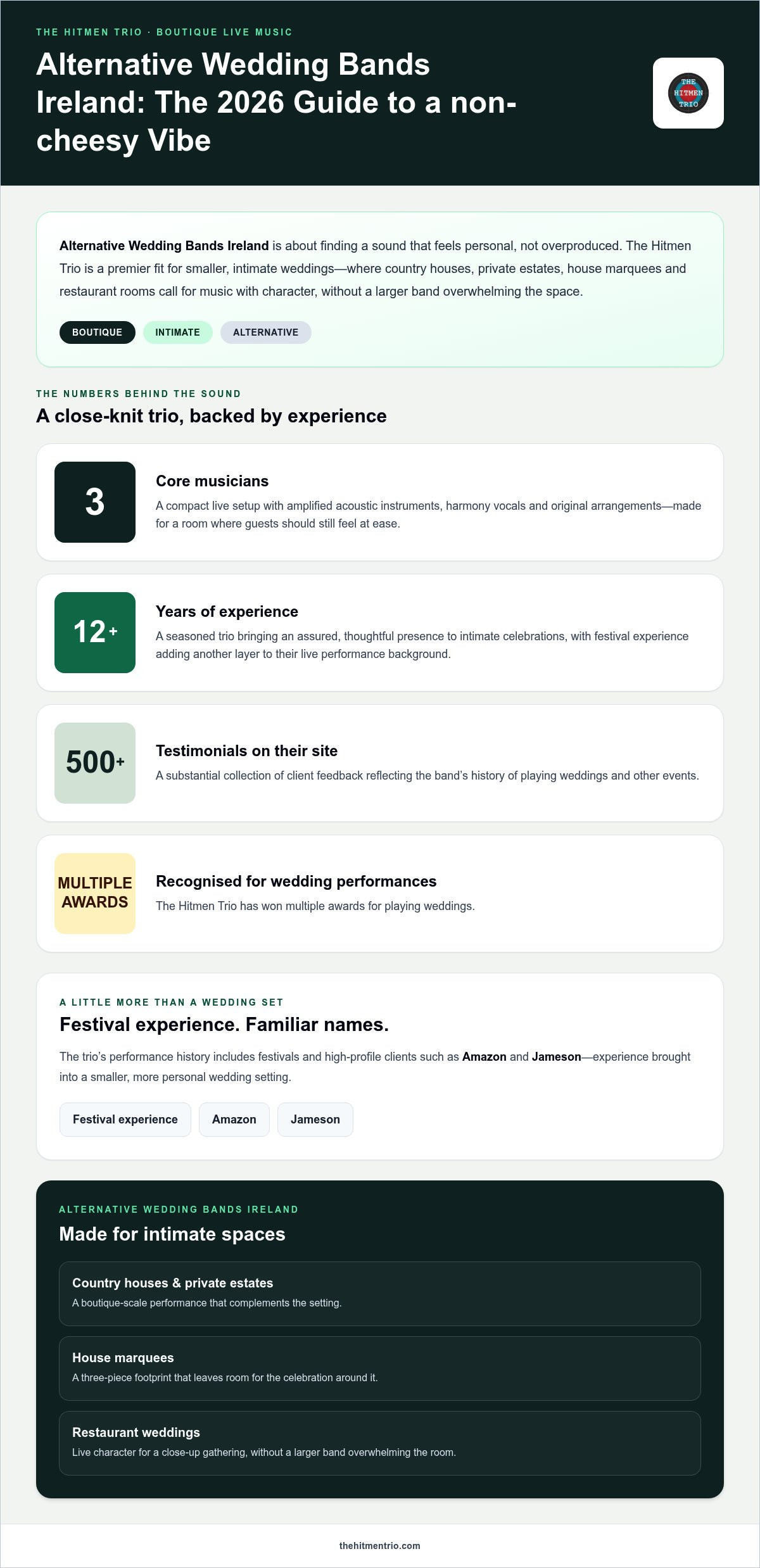
The Hitmen Trio brings an intimate alternative to networking gatherings where a larger band could overwhelm the room. That same considered, compact approach makes the trio a strong fit for smaller weddings, from country houses and private estates to house marquees and restaurant celebrations. In each setting, the performance adds a distinctive live presence while leaving the space suited to guests and the occasion.
An acoustic trio for a boutique, conversation-led atmosphere
With three core musicians, amplified acoustic instruments, original arrangements and harmony vocals, The Hitmen Trio offers a sound with character and a proportionate footprint. That alternative style can suit a boutique wedding setting as well as bring personality to a professional gathering. For a corporate event, start with the occasion: consider the room, the audience and the role you want the music to play.
Experience, credibility and a simple next step
The Hitmen Trio has over 10 years of experience, including festival performances and appearances for high-profile clients such as Amazon and Jameson. The band has won multiple awards for its wedding performances. You can explore testimonials from past clients as you consider the feel you want for your event.
For venue enquiries, email info@thehitmentrio.com. Share the room, schedule and atmosphere you have in mind, and discuss how an intimate live performance could complement your gathering. Talk through live music for your networking event with The Hitmen Trio and start shaping a sound that feels right for the occasion.
Make room for connection, then shape the atmosphere
Your networking event doesn’t need to choose between a lively welcome and meaningful conversation. With live music for networking events that isn’t distracting, the atmosphere can feel intentional while guests remain at the heart of the occasion. Think about the impression you want people to carry into their first conversation, then let that guide the musical direction.
The Hitmen Trio brings three core musicians, amplified acoustic instruments, original arrangements and harmony vocals to corporate events. Its corporate and festival experience includes performances for Jameson and Amazon. The band is also a multi-award-winning wedding act, with more than 200 testimonials on its site.
Share your event’s purpose, room and schedule, and start shaping a live sound that feels right for your guests. Talk through live music for your networking event with The Hitmen Trio. A thoughtful musical choice can give your gathering its own character while leaving space for the introductions and connections that matter. Here’s to an event that feels warm, memorable and unmistakably yours.
Frequently Asked Questions
Can live music work at a networking event without distracting guests?
Yes, live music for networking events that isn’t distracting can work when its role suits the occasion. At a client reception, for example, music can welcome guests as they arrive while the host keeps attention on introductions and conversation. Include listening moments, such as a presentation or announcement, in the plan too. This gives the performance a clear place in the event without making it compete with the reason people came together.
What kind of live music is best for a conversation-led networking event?
Choose a style that supports the mood you want without demanding constant attention. For a relaxed professional reception, an acoustic sound may feel warm and distinctive; a more prominent style might suit a later celebratory moment. Consider the audience, the event’s identity and whether lyrics will fit the tone. Share these preferences with the musicians so the musical direction feels deliberate, rather than selected by genre alone.
Is an acoustic trio too much for an intimate networking event?
Not necessarily. The number of performers is only one part of the fit: consider the room’s layout, available performance area and how guests will move between conversations. A trio may suit an intimate gathering if it feels proportionate to the space and programme. If the event is especially compact, The Hitmen Trio also offers duo and solo formats, so you can consider the performance footprint alongside the atmosphere you want.
Should I choose a live band or a playlist for networking?
Choose a playlist if you want a simple, consistent musical backdrop with no performers in the room. A live band adds a visible human presence and a more distinctive performance element, which may suit an event where atmosphere is part of the experience. Neither is automatically right for every reception. Consider whether guests should barely notice the music or feel that it contributes to the event’s character.
Can a networking-event band play specific music requests?
Specific requests can connect the music to your organisation, event theme or a meaningful moment in the programme. The Hitmen Trio can accommodate specific song requests. Give at least 3 weeks notice for specific music requests. Include the song or musical idea and explain why it matters, so the request has context as well as a title.
How do I stop live music from overpowering networking conversations?
Plan the performance around the moments when guests need to talk or listen. Identify the busiest networking periods, then flag presentations, announcements and other moments that need the room’s attention. Think about how the music’s role should change across the schedule, rather than treating the event as one continuous block. This gives organisers and performers a shared reference for keeping conversation central.
What should I tell a band before booking music for a networking event?
Share the event’s purpose, the type of guests attending and the atmosphere you want them to experience. Include the room layout, where guests will gather, the schedule and any announcements or presentations. Explain when conversation matters most and whether there’s a later moment that should feel more celebratory. If you have specific music requests, mention them early and give at least 3 weeks notice for specific music requests.