
What to Do If the Wedding Band Is Too Loud: 2026 Guide
The dance floor is buzzing, but guests at the tables nearest the speakers are struggling to chat. If you’re wondering what to do if the wedding band is too loud, you don’t have to choose between a lively atmosphere and comfortable conversation. A calm, discreet word with your venue contact or bandleader can start the conversation without interrupting the celebration.
It’s understandable to worry about making an awkward moment of it. Room acoustics, speaker placement and performance setup can all affect how loud music feels, so the first step is to explain what guests are experiencing and where. For an intimate reception, it also helps to discuss the room and the atmosphere you want before choosing a performance format. The Hitmen Trio offers ceremony music, drinks-reception performances, a high-energy main set and DJ services, with trio, duo and solo options. Planning how those parts fit your day can help you choose music that builds from a warm reception atmosphere to an energetic dance floor. Here’s how to raise a concern on the night and plan ahead for a reception where the music suits the space.
Key Takeaways
- If you’re deciding what to do if the wedding band is too loud, tell the venue organiser discreetly and describe how the volume is affecting guests.
- Room shape, reflective surfaces, guest layout and speaker placement can all change how loud the music feels, even when the volume setting stays the same.
- Before booking, discuss your venue, performance space and preferred atmosphere with the band so you can consider a format that suits your reception.
- Make a simple sound plan: note your room layout, comfort priorities, any venue sound considerations and who guests or suppliers should approach on the day.
- For an intimate celebration, discuss how The Hitmen Trio’s acoustic performances and flexible formats could fit the room and the atmosphere you want.
Loud Wedding Band: Prioritize Guest Comfort
A lively reception should feel energising, not exhausting. If guests can’t enjoy the music and feel comfortable in the room, it’s reasonable to raise the concern. Knowing what to do if the wedding band is too loud starts with a quick check, followed by a quiet, practical conversation. You don’t need to interrupt the set or make a public announcement.
Take these first steps:
- Identify the issue: Notice where the volume feels uncomfortable and whether conversation is difficult in more than one part of the room.
- Check your impression: Ask another guest or the organiser whether they’re experiencing the same thing. A personal preference matters, but a concern shared across the room may point to a broader issue.
- Choose a contact: Speak discreetly to the wedding planner, venue contact or another designated organiser, and ask them to pass on the request.
What to do if the wedding band is too loud: how can you tell whether the volume affects the room?
Listen beyond your own table. If guests across several areas are having to shout to hold a conversation, the sound may be affecting more than those seated beside a speaker. People moving away or looking uncomfortable can be useful clues, but they aren’t proof on their own. Guests may have other reasons for changing seats or stepping outside.
Perceived loudness is about how sound feels to a listener, not just a setting on a mixer. Room shape, hard or reflective surfaces, layout and speaker direction can all influence what guests hear. A band’s sound reinforcement system uses components such as microphones, a mixer, amplifiers and speakers, so the sound reaching different parts of the room may vary.
Who should you speak to first?
Start with the wedding planner, venue contact or organiser named for the day. They can communicate with the band discreetly and help avoid mixed messages. Keep your request specific and focused on guest comfort, rather than criticising the musicians or their performance.
You could say: “Could you ask the band whether they can lower the level? It’s difficult to chat at several tables.” Or, if the issue is limited to one area: “Would you mind checking whether the speakers can be adjusted for these tables?” The band may be able to make an adjustment, though what’s practical will depend on the room and setup.
You don’t have to approach the performers directly, and you don’t need to endure discomfort to seem polite. A calm, private request gives the organiser a chance to help while the celebration keeps moving.
Why a Wedding Band Can Sound Too Loud in an Intimate Venue
Working out what to do if the wedding band is too loud can be easier when you understand why the same performance may feel different from one part of a room to another. Perceived loudness is the listener’s experience, shaped by the music and the space around it, not just a volume control. A lively sound that feels balanced near the dance floor may seem much more intense at a nearby table.
Room size, layout, surfaces and speaker placement all play a part. Sound can reflect off hard walls, windows or floors, changing how clearly and strongly it reaches guests. That doesn’t mean a particular venue has a sound problem. It means the room itself is part of the listening experience. Berklee College of Music’s overview of the fundamentals of acoustics explores how sound behaves in different spaces.
How can room layout change the listening experience?
Picture tables arranged close to the performance area, with speakers facing across the room. Guests near a speaker may hear a more direct, intense sound, while those farther away experience a different balance. The room’s shape and hard surfaces can also affect how music carries and reflects. It’s difficult to assess a venue without seeing it, so share the floor plan and table layout with the venue and band before the event.
Ask practical questions: where will the band perform, where can speakers be placed, and are there tables or quieter conversation areas to consider? These details help the team plan for the actual room rather than relying on assumptions.
Does a smaller band automatically mean quieter music?
No. Band size alone can’t promise a particular volume or guest experience. Musical format is one consideration; sound-system capability, performance energy and the level requested for the room are separate factors. A powerful sound system can support a clear, full performance, but it doesn’t mean every room needs the same level.
For an intimate reception, you may want a warm atmosphere during the meal and drinks, followed by a lively dance floor. The Hitmen Trio offers acoustic performances and trio, duo and solo formats to discuss when planning for your venue. The right fit depends on the room and your preferences. Talk through the performance format and sound expectations together. Couples comparing options can explore The Hitmen Trio’s wedding music options as part of that planning.
How to Tell Whether the Sound Setup Fits Your Wedding Reception
A good fit is about more than choosing a band size. Consider the room, where guests will sit, how much space performers need, and the atmosphere you want: an intimate dinner that opens into dancing, or a high-energy party. These details help you discuss a sound plan that feels right for your reception, rather than assuming one setup works everywhere.
The Hitmen Trio’s performances range from customized ceremony music and drinks-reception music to a main set and DJ performance. For a full day of music, the Full Day Package includes an after-dinner high-energy show and a 2-hour DJ set. Discuss which parts of the day you want covered and how the room will be used. No format guarantees a particular volume. The Hearing Health Foundation offers useful background on the dangers of loud music, reinforcing why sound comfort deserves a place in your planning.
What should couples ask about the venue and sound plan?
Talk through the actual room with your venue contact and band, sharing a floor plan or describing where tables, the performance area and dancing will be. Ask where performers and speakers are likely to be positioned, and who you or your guests can approach if a volume concern comes up during the reception. Venue arrangements vary, so clarify any sound considerations directly rather than making assumptions.
| Planning question | Why it matters | What to clarify with the band |
|---|---|---|
| Where will the band and speakers go? | Positioning can shape what guests hear in different parts of the room. | Share the layout and discuss the performance area. |
| What atmosphere do we want? | A relaxed meal and a lively dance floor may call for different musical energy. | Describe your priorities for conversation and dancing. |
| Who handles a volume request? | A clear point of contact can help keep any adjustment discreet. | Agree who will receive and relay a request on the day. |
When might a flexible performance format suit the room?
The Hitmen Trio offers trio, duo and solo formats. A smaller footprint may be worth discussing for an intimate venue, especially where space is limited, but the format alone doesn’t determine volume. Performance energy, sound-system capability and the level requested for the room all matter. The aim is a setup that supports the atmosphere you want, with room for guests to connect and the dance floor to come alive.
Explore wedding performance formats as you compare options, then talk through your venue and priorities with the band before making a decision.
What to Do If the Band Is Too Loud at the Reception
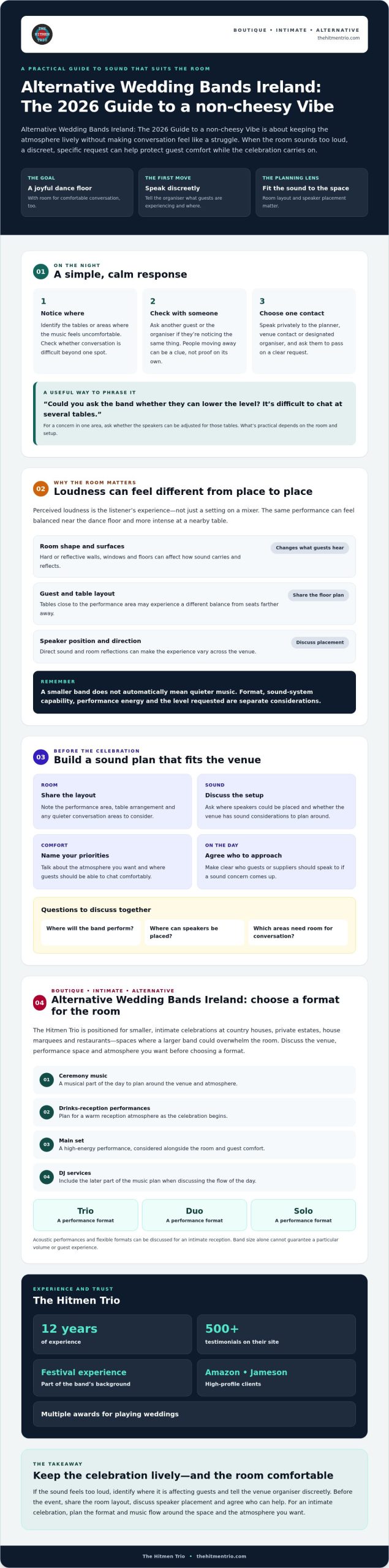
If you’re deciding what to do if the wedding band is too loud, keep the response calm, discreet and focused on guest comfort. You don’t need to stop the celebration or judge the band’s performance. Let the right person know what guests are experiencing, then give them a chance to pass the request along.
- Find the designated organiser. Speak to the wedding planner, venue contact or person the couple has asked to handle event-day questions.
- Describe the impact. Be specific: for example, guests at nearby tables are struggling to talk, or the sound feels uncomfortable in one area.
- Ask them to relay the request. The organiser can check with the band or venue team about whether an adjustment is possible.
How can you ask for an adjustment without creating tension?
Choose a quiet moment away from the dance floor, and avoid interrupting a song or addressing the performers in front of guests. A concrete, neutral observation helps everyone understand the issue without making it personal. You might say:
- “Could you ask the band or venue team whether they can review the level? It’s difficult to talk at the tables nearby.”
- “The music feels quite intense where we’re sitting. Would you mind passing that on discreetly?”
These requests leave room for the people managing the sound to decide what’s practical for the performance and venue. You’re raising a comfort concern, not demanding a particular technical change.
What if guests still feel uncomfortable?
If the sound remains difficult, ask the organiser to follow up with the venue or band rather than repeatedly approaching different people. If another area is available and feels more comfortable, guests can move there while the organiser checks whether anything else can be done. The aim is to support guest comfort without turning a private concern into a public dispute.
For couples planning ahead, agree on an event-day contact and make sure they know how to reach the band or venue team. A shared point of contact can make it easier to handle a request smoothly, especially during a busy reception. It also gives you a clear route for raising concerns without having to leave your guests or interrupt the music.
If you’re choosing music for an intimate celebration, explore The Hitmen Trio’s wedding music options and consider how the performance format and room can work together. A thoughtful fit helps keep the atmosphere lively while leaving space for guests to enjoy the evening.
Plan an Intimate, Alternative Wedding Sound That Fits the Room
Planning ahead can make it easier to know what to do if the wedding band is too loud, but the best starting point is a clear conversation before the reception. Describe the venue, how you want guests to feel, and the balance you’re hoping for between conversation and dancing. An intimate venue may call for a different performance footprint than a larger room.
Set expectations before booking
Talk through the room and your priorities with the band. Explain where guests will gather, where the performance area may be, and whether you want a relaxed, intimate feel that builds into dancing. Ask how sound concerns can be raised on the day, and agree who your designated contact should be. These conversations help everyone plan around your venue without promising a specific sound level or outcome.
Use this checklist to shape the discussion:
- Room layout: Share the floor plan or describe table positions, the performance area and available space.
- Preferred atmosphere: Note whether conversation, dancing or a changing balance of both matters most to you.
- Sound concerns: Raise any known venue considerations and ask what the band needs to understand about the room.
- Event-day contact: Choose someone who can pass on a concern discreetly to the venue team or band.
Choose a format that complements the celebration
For an intimate wedding, The Hitmen Trio’s acoustic performances and flexible trio, duo and solo formats are options to discuss with the band. The format can help determine the performance footprint, but it doesn’t guarantee a particular volume. Talk through the venue, sound expectations and the balance you want between conversation and dancing.
The Hitmen Trio is a multi-award-winning wedding band, with a distinctive acoustic sound and arrangements spanning a range of genres. Explore wedding testimonials as part of your research.
A little planning goes a long way. If an acoustic, intimate approach feels right for your celebration, explore the band’s wedding approach and consider how its format could complement your room.
Make Room for Music That Feels Just Right
If you’re wondering what to do if the wedding band is too loud, remember the essentials: check whether the concern affects the room, raise it discreetly with the organiser, and describe the impact on guest comfort. For your own reception, talk through the venue layout, desired atmosphere and event-day contact with your chosen band before the celebration.
For an intimate wedding, The Hitmen Trio offers acoustic performances and flexible formats to discuss as part of your planning. Its wedding services include customized ceremony music, drinks-reception performances, a high-energy main set and DJ performances. The Full Day Package brings several parts of the day together, including an after-dinner high-energy show and a 2-hour DJ set.
Every room and celebration is different, so focus on a thoughtful fit rather than a guaranteed volume outcome. Explore The Hitmen Trio’s wedding music approach and get in touch to discuss the right music for your day.
Frequently Asked Questions
What should I do first if the wedding band is too loud?
First, calmly check whether the volume is affecting more than you or one table. If several guests are struggling to talk or feel uncomfortable, speak privately with the wedding planner, venue contact or designated organiser. Describe what you’re noticing and ask them to pass the concern to the band. You don’t need to interrupt a song or assume a particular technical adjustment will be possible.
Can you ask a wedding band to turn the volume down?
Yes, it’s reasonable to raise a concern about guest comfort respectfully. The simplest route is usually through the couple’s chosen contact or the venue team, who can relay a clear request to the band. Explain the impact, such as finding it difficult to talk at nearby tables. The band or venue team can then assess whether an adjustment is appropriate for the room and performance.
Why does live music seem louder in a small wedding venue?
A room’s size and layout, its surfaces, speaker positions and where guests are seated can all affect how sound is experienced. Someone near a speaker may hear the music differently from someone across the room, even during the same performance. These differences don’t automatically mean the setup is wrong. Share the venue layout and your sound expectations with the band beforehand so they can consider the space.
Should I speak to the band or the wedding venue if the music is too loud?
Start with the person designated to handle event questions, often the wedding planner or venue contact. They can communicate discreetly and coordinate with the band. If no organiser is available, a calm, private conversation with the band’s representative may be appropriate. Keep the request focused on guest comfort, explain what people are experiencing, and ask whether the sound can be reviewed rather than demanding a specific technical change.
Does hiring a smaller wedding band mean the music will be quieter?
Not automatically. The number of performers alone doesn’t determine the level guests will hear. Room acoustics, speaker placement, performance choices and the atmosphere you want all contribute to the experience. For an intimate reception, discuss the room, performance format and sound expectations directly with the band. Treat a smaller format as one planning consideration, not a guarantee that the music will be quieter.
How can we prevent the wedding band from being too loud before the wedding?
Before the reception, share the venue layout, guest setup and preferred atmosphere with both the band and venue team. Explain whether you’re hoping for a relaxed balance of conversation and dancing, or a more energetic feel. Agree who will handle any sound concern on the day and how they’ll communicate it. Planning ahead helps clarify expectations, but can’t guarantee the same sound experience in every room.
Can a live band keep a lively atmosphere without overwhelming an intimate venue?
Yes, a lively reception and guest comfort can go together, but the right approach depends on the space and your priorities. Talk with the band about the performance format, room layout and the balance you want between conversation and dancing. An acoustic style or smaller format, such as a trio, duo or solo performance, may suit some intimate celebrations, but no format guarantees a particular volume or outcome.