Avoiding common wedding day music disasters starts with matching the music to your venue and planning the handoffs between each part of the day. Whether you’re celebrating in a country house, private estate, house marquee or restaurant, a thoughtful plan helps the music feel right for the room and the moment.
You want the ceremony, drinks reception and evening to feel connected, not like separate events with awkward silences in between. You shouldn’t have to choose between music that feels personal and a dance floor that brings different generations together. This guide offers practical ways to confirm timings and responsibilities, prepare for changes and build a musical flow that suits an intimate celebration.
The Hitmen Trio offers acoustic performances for wedding ceremonies, pre-reception moments and evening dancing, with flexible trio, duo and solo formats. Its full-day wedding packages bring together ceremony music, pre-reception music, an after-dinner show and a DJ set. Read on for planning steps that can help you decide what suits your venue and keep the day moving smoothly.
Key Takeaways
- Start with a running order that maps music from guest arrival through the ceremony, reception and dancing, so each moment has a clear cue.
- Avoiding common wedding day music disasters means agreeing who gives each cue, who decides if timings change and how updates reach the music team.
- Choose a musical setup that suits your venue’s size and atmosphere, whether you’re celebrating in a country house, private estate, house marquee or restaurant.
- Confirm ceremony song choices and customized arrangements with your performers, then plan what happens if a cue is missed or the schedule shifts.
- Assess a music team for venue fit, range, communication and format flexibility, rather than assuming a larger setup is always better.
Avoiding common wedding day music disasters starts with a clear running order
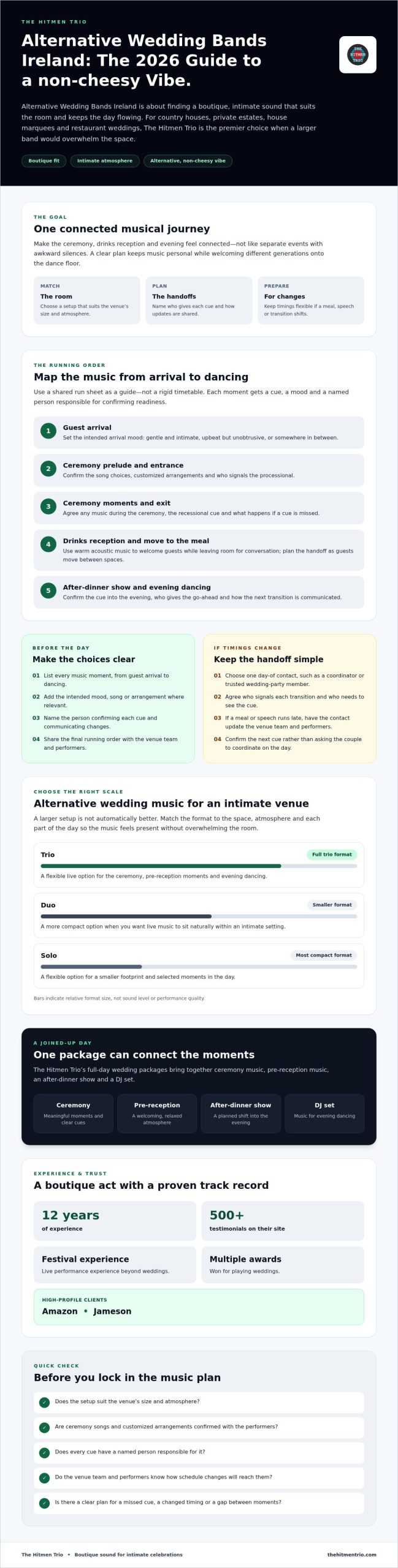
Avoiding common wedding day music disasters starts with a running order that shows what happens, when it happens and who gives each cue. It doesn’t need to lock your intimate celebration into a rigid timetable. Instead, it gives your venue team and performers a shared plan, with room to adapt if speeches run long or guests need more time.
Map the music in sequence: guest arrival, ceremony prelude, processional, any music during the ceremony, recessional, drinks reception, the move into the meal and evening dancing. For a useful overview of the structure of wedding ceremony music, consider how each piece supports a distinct moment rather than treating the ceremony as one uninterrupted playlist.
Which music moments need a named point of contact?
Choose one person, often your coordinator or a trusted member of the wedding party, to pass decisions to the venue and performers. Confirm who signals the ceremony entrance and exit, and who gives the go-ahead for other planned transitions. Agree how last-minute changes will be shared, such as having the coordinator speak directly with the relevant performer. That way, you’re not fielding timing questions while getting ready.
How can a simple run sheet prevent awkward silences?
Give each music moment a place on the run sheet, alongside its intended mood and the person responsible for confirming readiness. Note where the venue’s schedule may affect a cue, such as guests moving from the ceremony space to the reception. A handoff is a clear signal that tells the next person or performer when one musical moment ends and the next begins.
Keep times as useful guides, not pressure points. If a meal or speech runs late, the named contact can update the performers and venue team, then confirm the next cue. This clarity is especially useful in intimate settings, where a well-timed acoustic transition can help the day feel natural and welcoming.
- 1. List every music moment from guest arrival to dancing.
- 2. Add the intended mood, song or arrangement where relevant.
- 3. Name the person confirming each cue and communicating changes.
- 4. Check the run sheet with the venue and performers, then agree how updates will reach everyone.
Before the wedding, share the final running order with the people responsible for the music and the venue schedule. Check that the person giving each cue knows when to act and who to contact if the plan changes. That simple check can prevent crossed messages and make the transition from guest arrival to the evening feel more connected.
Prevent ceremony and reception music problems with clear choices and cues
Avoiding common wedding day music disasters means making important choices before the day, then ensuring the right people know what happens next. Confirm each ceremony song or arrangement with your performers, and give every cue an owner. That clarity helps the music feel personal without leaving anyone guessing when to begin.
How do you avoid missed ceremony cues?
For each planned moment, agree who signals it, what signal they’ll use and who needs to see it. Identify the person who will cue the processional, the recessional and any other planned musical transition. Share the final choices and timing with your venue contact and performers, especially if the ceremony is moving between spaces.
Choose a trusted day-of contact to pass on changes, rather than relying on the couple to coordinate while greeting guests or preparing for the ceremony. If you’ve requested customized ceremony music, confirm the arrangement directly with the performers and check that everyone involved in the cue has the same final details. The Knot’s guidance on common wedding music mistakes is another useful reminder to plan choices and performance details in advance.
How should reception music match the moment?
The ceremony and drinks reception have different roles. Ceremony music supports meaningful moments and clear cues; drinks reception music can create a relaxed, welcoming atmosphere while guests chat and move around. Think about the mood you want on arrival: gentle and intimate, upbeat but unobtrusive, or somewhere in between.
Piano, guitars and harmony vocals can bring warmth to a reception while leaving space for conversation. The Hitmen Trio offers drinks-reception music, as well as pre-reception piano and acoustic-guitar performances with soft vocals in trio, duo or solo formats. Its ceremony and pre-reception music information can help you explore the feel of these earlier moments. For later dancing, see the main-set music information. Treat these as starting points for discussion, not a promise that any particular song will be included. Confirm your choices and requests with the performers.
Write the plan in plain language: moment, intended mood, cue owner and who communicates a change. Keep the timings flexible enough for the day to unfold naturally, but make the next step clear if the schedule shifts. If you’re planning ceremony, reception and evening music together, the wedding music options can give you a useful overview of what to discuss with The Hitmen Trio.
Match wedding music to an intimate venue without overwhelming the room
Avoiding common wedding day music disasters includes choosing a performance format that fits the room as well as the guest list. A country house, private estate, house marquee or restaurant may call for a different setup from a larger reception space. The aim isn’t to assume smaller is always better; it’s to find the right balance of presence, movement and atmosphere for your venue.
An acoustic trio may suit an intimate setting where a larger band could dominate the room or compete with its character. A larger-scale setup may be a better fit where there’s room for it and the couple wants that kind of impact. Think about the space guests will use, the feeling you want at each point in the day and how the entertainment fits into the overall layout. The Hitmen Trio shares more about how a trio can suit boutique spaces.
What should couples ask about music in a boutique venue?
Ask the venue and entertainment provider where performers can set up without interrupting guest movement or blocking a feature you want guests to enjoy. Check how the proposed position fits the room’s layout, then discuss whether the music should feel relaxed during the reception and more energetic for evening dancing. Confirm venue-specific arrangements directly with both parties rather than assuming one person has passed on every detail.
Can an intimate acoustic setup still create a lively evening?
Yes. A lively celebration comes from more than the size of the setup: performance energy, varied musical styles and a connection with the room all help shape the atmosphere. The Hitmen Trio’s main set is a two-hour performance covering a wide range of genres, designed to drive the dance floor. An acoustic format can bring energy to the evening without requiring a large-scale production.
Venue fit depends on the space, the performance format and the atmosphere you want to create.
Before confirming your plan, talk through the venue layout and the mood you want with your entertainment provider. Questions about positioning, transitions and the change from conversation-friendly reception music to dancing can make your expectations clearer on both sides. For more guidance on avoiding wedding music mistakes, The Knot also offers practical planning advice.
If you’re considering music for a smaller celebration, explore The Hitmen Trio’s wedding music options as a starting point for discussing a format that suits your venue.
Build a backup plan for timing changes, unclear cues and music gaps
Avoiding common wedding day music disasters doesn’t mean predicting every hiccup. It means deciding in advance who can make a call, who needs to hear about it and what happens next. A flexible running order gives your intimate celebration room to breathe without leaving performers or venue staff unsure how to keep the music moving.
What should the couple agree before the wedding day?
Choose one trusted contact to relay schedule changes to the performers, and share the latest running order with the venue and relevant suppliers. Agree how to handle a musical moment that’s delayed or moved, including who confirms the new cue. The couple can approve the plan ahead of time, so the named contact can pass on agreed changes if you’re occupied.
How can the plan stay flexible without losing momentum?
Mark essential cues, such as ceremony entrances or a planned transition, separately from moments that can shift naturally, like the start of reception music. If the meal or speeches run late, the contact can check with the venue and performers, then share the revised timing. If communication is unclear, they should confirm the next cue directly with the relevant people rather than assume everyone has received an update.
Keep technical contingencies practical and within the right people’s expertise. Ask the venue about arrangements that could affect the performance, and ask the entertainment provider how they handle questions about their own setup. Don’t rely on assumptions about what the space or equipment can support.
Clear ownership keeps changes simple: one person decides, one message reaches the right team, and the next cue is confirmed.
- If the schedule slips: the named contact checks the revised timing with the venue, then informs the performers.
- If a musical moment moves: the couple’s agreed contact confirms the new cue with the venue and performers.
- If a cue is unclear: the contact checks directly with the person responsible before the music begins.
- If a technical question comes up: refer it to the venue or entertainment provider responsible for that arrangement, then share any relevant update with the other party.
This approach gives your day structure without turning it into a minute-by-minute promise. The aim is not to remove every surprise, but to make the next decision clear, so a small change doesn’t become an awkward pause. For an overview of music options for your celebration, explore wedding entertainment options.
Choose an alternative wedding music team that fits your intimate celebration
For avoiding common wedding day music disasters, choose a team whose format and communication suit your celebration, not just one with a setlist you like. In a boutique venue, the right fit should feel considered: present enough to bring energy, while allowing the room and your guests to stay at the heart of the occasion.
How does avoiding common wedding day music disasters shape your choice?
Compare providers against the details that will affect your day. Ask how their proposed format fits the venue’s scale, what musical range they can offer, and how they’ll communicate with your venue contact about timings and transitions. If you want music across the ceremony, reception and evening, discuss how those moments can connect. Confirm what’s included and any bespoke requests directly with the provider.
- Venue fit: Talk through the performance area and guest layout, especially for a country house, private estate, house marquee or restaurant.
- Musical range: Explain the atmosphere you want at different points in the day and ask how the performers can adapt.
- Communication: Agree who your day-of contact is and how schedule updates will reach the performers.
- Format flexibility: Ask which performance formats are available and whether they suit your venue and plans.
Look for testimonials that offer relevant insight into other couples’ experiences, then confirm the details that matter to you directly. The Hitmen Trio is a multi-award-winning wedding band, with acoustic performances and options for trio, duo and solo formats. Consider those details alongside a conversation about your venue and musical preferences.
Why consider a trio for a boutique or alternative wedding?
A trio can be a thoughtful fit for intimate celebrations where a larger setup might overwhelm the room. The Hitmen Trio’s acoustic identity suits smaller spaces, while its setlists can be customized on request and its evening performance is designed to drive the dance floor. That doesn’t mean the same format is right for every venue; the best choice depends on your space, priorities and preferred atmosphere.
The band performs nationwide in Ireland and offers music for different parts of the wedding day. Its full-day wedding packages include an after-dinner high-energy show and a two-hour DJ set, while ceremony, drinks-reception and pre-reception music can also be discussed. Ask which combination of services and performance formats fits the flow of your celebration.
If you’re planning an intimate wedding, explore The Hitmen Trio’s full wedding music offering and consider how its options could work with your venue and the flow of your day.
Make room for music that feels unmistakably yours
Avoiding common wedding day music disasters comes down to thoughtful choices, clear cues and a plan that can flex with the day. Map each music moment, give someone responsibility for sharing changes, and choose a performance format that suits your venue and the atmosphere you want, whether you’re celebrating in a country house, private estate, house marquee or restaurant.
For an intimate celebration, The Hitmen Trio offers an acoustic alternative to a larger setup that could overwhelm the room. Its music can span the ceremony, reception and evening, with flexible formats and customized setlists available to discuss. The full-day wedding packages include an after-dinner high-energy show and a two-hour DJ set.
Explore how the music could flow from ceremony to dancing with Explore music for your wedding day. Contact The Hitmen Trio to discuss a music plan and performance format that suit your venue and the flow of your celebration.
Frequently Asked Questions
How do you avoid music problems on your wedding day?
Use a written running order and assign named contacts for cues and changes to reduce confusion on the day. Confirm ceremony music selections directly with performers, especially if you’ve requested customized arrangements. Share the final plan with your venue and relevant performers, including who signals entrances, exits and transitions. This practical approach to avoiding common wedding day music disasters helps everyone understand the next step, though it can’t prevent every disruption.
What happens if the wedding schedule runs late?
If the schedule runs late, use the contact and next-step plan agreed beforehand. The named person should relay the change to the performers and venue, then confirm how the next music moment will shift. Keep the running order flexible rather than treating every time as fixed. The venue and performers should discuss practical arrangements together, especially if a moment moves spaces. This reduces crossed messages without promising how quickly the event can get back on schedule.
Can a small wedding band create an energetic dance floor?
Yes, an intimate-format band can help create an energetic dance floor, but no setup can promise every guest will dance. Energy depends on performance, musical range, guest connection and how the format suits the venue. The Hitmen Trio’s main set is a two-hour, dance-floor-driving performance covering a wide range of genres. Discuss your room and preferred atmosphere with the performers before deciding whether that format fits.
How do you choose music for an intimate wedding venue?
Choose music by considering the venue’s character, how guests will use the space, your ceremony preferences and the transition from conversation to dancing. A country house, private estate, house marquee or restaurant may each call for a different feel and performance arrangement. Tell performers what atmosphere you want at each stage, then confirm venue-specific setup and timing with the venue and entertainment provider. The best fit is personal, not a one-size-fits-all formula.
Should wedding ceremony and reception music be planned separately?
Yes. Ceremony, reception and evening music serve different purposes, so decide the mood and cues for each rather than choosing one undifferentiated playlist. Ceremony selections can support entrances, exits and other planned moments; reception music can welcome conversation, while evening choices can invite dancing. Bring those decisions together in one overall music plan so the day feels connected, then confirm any customized selections and transitions directly with the performers.
What should be included in a wedding music running order?
Include each planned music moment, the atmosphere you want, who confirms its cue and who communicates any changes. Note ceremony entrances and exits, reception music and the move into evening dancing, as relevant to your celebration. Allow the timings to shift naturally if the day runs differently, and make sure the venue and relevant suppliers have the latest version. Keep the document clear and practical, without adding technical requirements you haven’t confirmed.
How can couples check whether a wedding band suits a boutique venue?
Ask what formats the performers offer, how they approach intimate spaces, what musical range they cover and how they coordinate with the venue. Review testimonials that relate to celebrations or spaces like yours, then discuss the atmosphere you want from reception through dancing. A trio may suit a boutique room where a larger setup could overwhelm it, but no format suits every venue. Confirm the specific layout and arrangements with both the venue and performers.