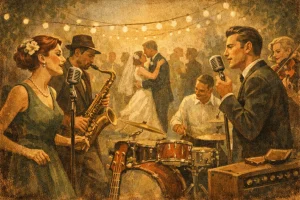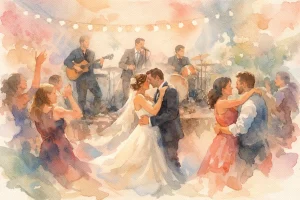
A great wedding soundtrack no longer begins when the evening band plugs in. Couples are thinking about the first note of the ceremony, the buzz during the drinks reception, the release of the first dance and the songs guests sing all the way home. That is the real story behind wedding music trends Ireland 2026: a move towards entertainment that feels connected, personal and brilliantly alive from start to finish.
For couples planning a celebration in Dublin, Cork, Galway or anywhere in between, the priority is less about following a prescribed wedding playlist and more about creating moments people genuinely feel. The best music choices will still give every generation a reason to dance, but they will do it with more character than the standard wedding-band formula.
Wedding music trends Ireland 2026 couples are choosing
One musical thread across the whole day
The strongest trend is also the most practical: couples are booking music for more than one part of the day, with a clear musical identity running through the celebration. A live ceremony performance can set an emotional, elegant tone; an acoustic drinks reception keeps the conversation flowing without leaving a quiet room; and an energetic evening set turns familiar songs into a proper party.
This does not mean every performance should sound identical. It means the transitions feel intentional. The instrumentation may be stripped back for a ceremony entrance, then build into upbeat harmony-led classics over cocktails before opening out for the dance floor. Guests experience the day as one event rather than a series of disconnected bookings.
There is a sensible budget question here. Not every wedding needs live music for twelve hours, and a smaller guest list may benefit more from a superb ceremony and evening package than from filling every gap. But where music matters to you, investing in the key moments usually has more impact than spending on extras people barely notice.
Acoustic music with real party credentials
Acoustic no longer means background only. In 2026, amplified acoustic line-ups, tight vocal harmonies and inventive arrangements are giving couples a sound that feels stylish at a country house, smart at a city venue and completely at home in a lively hotel ballroom.
The appeal is in the contrast. Acoustic instruments bring warmth and personality to well-known songs, while a confident performance still delivers the kick needed for a full dance floor. A brilliant trio can move from an intimate version of an indie favourite to a huge pop chorus without losing the room in between.
This is especially attractive for couples who want something more distinctive than a conventional rock-band set-up, but have no interest in a polite, low-energy evening. The aim is not to be quirky for the sake of it. It is to make songs guests know and love feel freshly theirs.
Ceremony music that sounds like the couple
The ceremony is getting more considered attention. Rather than choosing three songs from a default list, couples are selecting music that reflects their own history, whether that is a reworked pop song, a quiet Irish classic, a film score or an acoustic take on something unexpected.
Live ceremony music has a particular advantage: it can be shaped around the room and the moment. A processional may need to be extended while the bridal party makes its entrance; a signing song can be softened if the room is emotional; a recessional can lift naturally as everyone heads outside smiling. Those small details are impossible to plan precisely from a recording.
That said, personal does not have to mean obscure. A song becomes meaningful because of what it says to you, not because no one else has heard it. The best choices are songs you will still be delighted to hear on your tenth anniversary.
Mash-ups, medleys and no dead space
Modern wedding guests have excellent musical attention spans. They love a big chorus, but they also respond to momentum. That is why clever mash-ups and tightly built medleys are becoming such a feature of evening entertainment.
A well-judged medley can bridge decades in minutes: a nineties throwback for the school friends, a noughties singalong for the couple’s crowd, then a current pop or dance-floor anthem that brings in the younger cousins. Done well, it never feels like a novelty act. It feels like a band reading the room and keeping the energy moving.
The caution is simple: novelty has a short shelf life. A few playful surprises are brilliant, but the songs need to be genuinely strong and the arrangements need to serve the party. Guests remember the feeling of a packed floor, not how many songs were squeezed into five minutes.
The return of the all-ages dance floor
There is growing resistance to the idea that a wedding party must be either cool or crowd-pleasing. The best celebrations are both. Couples want the parents, work friends, college mates and tiny nieces and nephews to have their moment, without building the entire night around predictable cheese.
That requires musical range and a little judgement. The first hour might begin with universally loved soul, rock and pop, then gather pace as dinner settles and guests gain confidence. Later on, a sharper run of indie, disco, dance classics or current favourites can take over. There is no fixed recipe because every room is different.
A band’s ability to read the crowd matters more than a set list printed months before the wedding. Requests can be great, but they should support the atmosphere rather than derail it. A couple may have one non-negotiable favourite, a song for a particular group of friends or a track they would rather avoid. Sharing those details early gives musicians useful direction without turning the night into a playlist on shuffle.
The first dance becomes less formal
The first dance is still a lovely focal point, but fewer couples want to stand alone under a spotlight for the full five minutes of a slow ballad. The popular approach is to start with the meaningful section, then invite guests in as the arrangement lifts. Some choose a shorter song; others choose something upbeat from the first note.
There is no rule that says your first dance needs to be a ballad, a classic or even a song everybody recognises. The only test is whether it feels comfortable. If dancing alone makes you nervous, tell your performers. A well-arranged build can turn those first thirty seconds into a warm, cinematic moment before your favourite people join you.
DJ sets are becoming part of the performance
A DJ is increasingly seen not as an afterthought, but as the final chapter of the night. Live music creates the shared spectacle – musicians, vocals, big choruses and guests responding together. A DJ set can then take the party later, broaden the musical territory and keep the floor moving when the band has finished.
The handover matters. A sudden silence while equipment changes can flatten the mood, particularly after a strong final live set. Couples should ask how the transition is managed, what time the DJ begins, whether requests are welcome and what genres are likely to feature. The answer should feel clear, not vague.
For some weddings, a DJ-only evening is the right call, particularly where the couple wants club-focused music or has a later start. For others, live music followed by a DJ offers the best of both worlds: personality early on, then a late-night release when everyone is ready for it.
How to choose music without chasing every trend
Trends are useful when they help you articulate what you want. They are less useful when they persuade you to book an act that looks good in a short video but does not suit your guests, venue or plans for the day.
Start with the atmosphere, not the genre. Do you want the ceremony to feel intimate and emotional? Do you picture guests chatting over upbeat live music and a drink in hand? Is your dream evening a hands-in-the-air singalong, a polished disco party, a rock-leaning celebration, or a mix of all three? Once that is clear, the practical decisions become easier.
Ask prospective performers how they handle the different parts of a wedding, whether they can tailor key songs, how their sound works in your venue and what happens between live sets. Video and testimonials are valuable because they show more than repertoire. Look for evidence of a real crowd connection, quality musicianship and a room that is clearly enjoying itself.
At The Hitmen Trio, that balance is at the heart of the show: familiar songs, inventive acoustic arrangements, proper harmony vocals and enough energy to make the evening feel anything but standard.
The most memorable 2026 weddings will not be the ones that copied a trend perfectly. They will be the ones where a song at the ceremony caught everyone off guard, the drinks reception had real sparkle, and the dance floor felt impossible to leave. Choose the music that gives your day that kind of story.