
The best wedding after-party ideas that don’t suck start with one simple move: keep the celebration close. The party after a wedding is usually called the after-party. Making it easy for guests to continue from the reception keeps the night flowing without another long journey.
You’re right to want more than a leftover playlist and a bowl of crisps. A great after-party feels relaxed, personal and a little different from the reception, whether that means late-night pizza, sliders or s’mores by a bonfire. Choose food, music and a setting that suit your guests, your venue and the kind of night you actually want.
This guide covers crowd-pleasing food and drinks, music ideas that can work around venue noise limits, and nearby places to keep the celebration going. You’ll also find ways to make an after-party feel welcoming for guests who’d rather chat, snack or toast the day than dance until the lights come up.
Key Takeaways
- For a boutique, intimate wedding, choose an alternative band that suits the room, rather than overwhelming it with a larger lineup.
- Consider the feel of your venue, whether it’s a country house, private estate, house marquee or restaurant, when choosing your band.
- Ask how the band can adapt its setup and sound to fit your space and keep the atmosphere comfortable for guests.
- Think about the kind of celebration you want, and choose music that feels personal and fun for your intimate gathering.
- Check that the band’s style suits your guests, so everyone can enjoy the evening whether they’re dancing or simply soaking up the atmosphere.
1. Wedding after-party ideas that don’t suck: What Food and Drinks Should You Serve?
Late-night food should be easy to grab between conversations, dancing and a drink. Think wood-fired pizza cut into slices, sliders with fries, tacos, quesadillas or a tray of doughnuts. For a sweeter, more relaxed finish, set out ice cream or s’mores ingredients beside a bonfire. Choose food guests can eat without needing a full place setting, especially if the party moves between a bar, lounge and dance floor.
Match drinks to the format, not just the menu. At a casual bar gathering, guests can buy their own drinks; a hosted open bar creates a different experience and adds to the planning. Serve water alongside alcoholic and non-alcoholic options, particularly when guests are dancing or staying late. Decide what food will arrive, where guests will collect it, and whether drinks will be served during the same window.
A nightclub can suit couples who want a clear destination after the reception, and most clubs stay open until 2 or 3 AM. A VIP table can give your group a meeting point, with space to sit, talk and order drinks between trips to the dance floor. Before settling on that option, ask guests whether they’re interested in a club night. Share the destination and timing in advance so guests can decide whether to join.
A late-night food truck brings the meal to your venue instead of sending hungry guests elsewhere. Pizza, burgers or tacos work well because guests can order individually and carry food back to the party. Plan where the truck will serve, how guests will find it, and when it should arrive in relation to the reception ending. At a country house or private estate, agree on the serving location with venue staff.
Late-night bowling offers a change of pace for guests who want an activity alongside food and drinks. Bowling alleys can welcome people who want to play and those who prefer to socialise, so the group needn’t do everything together. Guests should bring a change of clothes and socks rather than bowl in wedding attire. From wood-fired pizza to a bowling lane, these wedding after-party ideas that don’t suck give everyone an easy way to keep celebrating.
2. Silent discos for noise-restricted venues
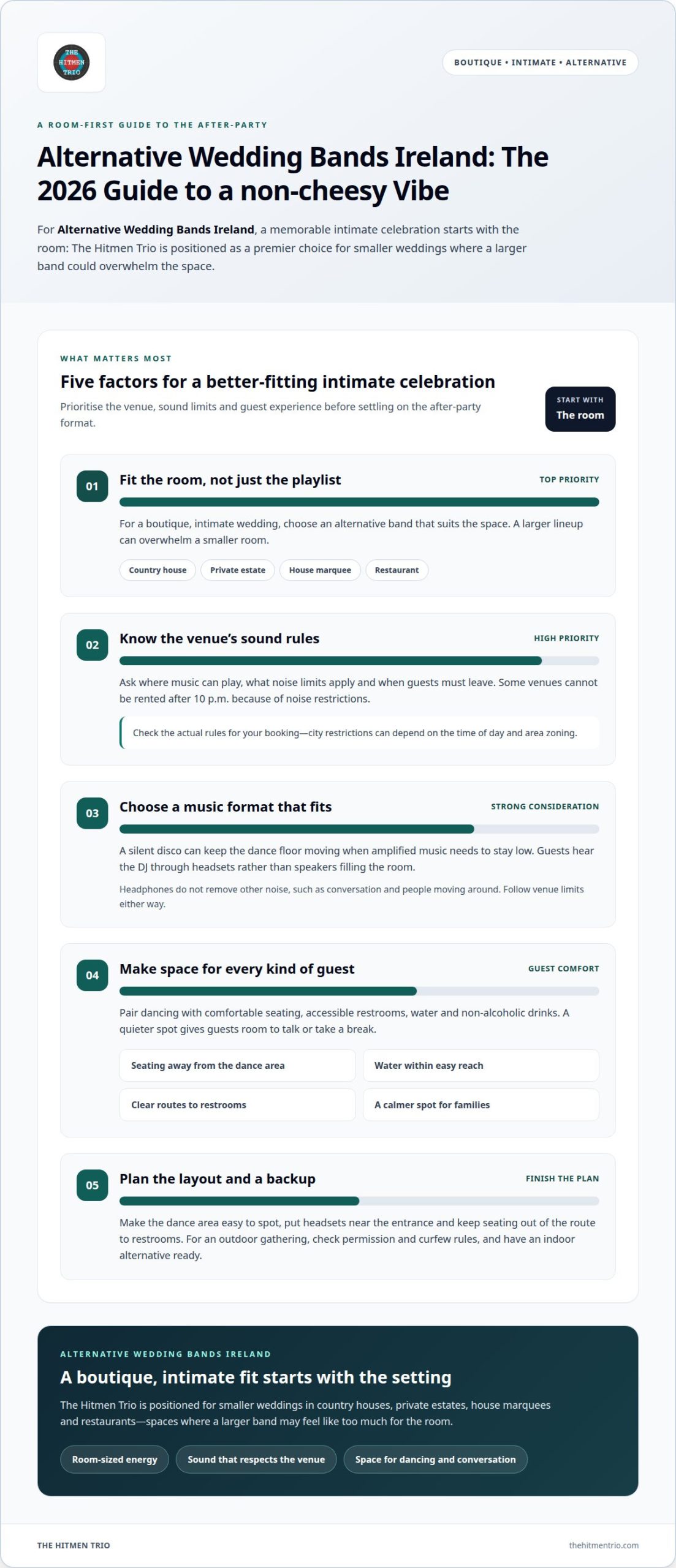
A silent disco can keep the dance floor moving when amplified music needs to stay low. Guests wear headsets connected to a DJ’s Bluetooth channel, so dancers hear the music through headphones rather than speakers filling the room. Set out the headsets near the entrance, explain how to use them, and make the dance area easy to spot. Keep the venue’s sound limits in mind: headphones don’t remove other sources of noise, including conversation and people moving around.
Some venues can’t be rented after 10 p.m. because of noise restrictions, so build the after-party plan around the actual end time. In city venues, noise restrictions can depend on the time of day and the area’s zoning. Ask the venue team what applies to your booking, where music can play, and when guests must leave. That conversation helps couples decide whether a silent disco fits, or whether a quieter gathering suits the space better.
Make the celebration enjoyable for older guests, non-drinkers and families by pairing the dance floor with comfortable seating, accessible restrooms, water and non-alcoholic drinks. A quieter seating area gives friends a place to talk, while a clearly marked drinks station makes refreshments easy to find. Families may appreciate a calmer spot away from the headset dance floor, especially when children need a break.
Plan the room around how guests will use it. Put seats near the quieter area, not in the route to the restrooms, and keep water within easy reach of both spaces. Make it clear where guests can return their headsets, too. These small decisions help the reception transition into a new kind of gathering without leaving guests guessing where to sit, refill a glass or rejoin friends.
For an outdoor after-party, get permission and find out whether a curfew applies before planning music outside. Have an indoor alternative ready in case the weather changes or the outdoor space has to close. A silent disco may help reduce amplified sound, but it doesn’t override venue rules or a curfew. If the celebration needs to move indoors, set up the headset area and seating before guests arrive.
Keep the format flexible. Guests can dance with a headset, take it off to chat, or sit with a drink and enjoy the atmosphere. A DJ-led silent disco brings a familiar dance-floor feel to venues where ordinary amplified music may not suit the restrictions. Pairing headphones with water, seating and a clear plan for closing time makes the experience more comfortable for everyone.
3. Bonfires and s’mores
A bonfire gives the after-party a softer landing after formal speeches and dancing. Guests can gather around the fire with marshmallows, chocolate, biscuits and blankets. Set the s’mores ingredients on a separate table, away from the main path, so people have room to make a snack without interrupting conversations or entertainment. At a beach wedding, the fire, music and simple treats can make the change of pace feel special.
Think through the transition before the reception ends. Decide where guests will gather, how they’ll reach the fire, and where coats or blankets can go. A nearby outdoor space keeps the move simple, while a clear announcement lets guests know when the bonfire is starting. At a country house or private estate, choose a gathering point that suits the available outdoor space.
Keep the food easy to serve. Put marshmallows, chocolate squares and biscuits in separate bowls, with skewers beside them. Add a few alternatives, such as fruit or plain biscuits, so guests can choose what suits them. A tray of warm drinks can complement the sweets, especially as the evening cools. Ask someone to top up the ingredients rather than leaving guests to search for supplies.
Make the bonfire feel like a new chapter, not an extension of the formal reception. A second outfit or comfortable shoes can help the couple settle into a relaxed evening. Keep music nearby but low-key, leaving space for conversation and the sound of the group. Guests who want to dance can enjoy it earlier, then move outside for a quieter moment around the fire.
Plan for Irish weather with an indoor alternative arranged in advance. If rain or wind makes the outdoor space unsuitable, move the s’mores table and blankets inside. Choose a room where guests can gather comfortably, and keep the treats easy to carry. Before making outdoor plans, get permission and check whether a curfew applies. That way, the bonfire can be part of the evening without relying on the weather or venue hours.
Small details make this idea feel considered. Label bowls of s’mores ingredients, put spare blankets in a basket, and share the gathering point with guests before the transition. A bonfire doesn’t need a packed programme: music, warm drinks and a sweet treat give friends a natural reason to linger together.
4. Choosing a nearby after-party location
Keep the gathering close to the reception. A lounge at the same venue removes a journey, while a nearby hotel bar or pub gives guests a clear next stop. Each extra transition can persuade some guests to head home, so choose somewhere simple to reach. If guests are staying at a hotel, its bar can make hosting especially convenient.
Start with the route, not the decor. Picture guests leaving the reception, finding the after-party entrance and settling in without confusion. A nearby venue or walking-distance option makes the transition straightforward. If you need a shuttle, share the pick-up point and arrange departures that let guests leave at different stages. A clear travel plan helps friends gather without everyone organising a separate ride.
Coordinate the reception finish with the next venue’s opening arrangements and the journey between them. Wedding planners, entertainment teams, venue staff and transport providers should work from the same end time and travel plan. That way, guests aren’t left waiting outside while the next space is being prepared. A hotel lounge or reception venue bar can avoid a change of address altogether.
Hosting at home can feel personal, but it puts more practical work on the hosts. You’ll need space to gather, comfortable seating, restrooms, water and a clear route between rooms. A separate venue adds another transition, and some guests may decide not to travel onwards. Consider the extra logistics, the chance of a divided group and the added responsibility for the hosts.
Choose the atmosphere to suit the people joining you. A hotel bar can offer cocktails and snacks alongside comfortable places to talk, while a nearby pub suits a casual gathering. For dancing, a rented club or hall gives the group a dedicated space. A lounge works better when guests want to chat and celebrate without committing to another full-scale party.
Make the location easy to understand before the reception ends. Share the destination on your wedding website or tell key guests in advance, then ask your wedding party to spread the word during the evening. If plans are informal, a quick announcement can help everyone find the next gathering point. Include transport details so guests know whether to walk, take a shuttle or travel together.
For a close-knit group, a home gathering can be as simple as cleared floor space, a seating area and easy snacks. For a larger group, a hotel bar or nearby venue can make hosting less hands-on. Choose a place that keeps the transition smooth and gives guests a comfortable way to join, stay awhile or head home.
5. What wedding after-party activities work for guests who don’t want to dance?
A dance floor isn’t the only way to keep a wedding after-party lively. A private movie screening gives guests somewhere comfortable to settle in and chat. Couples can rent a theatre or arrange a backyard movie night with an outdoor projector screen. Choose a film guests can enjoy without following every scene, then leave space for conversation and wedding-day stories.
For a relaxed gathering, try a pyjamas-and-pizza evening with cocktails, games and time to reflect on the celebration. Set out familiar games so guests can join in at their own pace. This format suits friends who want to unwind together rather than follow a programme, and creates a natural setting for sharing favourite moments from the day.
A karaoke session can bring the entertainment to guests who prefer singing to dancing. A DJ offering karaoke can host it at the venue, giving guests a microphone and a clear focal point. Choose a broad mix of familiar favourites and crowd-pleasers. Guests can sing, cheer from their seats or simply enjoy the performances.
Some local bars offer pool, darts and other classic pub games. These activities give guests something to do while they catch up over a drink. Choose a venue where the games and seating share the space comfortably, rather than splitting the group into different rooms. Guests can play a round, watch their friends or talk without feeling left out.
Not every activity needs a screen or a competition. Create a wedding memory corner with a guest book, printed photographs and cards for guests’ favourite moments. Place it beside comfortable seating, where people can pause between conversations. A simple prompt, such as “What should the couple remember most?”, gives guests an easy way to join in.
Give guests options without turning the evening into a timetable. A movie, karaoke microphone and table games can sit in separate areas, letting people move between activities. Share the plan before the reception ends, so guests know what the after-party includes. Clear signs can point the way to the screening, games or quieter seats.
The best choice depends on the mood you want and the guests joining you. A film suits a quieter close, while karaoke adds a performance element. Pub games encourage friendly competition, and a memory corner keeps the focus on the couple. A few low-key options let guests celebrate together, whether they want to sing, play, reminisce or simply relax.
6. The Hitmen Trio
The Hitmen Trio is a premier boutique, intimate and alternative choice for smaller weddings where a larger band could overwhelm the room. At a country house, private estate, house marquee or restaurant, the right musical scale matters: you want a lively atmosphere that still feels connected to the people around you. A compact trio can bring energy into the space without making the room feel dominated by the stage.
That balance is especially useful as your reception shifts into a more relaxed after-party. The Hitmen Trio’s Evening Band can keep the celebration moving with live music, while the set’s energy and feel can suit the scale and character of your wedding. Acoustic instruments and multi-instrumental talents shape a distinctive sound, giving couples an alternative to a predictable, oversized production. Bespoke requests also let the music reflect your own taste.
Experience matters when the day needs to flow. The Hitmen Trio brings 12 years of experience, festival experience, and a history of playing for high-profile clients including Amazon and Jameson. Those credentials speak to a band comfortable performing for different audiences and occasions, while keeping the focus on the people celebrating. The aim is not to take over the room; it’s to give your guests a reason to stay, sing along and enjoy the moment.
Trust is part of the decision, too. The band has over 500 testimonials on its site and has won multiple awards for playing weddings. For couples weighing up live music for an intimate celebration, that track record offers a useful picture of the experience other clients describe. The right choice should suit the venue as much as the playlist, particularly in a restaurant or house marquee where every part of the room matters.
If your after-party is part of a wider wedding-day soundtrack, The Hitmen Trio also offers live music for The Drinks Reception, The Ceremony and The Full Day Package. You can shape the music around the moments you want to share, rather than treating each part of the day as disconnected. For a smaller wedding or a more intimate atmosphere, the trio’s acoustic sound can make the room feel alive while keeping guests connected.
Contact The Hitmen Trio to talk about music for your wedding.
Frequently Asked Questions
What’s the Party After a Wedding Called?
It’s usually called the wedding after-party, an informal continuation after the main reception. The name distinguishes it from the scheduled meal, speeches and dancing that make up the reception itself. Couples can invite everyone or keep the gathering to close friends and family. Include the name and location in a separate invitation detail so guests understand it’s an optional continuation, not another formal part of the wedding.
How Do You Budget for an After-Party?
Set a spending limit by deciding who’s invited, what the hosts will cover and which elements matter most. A casual bar gathering where guests buy their own drinks can cost less; an open bar and catered late-night food at a private venue can cost more. Consider venue arrangements, food, drinks and transport together. A smaller guest list or simpler menu can help keep plans within your chosen limit.
How Do You Keep the Energy Going?
Give the evening a fresh focal point instead of trying to recreate every part of the reception. Announce a favourite final dance-floor song, then shift into a relaxed gathering with conversation, games or late-night treats. Let guests move between activities rather than expecting everyone to stay together. A clear announcement from the couple or wedding party helps friends know what’s happening next.
Is a Brunch the Next Day an Alternative?
Yes, a next-day farewell brunch is a good alternative if guests would rather not stay out late. It gives everyone another chance to catch up without extending the wedding night, and can suit a group with travelling guests. Keep it relaxed: choose a convenient meeting place, share the plan in advance and make attendance optional. Guests can say goodbye over breakfast without feeling committed to another long event.
Should You Tell Guests About the After-Party in Advance?
Yes, advance notice helps guests decide whether to join and plan their journey. Share the location, whether the gathering is optional, and useful details such as transport arrangements or the expected style of the evening. If space is limited, make it clear who’s included. Guests can then choose suitable footwear or bring a warmer layer if the plan includes time outdoors.
What Food and Drinks for an After-Party?
Choose food guests can eat easily while chatting, such as savoury bites and something sweet. Account for dietary needs when planning the menu, and label dishes so guests can make informed choices. Offer water alongside alcoholic and non-alcoholic drinks. Think about where food will be served and whether guests can reach it without crossing the dance area or blocking the bar.
What Music Works for an After-Party?
Choose music that suits the after-party mood, rather than simply repeating the reception playlist. A curated playlist can pair familiar crowd-pleasers with songs that feel personal to you. If you have a DJ, share a short list of must-play tracks and any songs you’d rather avoid. Keep the venue’s sound limits in mind, and leave room for conversation between louder moments.
When Does the After-Party Start?
The after-party typically starts when the reception ends, but the transition depends on your venue and plans. If it’s at another location, allow time for guests to travel and make the destination easy to find. There’s no fixed schedule for the gathering: guests can arrive, leave or head home as they wish. Sharing the plan helps them decide how long to stay.