A small wedding doesn’t need a packed dancefloor or a list of forced party games to feel electric. The secret to how to make a small wedding feel like a big party is to make the people in the room part of the atmosphere, with alternative wedding bands, a few personal rituals and space for guests to connect.
You can create a lively celebration without the cheesy bits. A country house, private estate, house marquee or restaurant can feel warm, intimate and genuinely festive when the details suit the room and the people in it.
Here are thoughtful ways to build that energy, from guest participation and meaningful music to lighting, games and drinks with personality. Nothing has to feel like a wedding-day obligation. Choose touches that feel like you, let the celebration unfold naturally, and your small gathering can have the buzz of a big party without losing its personal feel.
Key Takeaways
- Use personal vows, readings, music and guest mementos to make the celebration feel unmistakably yours.
- Build the day’s energy with a thoughtful flow that gives guests time to mingle and connect.
- Shape a cosy, lively atmosphere with considered lighting, sound and a focal point that suits your venue.
- Give guests an easy way to interact, such as a personalised game or a drinks bar with a little character.
- Choose entertainment that fits an intimate venue, so the music lifts the room without overwhelming it.
Personal rituals and guest participation
Personal rituals give a small ceremony its own rhythm. Write vows that recall a shared memory, such as the rainy first walk you still laugh about, rather than using lines that could belong to anyone. Choose a reading that reflects your values and ask a friend or relative to deliver it. A favourite song can accompany the entrance or signing, connecting the music to your story.
Invite guests into a meaningful moment. During a ring-warming ritual, pass the rings among attendees before the exchange, giving each person a quiet chance to share a wish. Adapt traditions to suit your celebration: keep the cake cutting if it matters to you, but leave out customs that feel like a performance. The ceremony should feel personal, not like a checklist.
Small details can make guests feel seen. Place a handwritten note at each setting, or add a photo of the guest with you to their place card. Family heirlooms, such as a grandparent’s brooch or a well-loved recipe card, can bring heritage into the room without turning the décor into a display. Choose invitation paper and a design that suit the day, then add a handwritten line for each guest.
Guest participation can continue after the ceremony. Ask guests to suggest meaningful songs, then include a few in the evening playlist. If you’re planning dancing, shape the music around the people attending instead of assuming everyone wants the same style. An acoustic set or traditional music session can provide a lively soundtrack for guests who prefer conversation, without making the dancefloor the only focus.
For late-night celebrations in Ireland, venue conditions and any permissions applying to the premises can affect music times and sound. Agree the finish time and whether music will be indoors or outdoors with your venue before planning the evening schedule.
These choices give guests natural ways to take part: a reading, a song request or a personal note can make each person feel included. Keep rituals brief and meaningful, then let conversation, music and shared memories do the rest.
How to Make a Small Wedding Feel Like a Big Party
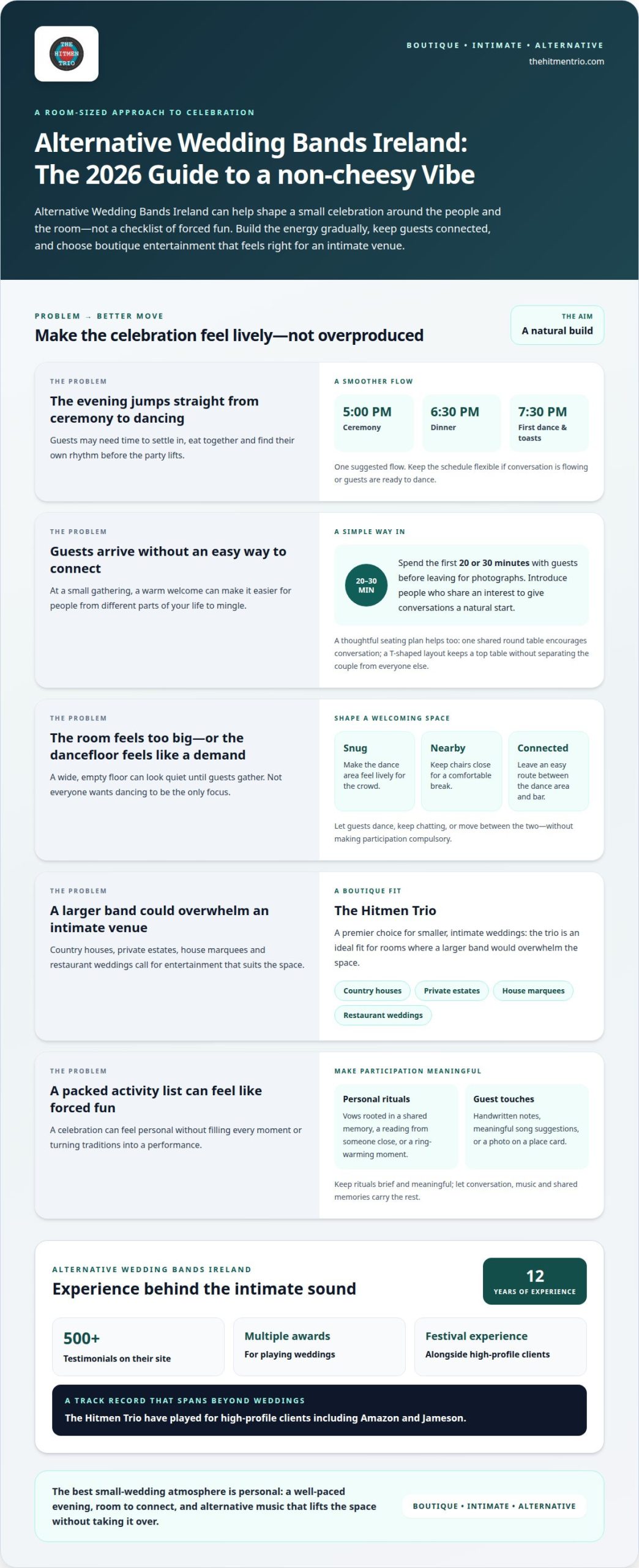
Plan the reception as a steady build, not a jump from ceremony to dancing. One suggested evening flow starts the ceremony at 5:00 PM, serves dinner at 6:30 PM, then places the first dance and toasts around 7:30 PM. That gives guests time to settle in, eat together and feel the energy lift naturally.
Make the drinks reception an easy first step into the celebration. Spend the first 20 or 30 minutes with guests before leaving for photographs, especially if some people may know only the couple. Introduce guests who share an interest, such as cousins who both love hiking, or friends from different parts of your life. A warm welcome helps conversations get started.
Seating can help the room feel connected. Rows, a circle around the ceremony space or no formal ceremony seating can all suit a smaller gathering. For dinner, one shared round table encourages conversation, while a T-shaped layout keeps a top table without separating the couple from everyone else. Place names also help guests find their seats with confidence.
Choose a guest list that feels comfortable for you as a couple, rather than chasing a particular headcount. Small-wedding reception ideas often suit roughly 10 to 40 guests, but your own guest list should reflect the people you want beside you. Think about the room, too: guests need comfortable seating, clear paths to move around, and space for anyone using mobility aids.
Comfort includes the meal. Share guests’ dietary needs with the catering team early, and clearly label buffet dishes so people can choose with confidence. Then decide where a focused upgrade will matter most. A dinner guests will remember, a favourite drink served on arrival or a personal menu can make the day memorable without adding details everywhere.
A smaller guest list can let you direct more of the budget towards a few standout touches. For example, compare planning considered upgrades for 30 guests with spreading the same budget across 150. Choose two or three details that will shape the experience, such as a special meal, a welcome drink and a meaningful toast. The strongest choices suit your guests, not a generic party checklist.
Keep the schedule flexible enough to make room for real moments. If dinner conversation is flowing, let it continue; if guests are ready to dance, bring the evening set forward. That’s the practical answer to how to make a small wedding feel like a big party: give every guest a way to join in while keeping the celebration true to your pace.
Creating a celebratory atmosphere without forced fun
A memorable celebration comes from a few clear choices, not a timetable packed with activities. For example, let guests enjoy dinner and conversation, then shift the focus to music by moving into a smaller room and dimming the lights. The change of setting signals a new part of the evening without an announcement or compulsory group game. Guests can dance, keep chatting or move between the two.
Give the room a visual anchor with flowers. A low arrangement of seasonal blooms on the dinner table keeps faces visible, while a larger display near the entrance draws guests into the space. Repeat a colour from the bouquet in the napkins or place cards to tie the details together. A few intentional touches can make more impact than filling every surface with decorations.
For dancing, choose a space that feels lively rather than cavernous. A dance area that feels snug for the crowd can help guests feel part of the action, while a wide, empty floor may look quiet until people gather. Keep chairs nearby for anyone who wants a break, and leave an easy route between the dance area and the bar. The room should invite movement, not demand it.
Build the playlist around songs guests will recognise, then add tracks that reflect your own taste. A familiar chorus can draw people in, while a slower favourite gives the room a chance to reset. Share a short list of must-play songs and styles to avoid, giving the music direction without scripting every transition. This is a practical way to make a small wedding feel like a big party while keeping the soundtrack personal.
Offer optional moments instead of putting guests on the spot. A couple’s first dance can open the floor, followed by an upbeat song that makes it easy for friends to join. If conversation is still flowing, let it continue rather than interrupting with a dance-off or asking everyone to take part. Thoughtful music, flowers and space show how to make a small wedding feel like a big party without forcing anyone into the spotlight.
How can sound and lighting support the atmosphere?
Sound shapes the room before anyone steps onto the dancefloor. During dinner, choose background music that lets guests hear one another across the table. For a meaningful ceremony reading, keep music low or pause it altogether so every word carries. Later, a more rhythmic playlist can signal the shift from dinner to dancing without an abrupt jump in energy.
In an intimate venue, speaker placement matters as much as the playlist. Aim sound towards the guests rather than a bare wall or window, where it may bounce back. A country-house dining room, for example, may need a different setup from a marquee with open sides. Plan around how the room will be used, including where guests will sit, eat and dance.
Lighting can define each moment without elaborate décor. Use warm string lights above the dining area, then lower the main lights for the evening reception. Battery-powered LED uplights can add colour to a plain wall or highlight an architectural feature. Choose one or two tones that work with the flowers and table details rather than competing with them.
For affordable lighting, focus on a few well-placed details. A strand of warm lights over the dinner table, tea lights along a windowsill or a lamp beside the guest book can create distinct pools of light. If the venue has lamps or dimmers, use them first. A simple lighting plan can make a country house or restaurant feel considered without filling every corner.
Choose a focal point guests can see from different parts of the room. In a marquee, flowers on the couple’s table can draw the eye; in a restaurant, a cluster beside the cake can do the same. Keep centrepieces low enough for guests to talk across the table. A few blooms on the welcome table can link the entrance to the reception décor.
Set a simple cue for each shift in the day. Keep the lights soft for readings and dinner, then brighten a feature wall or switch on the dance-area lights for the first dance. A clear change in sound and lighting tells guests that the evening is moving on. Together, these choices create an atmosphere that feels lively yet intimate, with room for conversation and dancing.
Games and drinks bars for the reception
A drinks bar or guest-themed game gives people an easy place to gather. For an intimate reception, serve a small menu inspired by the couple’s favourite flavours, such as a signature cocktail, a sparkling option and a non-alcoholic choice. Pair drinks with easy-to-share bites, like savoury pastries or a cheese board, so guests have something to enjoy while chatting. Food and drinks feel personal when they reflect the couple rather than a generic party package.
Make the bar a natural meeting point, not an obstacle. Set it near the reception entrance or beside comfortable seating, leaving a clear route for guests carrying drinks. A simple menu card can name each option and explain its ingredients, while a jug of water keeps the station useful throughout the evening. This setup gives friends a reason to pause, start conversations and settle into the celebration.
Choose games that spark stories without putting anyone on stage. A table quiz about the couple could ask, “Who planned the first date?” or “Which song was playing on their first road trip?” Guests can answer together over dinner, then compare guesses later. Keep the questions light and let people join in if they want. The best game creates laughter and conversation, not pressure to perform.
For a more visual activity, set out cards with prompts guests can answer in a sentence. Ask for a favourite memory with either partner, a date-night suggestion or a song request for the evening. Place the cards and pens beside the bar, then gather them for the couple to read later. It creates a personal keepsake and gives quieter guests an easy way to contribute without taking the microphone.
Keep dancing optional and make the transition feel natural. Start with a relaxed drinks period, for example, then let the music build as guests finish chatting. A small bar menu and an optional game provide focal points before the dancefloor takes centre stage. Choose ideas that suit your friends and venue. The principle is simple: offer a few inviting ways to join in, then let everyone decide how they want to celebrate.
Alternative Wedding Bands: The Hitmen Trio for Small Weddings
The Hitmen Trio is a natural fit for intimate celebrations where the music should lift the room, not overpower it. In a country house dining room, private estate, house marquee or restaurant, a larger band can dominate the space. A boutique trio brings a more considered scale, keeping the performance lively while leaving room for guests, conversation and the character of the venue.
With 12 years of experience, the band brings confident live performance to smaller wedding settings. Its festival experience adds a strong sense of pace and audience connection, shaped for a different kind of room. The aim is not to recreate a vast festival stage in a restaurant or marquee. It’s to bring that spark into an intimate celebration, with music that feels right for the people gathered there.
The band has also performed at events for clients including Amazon and Jameson, bringing experience from varied occasions to wedding celebrations. That background supports a polished performance without making the music feel formal or distant. At a small wedding, the details matter: volume, energy and how the music fits the room all help guests feel included.
The Hitmen Trio has over 500 testimonials on its site and has won multiple awards for playing weddings. Those credentials reflect a substantial history of live events and wedding performances. Couples can browse wedding testimonials to read how past celebrations describe the experience, while keeping their own plans focused on the atmosphere they want to create.
Choose musical coverage that suits the shape of your day. The Evening Band can bring the main reception to life; The Drinks Reception provides music for the earlier gathering; and The Full Day Package covers music throughout the day. These options help create a cohesive soundtrack, rather than treating each part of the celebration as a separate event.
For a country house, private estate, house marquee or restaurant wedding, the trio’s intimate scale is central to the fit. It brings live energy without crowding the room, so guests can move naturally between listening, chatting and dancing. That balance is what makes boutique entertainment feel personal and properly celebratory.
Planning a smaller wedding? Contact The Hitmen Trio to talk about your celebration.
Frequently Asked Questions
Can a wedding feel like a party without being cheesy?
Yes. Make the celebration feel like your gathering, not a scripted show. Choose one or two traditions you genuinely enjoy, then skip the ones that feel awkward. For example, replace a formal announcement before every moment with a relaxed toast from a friend. A clear sense of welcome, good conversation and music that suits your crowd can bring energy without forced games or clichéd routines.
How can non-dancers feel part of the party?
Give non-dancers enjoyable ways to take part without making the dancefloor the only focus. Set comfortable seats near the action so guests can listen and chat without standing in the middle of the room. A quiet corner for conversation or a place to share photos can help friends feel included. Make it clear that joining in means celebrating together, not necessarily dancing.
How can you keep the evening flowing on the day?
Choose one confident person to coordinate announcements and key moments. They can alert the catering team when a toast is approaching, then cue the next part of the evening without interrupting lively conversation. Keep a simple running order on their phone or a printed page. If dinner takes longer than planned, they can adjust the order of events instead of rushing guests.
What makes a wedding reception feel celebratory?
A reception feels more celebratory when guests know where to go and what is happening. A welcome sign can point out the seating, cloakroom and bar, while a short introduction from the couple helps bring different groups together. Choose a clear moment to raise a glass or welcome everyone to dinner. These small signals give the gathering a shared sense of occasion.
How can you make a small wedding reception feel lively and festive?
Give guests reasons to interact beyond the formal parts of the reception. A shared platter encourages conversation, while a guestbook with space for photos gives people something to do between moments. Consider a late-evening savoury bite if it suits your plans. Choose a few details that fit your guests rather than filling the schedule with activities.
What entertainment works best for a small wedding party?
Choose entertainment that can keep its musical presence warm and lively without overpowering an intimate room. The Hitmen Trio performs with amplified acoustic instruments, original arrangements and harmony vocals from all three members. That acoustic sound can suit a smaller setting while still bringing energy to the reception. For specific music requests, give at least 3 weeks notice.
How do you plan a fun wedding dance floor with a small guest list?
Make the dance area easy to reach from the tables instead of hiding it in a separate part of the venue. Leave seats nearby for guests who want to watch, and avoid placing furniture where it blocks access. Consider the shape of the room as well as its size: a clear, open space near the music helps guests gather naturally and join in at their own pace.