A seamless wedding soundtrack isn’t just about choosing the right songs. To understand how to ensure a seamless sound experience for guests, agree one communication route for show-day changes, name a decision-maker, and make sure the revised running order and working show information stay in sync. That gives everyone a clear cue when plans shift.
And they often do. A ceremony may run late, speeches may move, or guests may need a little lift as the room changes from drinks to dinner and dancing. You’re right to think beyond the playlist: clear cues and well-timed music help keep the day feeling connected, not like a series of separate events.
This guide shows you how to prepare for changes, manage guest energy and check ceremony sound before guests arrive. It also explores how music can preserve the emotion of the day and set a relaxed, welcoming mood for pre-reception drinks, especially in intimate Irish venues where the sound needs to suit the room. The goal is simple: every transition feels natural, and every moment sounds like it belongs.
Alternative Intimate Wedding Takeaways
- For boutique country houses and private estates, an alternative trio brings a lively sound without overwhelming the room.
- In house marquees, a smaller lineup keeps the music close and gives guests space to mingle.
- For restaurant weddings, choose an intimate trio that fits the room and keeps the atmosphere warm.
- At smaller venues, a trio can carry the celebration from ceremony to reception without a larger band taking over.
- For intimate weddings, an alternative trio brings character and energy while leaving room for conversation.
1. The MC’s role in managing atmosphere and guest energy
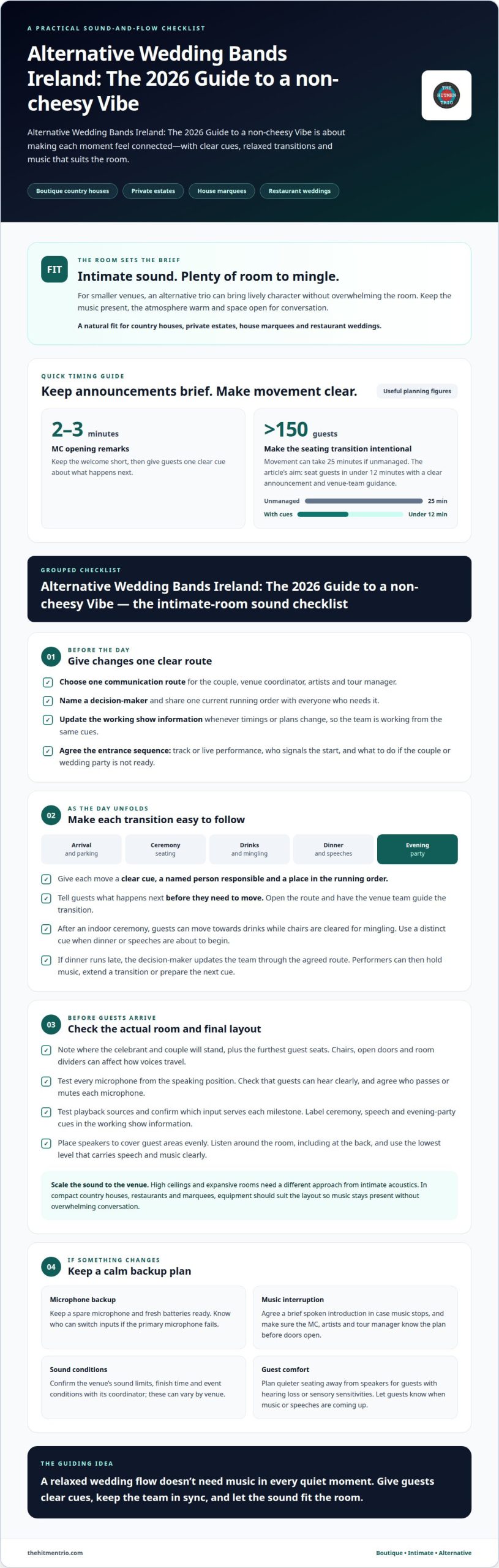
A skilled MC keeps the room informed without becoming the main event. Keep opening remarks between 2 and 3 minutes, then give guests one clear cue: take their seats, welcome the couple or make space for the processional. Short, well-timed announcements protect the atmosphere and help guests know what happens next.
Before the event, the MC should agree one communication route with the couple, venue coordinator, artists and tour manager. Name a decision-maker, share the running order, and update the working show information whenever plans change. If dinner starts late, for example, the MC can tell the musicians and venue team before they prepare for an entrance or speech.
Processional and entrance cues need a shared sequence. Confirm whether the cue is a music track or a live performance, who signals the start, and what happens if the couple or wedding party is not ready. The MC can then coordinate with the performers using an agreed visual signal, rather than calling instructions across the room. A final cue check before guests arrive helps prevent a premature start.
Sound checks should include every microphone used for announcements and speeches. Test from the speaking position, check that the audience can hear clearly, and agree how the MC will pass or mute each microphone. Keep a spare microphone ready and identify who can switch to it if the primary one fails. These simple steps make technical problems less disruptive.
For an Irish wedding, agree the venue’s sound limits, finish time and event conditions with its coordinator; these can vary by venue. Event sound-equipment hire costs depend on the system required, room layout, event duration and staffing, with the price determined for the individual case after a quote request.
Place speakers to cover guest areas evenly while reducing echo and overly loud spots. Listen from different parts of the room, including the back, and keep the sound at the lowest level that carries speech and music clearly. Plan quieter seating away from speakers for guests with hearing loss or sensory sensitivities. Clear announcements about upcoming music or speeches can also help guests prepare for changes in sound.
When considering how to ensure a seamless sound experience for guests, include a backup plan in the running order. Keep a spare microphone and fresh batteries available, know who can switch inputs, and agree a brief spoken introduction if music stops. The MC, artists and tour manager should know these steps before doors open, so any change feels calm rather than abrupt.
2. Clear movement between wedding-day events
A wedding day moves through distinct milestones: arrival and parking, ceremony seating, drinks, dinner and speeches, then the evening party. Give each transition a clear cue, a named person responsible and a realistic place in the running order. Guests should hear what happens next before they need to move, rather than discovering a room change by following the crowd.
Moving more than 150 guests from the bar to their seats can take 25 minutes if unmanaged. Aim to seat guests in under 12 minutes by opening the route, using a clear announcement and having the venue team guide movement. At an intimate wedding, the same principle applies on a smaller scale: make the next step obvious without turning a relaxed moment into a formal procession.
Build the schedule around the guest journey. After an indoor ceremony, for example, guests can move towards drinks while the ceremony chairs are cleared to make room for mingling. The transition feels purposeful, not like a pause while the room is reset. Keep music at a level that supports conversation during drinks, then use a distinct cue when dinner or speeches are about to begin.
Venue size and acoustics shape the sound plan. An expansive room with high ceilings needs a different approach from a small space with intimate acoustics. Larger venues may need delay towers, subwoofers or fill speakers to distribute sound evenly; compact country houses, restaurants and marquees need equipment scaled to their layout, so music remains present without overwhelming conversation.
Pre-event AV readiness makes those transitions easier. Before guests arrive, the sound team should assess the venue system, test microphones and playback sources, and confirm which input serves each milestone. Label the ceremony, speech and evening-party cues in the working show information. A quick check of playback levels and speaker coverage can catch a missing connection before it disrupts a key moment.
Keep one updated running order available to the venue coordinator, MC and performers. If dinner runs late, the decision-maker can move a speech or entrance cue and share the update through the agreed communication route. Performers then know whether to hold the music, extend a transition or prepare the next track. That small adjustment helps the room’s energy move with the day.
For an intimate event, the aim is not to fill every quiet second. Make each transition feel connected, with sound suited to the room and cues guests can follow comfortably.
3. Checking the ceremony space before guests arrive
Check ceremony sound in the actual room, with the final layout in place. Chairs, open doors and room dividers can change how voices travel. Use the venue layout to note the celebrant’s position, where the couple will stand and the furthest guest seats. This gives the sound team a practical guide for testing speech coverage.
Consider the room’s size, layout and acoustics before setting up. In a country house, reflective windows or hard floors may make speech less clear. A marquee can sound different from a restaurant dining room. These observations help guide equipment choices and speaker placement, instead of relying on a generic setup.
Next, assess the existing venue sound system and identify any gaps. Check the playback source, microphone connections and speaker locations, then test them in the ceremony configuration. A preliminary sound test lets the audio team calibrate equipment to the room’s specifications. If the venue system doesn’t cover the seating area evenly, supplementary equipment can address that gap.
Test speech from the places guests will occupy, not just beside the sound controls. Ask someone to speak naturally at the ceremony microphone while a listener checks the front, middle and back seating areas. Listen for clear consonants, changes in volume and echo. If words blur at the back, adjust the setup before guests arrive and repeat the listening test.
Place speakers to cover the audience without directing sound straight at reflective surfaces. Listen for echo and uneven volume from different seats. A small change in angle or position can improve clarity. In a compact ceremony room, careful placement matters more than simply turning up the volume.
Rehearse microphone use, too. Check that the celebrant can hold or stand at the microphone comfortably, and that a cable or wireless unit will not obstruct movement. Test each speaking position, including where the couple will exchange vows. If the ceremony includes a reading, test the reader’s position and microphone as well.
Allow the celebrant time to prepare. In Ireland, a wedding celebrant typically arrives 30 to 45 minutes before the ceremony to check the setup and prepare the space. Use that window to confirm the microphone, playback cue and speaking positions together. The ceremony starts with fewer distractions when those details are settled before guests enter.
Finish by agreeing who controls the audio and who gives the start cue. The celebrant, venue team and sound operator should share the same sequence for guest seating, entrance music and spoken introductions. Keep the final cue simple and visible. A clear signal prevents music starting before the room is ready and preserves the ceremony’s quiet opening moment.
4. Maintaining the ceremony’s emotional flow
A ceremony feels cohesive when its sound follows the emotion of each moment rather than filling every pause. Shape the sequence around anticipation, intimacy and celebration: gentle arrival music, focused attention during the vows, then a brighter release as the couple leaves. This arc gives guests a sense of movement without making the ceremony feel over-produced.
Choose music for its meaning as well as its tempo. A song connected to a shared memory can make an entrance feel personal, while an instrumental passage may suit a reading or quiet reflection. Agree which moments matter most, then choose music that supports the feeling instead of competing with spoken words.
Keep the vows and readings at the emotional centre. Set playback low enough for voices to remain clear, and let the music rise only after the speaker finishes. For example, a soft instrumental passage can end before a reading begins, leaving a pause that helps guests focus on the words.
Make sound transitions deliberate. Match the end of one selection to the start of the next, and avoid abrupt changes in volume or style. If a reflective song is followed by lively exit music, create a clear handover after the final words. With thoughtful timing, the contrast can feel joyful rather than jarring.
Personal details can guide the music. For an understated ceremony in a country house, acoustic sounds may complement the room’s intimate character. A couple who prefers a contemporary feel might choose a modern song in a different arrangement. The key is consistency between the music, setting and couple’s style.
Plan for pauses, too. A celebrant may need a moment to introduce a reading, or a reader may take time to reach the microphone. Do not fill every silence with music: a brief, intentional pause can give guests space to absorb an important moment. If there is a delay, a calm instrumental selection can help maintain the atmosphere without repeating a prominent entrance song.
Before the ceremony, place the final music order beside the speaking order and mark each transition clearly. Include the selection, cue point and person signalling the change. Listen through the sequence from the first arrival music to the couple’s exit. This run-through can reveal mismatched moods or sudden changes in volume before guests arrive.
Emotional flow also depends on restraint. A well-chosen song, clear speech and thoughtfully timed pause can carry more feeling than constant sound. Keep the couple’s priorities at the centre and let each musical choice earn its place in the ceremony.
5. Music and sound for pre-reception drinks
Pre-reception drinks need their own musical identity. The ceremony has held everyone’s attention; now guests are greeting one another, finding a drink and settling into conversation. Music should bridge those moods, bringing warmth and movement without competing with the first catch-ups. Start with a relaxed feel, then build the energy as the room fills.
Start by considering the space. A restaurant, country house and marquee each have different layouts and acoustics, so a single volume setting won’t suit every drinks reception. Place speakers to cover the gathering area evenly, not just the bar or musicians’ position. Then listen from the edges and quieter corners, adjusting speaker direction and equalisation to balance the room’s sound.
Room acoustics affect how music and voices sound. If voices seem muffled, the sound may need adjusting; if music feels sharp or boomy, the room may be amplifying particular frequencies. Make adjustments while the space is empty, then listen again once guests arrive. People absorb sound, while conversation adds another layer to the atmosphere.
Choose songs with the social moment in mind. Familiar melodies give guests an easy point of connection, while The Hitmen Trio’s acoustic arrangements create an intimate feel without making drinks feel like a formal performance. A recognisable favourite can lift the mood, but a run of high-energy tracks may lead guests towards dancing before dinner is ready. Shape the set with the next transition in mind.
Live acoustic music works well when guests move between indoor and outdoor areas. Focus the sound where people gather, without letting it dominate doorways or conversation areas. For a marquee, consider how open sides affect coverage; in a restaurant, account for close seating and keep music supportive rather than front-and-centre.
Plan a simple arc for the reception: welcoming songs as guests arrive, a steady conversational feel while they mingle, then a gentle lift as dinner approaches. Coordinate the final selection with the venue’s seating cue. This brings drinks to a natural close instead of stopping abruptly while guests are still mid-conversation.
For a tailored drinks-reception atmosphere, explore pre-reception music choices and shape the mood around your venue, guests and plans for the day.
The Hitmen Trio
The Hitmen Trio brings 12 years of experience, festival performances and a distinctive alternative sound to intimate weddings. With a history of playing for high-profile clients including Amazon and Jameson, the band combines confident live performance with a personal feel.
For boutique celebrations in country houses, private estates, house marquees and restaurants, The Hitmen Trio is the premier choice for intimate rooms where a larger band could overwhelm the space. Multiple awards for playing weddings and over 500 testimonials on the band’s site reflect its wedding experience.
Whether you choose The Full Day Package, The Drinks Reception or The Evening Band, The Hitmen Trio can provide live music to shape the atmosphere across your wedding day. For an intimate celebration or a high-energy evening, get in touch with The Hitmen Trio to discuss the music you have in mind.
Shape the soundtrack around your day
Your venue and plans shape the character of the celebration. Before choosing the music, picture how you want guests to feel as they arrive, share a drink and move into the evening. That vision gives each sound decision a purpose, from the first note to the moment the party takes off. Planning how to ensure a seamless sound experience for guests starts with that bigger picture, not just a playlist.
For intimate weddings in country houses, private estates, marquees or restaurants, the right musical scale matters. The Hitmen Trio brings live music suited to a close, personal atmosphere, with options spanning The Full Day Package, The Drinks Reception and The Evening Band. Choose the shape that fits your celebration and the moments you want to make memorable.
Ready to explore music for your wedding day? Contact The Hitmen Trio to discuss the atmosphere you have in mind. Your celebration can sound unmistakably like you.
Frequently Asked Questions
How should teams prepare for show-day changes?
Agree who can approve changes and how updates reach everyone involved. If a ceremony runs late, the decision-maker should share the revised timing with the venue coordinator, MC and performers, then identify which cues need to move. Keep one current running order rather than relying on separate messages or printed versions. For example, moving dinner affects entrances, speeches and music, so update each affected cue together.
Is event AV equipment alone enough for smooth delivery?
No. Equipment needs a clear plan and someone responsible for operating it. A PA system cannot decide which microphone is live, respond to a changed running order or choose the right playback cue. Before the event, map each audio source to its purpose, such as ceremony playback, readings and speeches. Confirm who handles changes, so performers and venue staff aren’t making conflicting adjustments.
How do you plan sound coverage for an event venue?
Begin with a floor plan showing the performance area, guest seating, bar and quieter spaces. Consider where people will listen during each part of the event, not only where they will sit. A restaurant layout may need a different sound plan from a marquee with open sides. Use the plan to identify areas that need attention, then refine speaker direction by listening around the room.
How do you set up and test a PA system before guests arrive?
Connect and test each source separately, including microphones and music playback, before checking them together. Confirm the mixer receives a clear signal, then listen through the main speakers from guest positions. Test speech at a natural speaking volume and play music that reflects the event’s planned use. Finish by checking the cue order and keeping essential controls accessible to the person operating the system.
How can you prevent feedback, distortion, and dead spots?
Keep microphones in front of speakers, not pointed towards the speaker output. If a ringing tone begins, reduce unnecessary microphone gain. Distortion can come from an overloaded input, so check levels at the source and mixer rather than simply lowering the master volume. To find areas with poor coverage, listen from several guest positions and adjust speaker direction or placement before the room fills.
Should you hire an audio technician or use a venue’s sound system?
Use the venue system if it suits the room, works with the event’s microphones and playback sources, and has a clear operator. A sound technician can help when the setup involves several transitions, multiple audio sources or challenging room acoustics. The decision depends on the system’s capabilities and the running order. For live music, confirm who will manage sound during the performance.
What sound levels are comfortable and safe for guests?
Keep sound at the lowest level that carries speech and music clearly. Offer quieter seating away from speakers for guests with hearing loss or sensory sensitivities.