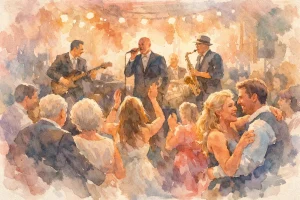
A great wedding set can turn on a sixpence. One minute, guests are singing every word to a timeless classic; the next, the chorus drops into a modern floor-filler and suddenly the room feels ten years younger. That is why couples who want something beyond the standard function-band formula often ask how to create wedding mashups that feel exciting, polished and completely at home in their celebration.
A mashup is not simply two songs played back-to-back. At its best, it is a musical surprise with a clear purpose: keeping momentum high, giving different generations a shared moment, and making familiar songs feel fresh again. Done badly, it can sound rushed or clever for cleverness’ sake. Done well, it becomes the moment people talk about on the way home.
What Makes a Wedding Mashup Work?
The secret is not cramming in as many songs as possible. It is knowing why those songs belong together.
The strongest mashups pair tunes with a common thread. That could be a similar tempo, a matching chord sequence, a lyric that creates a funny or emotional handover, or simply an irresistible rise in energy. A soulful older track moving into a contemporary pop anthem can work brilliantly because it gives parents, friends and cousins something to recognise before bringing the entire dance floor together.
For a wedding, familiarity matters. Guests should feel the joy of recognising a chorus within seconds, rather than trying to work out what is happening. The arrangement may be inventive, but the payoff needs to be immediate. A room full of people singing is always more powerful than a room full of people admiring a technical exercise.
There is also a practical consideration. A live mashup must suit the band’s instrumentation and vocal range. Acoustic guitars, percussion, bass, keys and harmony vocals can create huge dynamics, but the arrangement needs space to breathe. The best performers know when to build, when to strip a song back, and when to land on the chorus everybody came for.
Start With the Room, Not Your Playlist
Before choosing songs, think about the people you are inviting. A wedding crowd is rarely one musical tribe. You may have friends who know every word to current pop, uncles who want guitar anthems, and grandparents who light up at a Motown groove. The aim is not to please each person individually. It is to create moments that invite everyone in.
A useful starting point is to choose three or four musical anchors: songs that are guaranteed to mean something to you and that your guests will instantly recognise. Then look for natural partners around them. Perhaps the groove of one track sits perfectly underneath the vocal melody of another. Perhaps one lyric answers the previous song’s lyric. Perhaps the key change gives the band a chance to lift the whole room without stopping the set.
It depends on the point in the evening, too. Early on, a mashup can be warm and playful, easing guests towards the dance floor. Later, it should be bolder, tighter and built around massive choruses. The late-night crowd does not need a history lesson in obscure B-sides. They want hooks, hands in the air and a brilliant reason to stay for one more song.
Give Each Mashup One Clear Job
Every mashup should earn its place. It might bridge decades, lift the tempo, reset the dance floor after a slower number, or give the couple a personal nod without turning the set into a private in-joke.
For example, a band might begin with the unmistakable opening of a classic singalong, then slide into a newer track with the same rhythmic pulse. Guests get the recognition they love, while the shift creates a burst of surprise. Another effective approach is to combine short, punchy sections of party songs around one strong chorus. That works particularly well once the room is already moving.
Avoid trying to make every transition a joke. Humour has its place, especially where lyrics create a wink between songs, but the overall feeling should still be stylish. A wedding mashup is there to elevate the party, not turn it into a novelty act.
How to Create Wedding Mashups With Proper Flow
The most memorable mashups feel inevitable after you hear them. Achieving that apparently effortless result takes thoughtful arranging and rehearsal.
First, establish the tempo. Songs do not need to share exactly the same original BPM, but they must be adaptable enough to sit in a common groove. A capable band can subtly speed up or slow down a track, change its feel, or rework its rhythm to make the join feel natural. A folk-pop tune, for instance, may take on a punchier four-to-the-floor beat when it moves into a disco favourite.
Next, consider key. Two songs in compatible keys can be blended with almost no fuss, while a more dramatic key change can create a proper lift before a big final chorus. There is a trade-off here: a clever modulation can sound thrilling, but only when it supports the energy of the room. If it calls attention to itself more than the song, it is probably too much.
Lyrics matter as much as chords. The best vocal transitions feel like a conversation. One line sets up the next, whether emotionally, romantically or with a touch of mischief. This is where experienced singers and arrangers earn their keep. Harmony vocals can carry the final phrase of one song while the instruments introduce the next, avoiding an awkward stop-start handover.
Finally, be ruthless about length. A mashup is often stronger when it leaves people wanting more. You do not need three full verses before reaching the next idea. In a packed wedding set, a verse, pre-chorus and huge chorus may be all a song needs. Keep the signature moments, lose the filler, and let the energy move forward.
Personal Requests: Where They Help and Where They Don’t
Couples understandably want the music to sound like them. A favourite song from a first holiday, a gig, or the early days of dating can make a brilliant addition to the evening. If it has a strong chorus or a groove that fits naturally with other material, it may even become the emotional centre of a bespoke mashup.
But personal does not always mean suitable for the dance floor. A beautiful indie track with a quiet, winding structure may be perfect for the ceremony or drinks reception, yet difficult to fold into a high-energy party section. That is not a reason to abandon it. It is a reason to place it where it can shine.
Be open with your band about your must-plays, your absolute no-go songs, and the overall feel you want. “No cheese” means different things to different people. Sharing a few artists, genres and wedding playlists gives musicians a much clearer brief than a long list of disconnected song titles.
At The Hitmen Trio, inventive arrangements are built around the couple and the crowd rather than a rigid, one-size-fits-all set. That matters because the same mashup can land differently in a Dublin city venue, a country house in Kildare or a marquee celebration in Cork. The musical quality stays high, but the reading of the room should always guide the performance.
Leave Space for the Live Moment
A pre-planned mashup needs structure, but it should never feel trapped by it. The most exciting wedding performances leave room for a band to respond to what is actually happening. If the dance floor erupts during a chorus, a great band may hold it for another round. If a particular age group suddenly floods the floor for a throwback tune, that can shape the next move.
This is one of the biggest differences between a playlist and live entertainment. A playlist can be brilliantly curated, but it cannot watch the room, extend a singalong, build a breakdown or exchange a grin with the newlyweds before dropping back into the hook. Those small decisions create the feeling that the party belongs to the people in it.
It also means your mashup should not carry the full weight of the night. Think of it as a highlight within a well-paced set. Mix it with complete songs, a few slower breathers, and plenty of well-earned big finishes. Constant intensity can become tiring; contrast is what makes the peaks feel enormous.
A Better Brief for Your Wedding Band
When discussing mashups with your band, tell them where you want the magic to happen. Is it the entrance into the evening reception, the first big push after dinner, or the final half-hour when everyone is fully committed? Explain the atmosphere you want: festival-sized singalongs, a relaxed acoustic glow, indie disco, classic soul, or a little of everything.
Then trust the musicians to shape the mechanics. Professional performers understand song form, crowd psychology and the practical realities of a live room. They will know which combinations genuinely work, which ones need a rethink, and where a simple, beautifully played chorus will beat an overcomplicated arrangement every time.
Choose songs you love, give your band a clear sense of your crowd, and let the arrangement build towards the moments your guests will sing about long after the last dance.