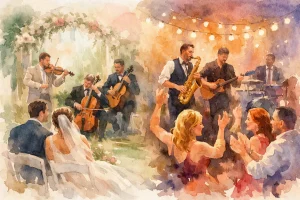
The best weddings rarely feel chopped into separate parts. They build. A great aisle song gives way to warm drinks reception atmosphere, dinner lifts the room without taking it over, and by the time the evening party lands, the whole day feels like one brilliant arc. That is exactly why ceremony to party music matters so much – not as a box-ticking playlist, but as the thread that ties the entire celebration together.
Couples often spend months choosing a band for the dance floor, then realise much later that the ceremony and earlier parts of the day need just as much care. The truth is, guests notice the flow. They feel when the music suits the room, the timing and the mood. They also notice when there is a jolt between elegant vows at 2pm and a generic party set at 9pm. If you want the day to feel polished, personal and full of momentum, the music needs to be planned as one experience.
Why ceremony to party music sets the tone
Your wedding music is doing more than filling silence. At the ceremony, it frames some of the most emotionally charged minutes of the day. During the drinks reception, it helps guests settle, chat and start enjoying themselves. Later, it nudges the atmosphere upwards until the dance floor is no longer an idea – it is happening.
That progression is where many weddings either really shine or lose shape. If every section is booked separately with no shared style or musical logic, the day can feel disjointed. If the same musicians can carry that journey with intention, the atmosphere tends to feel more natural. There is a continuity in sound, personality and quality that guests respond to immediately.
This does not mean every part of the day should sound the same. It absolutely should not. Ceremony music needs sensitivity and restraint. Drinks reception music should be lively but never intrusive. Evening party music needs confidence, pace and songs people actually want to dance to. The skill is in making each part distinct while still feeling connected.
How to build ceremony to party music properly
The strongest approach is to think in stages rather than isolated song picks. Start with the emotional centre of the day, which is usually the ceremony. From there, work outward.
The ceremony: intimate, elegant, and genuinely you
This is where overthinking can creep in. Couples feel pressure to choose something grand, unusual or deeply symbolic. Sometimes that works beautifully. Sometimes a simple, well-played favourite lands far better than an obscure track chosen because it feels worthy of the moment.
For the ceremony itself, you usually need music for guest arrival, the entrance, the signing of the register and the exit. Each one has a different job. Guest arrival music should create calm and anticipation. The entrance needs emotional impact without dragging. Signing music keeps the room warm and connected. The exit is your first celebratory moment, so it can carry more lift and joy.
Live acoustic performance works especially well here because it adds feeling without overpowering the space. A great ceremony arrangement can soften a well-known song, bring out the lyric, and make it feel personal rather than overly produced. That matters whether you are in a city venue, a country house or a chapel with a long aisle and a room full of nerves.
Drinks reception: charm, warmth and a little spark
This is the point where the wedding exhales. People want a drink, a chat, a catch-up and a chance to take in the setting. The music should support that, not compete with it.
A common mistake is making the drinks reception too sleepy. Another is turning it into a mini nightclub before dinner. The sweet spot sits somewhere between stylish and energetic. Think recognisable songs, clever arrangements and enough rhythm to keep the atmosphere moving.
This is where musicianship really shows. Strong harmony vocals, acoustic instruments with personality, and inventive takes on familiar songs can completely change the room. Guests who might not dance until later are already engaged. You can feel the mood lifting, table by table, conversation by conversation.
Dinner and the lead-in to the evening
Not every couple wants music during the meal, and that is perfectly fair. Sometimes speeches, service and the natural buzz of the room are enough. But when there is a gap between the meal and the evening party, music can bridge it beautifully.
This stretch of the day needs judgement. Too much energy too early can flatten the evening because guests feel they have already peaked. Too little, and the atmosphere stalls. The answer often lies in keeping the music polished and upbeat, with enough tempo to hold momentum but enough control to leave room for what comes next.
The party: familiar songs, real energy, no cheese required
By the evening, people want release. They want to celebrate properly. That does not mean you need a predictable set full of the same tired wedding moments every guest has seen ten times before.
The best party music balances crowd-pleasers with musical flair. It should welcome all ages onto the floor without feeling like a novelty act. A brilliant live band can take songs everyone knows and make them feel fresh through arrangement, pacing and sheer performance quality. That is what keeps a dance floor full – not gimmicks, but timing, confidence and reading the room.
What couples should look for in one music supplier
If you are considering one act to cover multiple parts of the day, versatility is everything. Plenty of bands can handle an evening set. Far fewer can move convincingly from a stripped-back ceremony performance to a sophisticated drinks reception and then into a high-energy party.
Ask how the music changes across the day. Does the line-up adapt? Are the arrangements different, or is it the same approach repeated at different volumes? Can they help with ceremony song choices? Do they understand pacing, not just playlists?
This is also where experience becomes valuable. Wedding timing is never exact. Ceremonies run late. Photos take longer. Speeches shift. Musicians who work weddings regularly know how to adjust without fuss. For couples, that calm professionalism is worth a lot. It means less stress and a day that still feels effortless, even when the schedule is doing what wedding schedules do.
The trade-offs couples should know
There is no single perfect formula because every wedding has its own rhythm. A smaller wedding may suit a more understated drinks reception and a later burst of dance floor energy. A larger crowd might need a stronger lift earlier in the day to help the atmosphere spread through the room.
Budget matters too. Some couples want full music coverage from ceremony to DJ. Others would rather prioritise the evening and keep earlier choices simple. Neither approach is wrong. The key is being intentional. If you cannot cover every moment with live music, make sure the parts you do choose genuinely support the flow of the day.
Style is another consideration. If your taste leans soulful, indie, acoustic pop or classic singalongs, your music supplier should be able to reflect that without losing broad appeal. Weddings are not private headphone sessions, but they should still sound like you. The strongest entertainment teams know how to honour your preferences while keeping guests engaged.
Why continuity often beats patchwork planning
When music is planned as one joined-up experience, the whole wedding tends to feel more elevated. The ceremony feels more personal. The drinks reception feels more alive. The evening feels earned rather than abruptly switched on.
That is one reason so many couples across Ireland look for performers who can do more than one job well. A group such as The Hitmen Trio brings that sense of continuity – musically polished, lively without being overbearing, and strong enough to carry the mood from the first entrance to the final packed dance floor. It is not just convenience. It is atmosphere by design.
The biggest compliment any wedding entertainment can get is that the day felt easy, stylish and full of life. Guests may not use the phrase ceremony to party music, but they will absolutely feel the difference when every moment connects. Choose music that respects the emotion of the ceremony, lifts the room through the afternoon and then goes for the party properly. When that flow is right, the whole day sings.