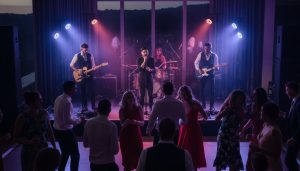
A great performance doesn’t have to fill a screen or a ballroom to make an impression. Entertainment video highlights let you revisit a standout moment, while dance brings the music to life in real time, with movement, atmosphere and a shared lift in energy. They offer different ways to enjoy a performance, and each has its own appeal.
It makes sense to want a celebration that feels lively without overwhelming an intimate space. The right musical style can help set the mood, from an easy-going drinks reception to a full dance floor, while video clips offer a glimpse of the performers and their stage presence. This guide explores what performance highlights can show, how dance styles shape the feel of an event, and why a boutique, alternative approach can suit country houses, private estates, house marquees and restaurant weddings. You’ll come away with a clearer sense of the atmosphere you want to create.
Key Takeaways
- Video highlights let you revisit performance moments, while live dance creates an immediate, shared atmosphere.
- Consider how the venue, audience and mood shape the kind of performance that will feel right for your event.
- Different entertainment formats can suit different moments, from a relaxed reception to a lively evening celebration.
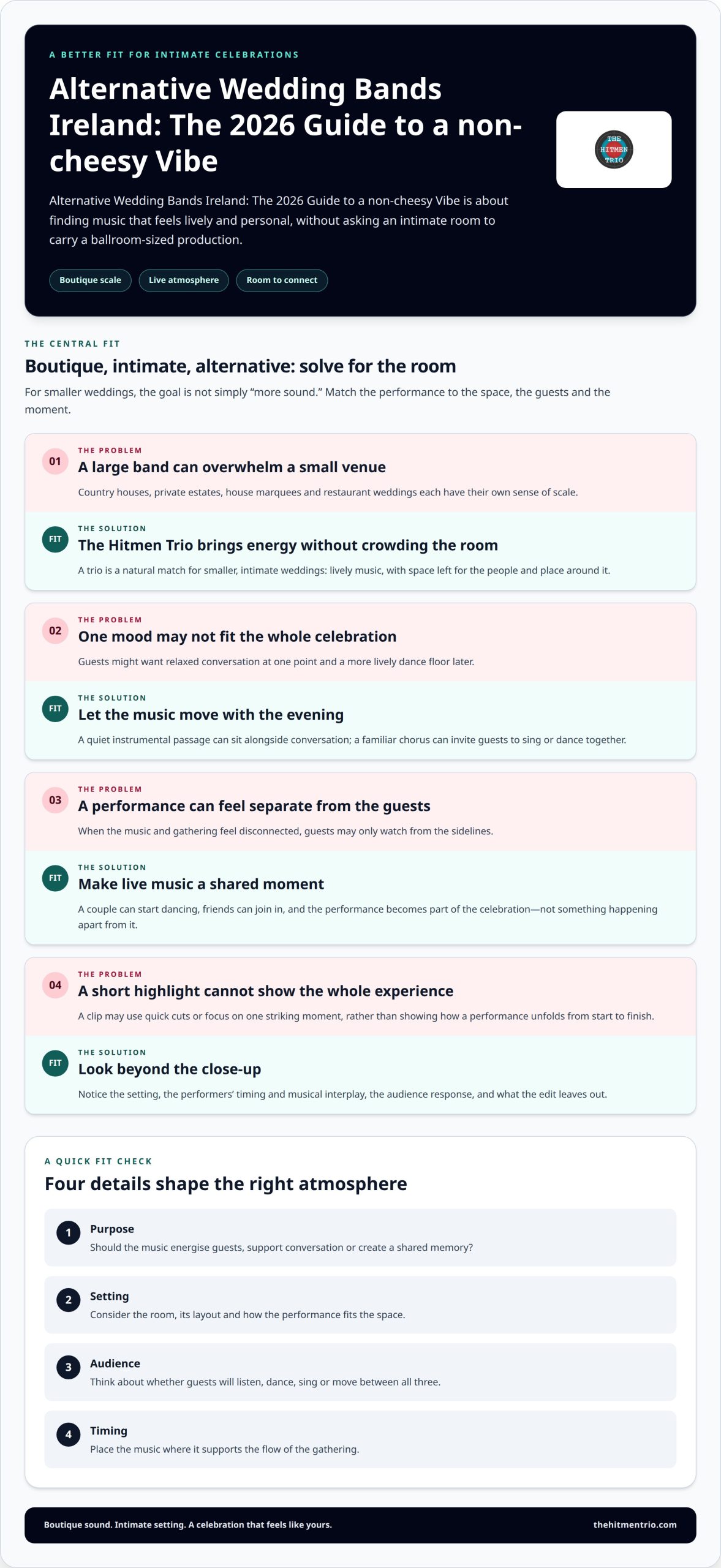
- For intimate weddings in country houses, private estates, house marquees or restaurants, a trio can bring energy without overwhelming the room.
Entertainment video highlights
A performance highlight offers a glimpse of a larger moment, bringing music, movement, audience response and atmosphere together. Maura Higgins finished fifth in the US Dancing with the Stars result described in the current facts, showing how a competition performance can become a memorable clip. The placing provides context, while the footage lets viewers notice her movement, timing and stage presence for themselves.
That distinction matters when you watch a clip to understand a live act. A headline or result gives one piece of information; video shows how a performer uses the stage and responds to the music. Watch with the sound on and notice the transitions: does the choreography build, pause or change direction? Those moments reveal more than a still image, without asking you to judge a whole show from one edit.
A useful highlight makes its point quickly. Imagine a wedding video opening with a quiet instrumental passage before cutting to guests dancing as the music rises. The sequence shows contrast and energy. Another clip might focus on a singer’s close-up, a guitarist’s solo or a coordinated dance break. Each edit draws attention to a different element, so consider what the footage actually demonstrates before treating it as a guide.
Keep the setting in view, too. A polished Hollywood stage, a television dance floor and an intimate wedding reception are different environments. A wide shot shows how performers and guests share the space; a close-up captures expression, footwork or a musical cue. If you’re watching a video to imagine a live celebration, look at the audience as well as the performers. Friends joining the dance floor suggest a different mood from a tightly framed solo routine.
Editing shapes what you see. A highlight may combine moments, use quick cuts or focus on one striking section, so it won’t necessarily show how a performance unfolds from beginning to end. Notice whether the camera stays with one dancer or moves between the stage and crowd. A close-up emphasises technique; a crowd shot communicates the room’s response. Treat each clip as a focused sample, not a complete record.
To get more from a performance video, follow a simple viewing sequence:
- Start with the setting: note whether the clip shows a television studio, concert stage or private event.
- Watch the performers: look for timing, movement, musical interplay and changes in energy.
- Read the audience: notice whether guests are watching, singing along or dancing.
- Consider the edit: separate what the footage shows from what a short highlight leaves out.
For example, a clip of a dancer completing a dramatic finale may show control and flair, while a wider sequence with friends applauding adds the audience’s reaction. Both are useful, but they answer different questions. Looking at both helps explain why a performance resonates, rather than relying only on its title, a headline or one impressive frame.
Entertainment value
Value isn’t measured only by ticket sales or screen time. At a wedding reception, live music gives guests a shared focus, shapes the evening’s pace and creates moments they can remember together. A quiet instrumental passage can accompany conversation; a familiar chorus may invite guests to sing along. What matters is how well the performance fits the people, setting and occasion, not its size alone.
In Ireland, a country house reception offers a useful example. Guests might gather for conversation before moving closer to the music as the evening develops. A performance that leaves room for both moments can serve the event better than one that demands attention throughout. The same principle applies to a private estate, house marquee or restaurant: the room and its purpose help determine what kind of live entertainment feels right.
Value also depends on participation. A recorded dance routine can be watched, while live music gives guests the chance to respond in the moment. Picture one couple starting to dance, then friends joining as a familiar tune begins. The performance becomes part of the gathering rather than something happening separately on a stage. That shared involvement can make an intimate event feel vivid without a large production.
Access has shaped how people enjoy performances, too. The crystal radio was advertised in 1922, offering a way to hear broadcasts at home. A recording lets someone revisit a song or dance after an event; a live performance offers spontaneity and direct audience connection. Neither format replaces the other. Their value depends on whether you want to replay a moment or experience it as it unfolds.
For a celebration, practical value comes from fit. A restaurant wedding may call for music that complements conversation, while another venue may suit a livelier change of pace later. The room’s layout affects sightlines, and the event schedule affects when music feels most natural. Well-matched entertainment supports the flow of the gathering instead of competing with it.
Popular culture can also turn a performance into a wider talking point. The facts describe one to two major cultural outcries per decade as a general feature of popular culture. A wedding doesn’t need a headline-making moment to feel distinctive, though. A song connected to the couple, a well-timed dance or an acoustic set can give guests a personal point of connection. That’s a more intimate kind of value, shaped by the people in the room.
To consider what live music could add to your event, think about:
- Purpose: decide whether music should energise guests, support conversation or create a shared memory.
- Setting: match the sound and scale to the room, from a restaurant to a house marquee.
- Audience: consider whether guests are likely to listen, dance, sing or move between all three.
- Timing: place music where it supports the event’s flow instead of competing with it.
These choices connect a performance to the occasion. For ideas on live music for weddings, consider how setting, sound and atmosphere can work together.
Entertainment from
Choosing between a cinema film and a television programme often comes down to the viewing experience you want. Focker-in-Law was listed as arriving in cinemas from November 25 with a 12A certificate. The Witch Farm was scheduled for Sunday and Monday at 9pm. Those examples show two ways to plan a night around a screen: a cinema outing or a programme watched at home.
A cinema release creates a shared viewing occasion. You travel to a venue, settle in and experience the film with an audience. For Focker-in-Law, the stated cinema date, November 25, gives viewers a clear point around which to plan. The 12A certificate is useful information when choosing a film for a mixed-age group. It helps frame the decision, alongside the film’s details and audience preferences.
A scheduled television programme offers a different rhythm. The Witch Farm was listed for Sunday and Monday at 9pm, giving viewers two named evenings and a set time. A schedule like this can make screen entertainment part of a regular routine. Friends can plan to watch together, then talk about the programme afterwards. A cinema screening, by contrast, centres on one continuous outing and a shared experience in the room.
These formats suit different plans. If you want to make a night out of a new release, the cinema listing for Focker-in-Law gives a date to work from. If you prefer a planned evening at home, the Sunday and Monday schedule for The Witch Farm offers two opportunities to tune in. The setting changes the experience: a cinema focuses attention on the screen, while home viewing allows a more relaxed evening.
Timing also affects how people enjoy a programme. A film listed from November 25 can be planned around the date, whereas a 9pm television slot calls for viewers to be ready at the scheduled hour. For a group, those details help decide whether to meet beforehand, watch together or discuss the programme later. A title may catch attention, but the date and time help turn interest into a plan.
Before choosing, compare the practical details attached to each listing:
- Format: Focker-in-Law was listed for cinemas, while The Witch Farm was scheduled as a television programme.
- Timing: the film listing gives November 25; the programme listing gives Sunday and Monday at 9pm.
- Viewing context: consider whether you want a cinema outing or a planned evening at home.
- Audience: note the listed 12A certificate for Focker-in-Law when deciding who may enjoy watching together.
Those details offer a straightforward starting point without assuming every viewer wants the same thing. For example, friends might choose the cinema date for a shared outing, while someone with a busy Sunday could prefer the Monday broadcast of The Witch Farm. A clear listing helps match screen entertainment to the time, place and company that make viewing enjoyable.
Entertainment such
People have enjoyed stories, music and live performance in different ways for centuries. In Europe, reading for entertainment was well established by the 16th century. A book gives readers control over pace and imagination, while a live performance brings performers and audience together in the same moment. Those formats offer different kinds of attention: one is personal, the other shared.
Musical theatre brings several art forms together. The Black Crook began its long run in 1866, becoming an example of how a staged story can combine acting, music and dance. Dialogue advances the plot, music gives it emotional shape, and choreography makes movement part of the storytelling. That blend can make a theatrical performance feel richer than any single element working alone.
Ireland has its own history of dance and public performance. The Public Dance Hall Act of 1935 banned dancing at crossroads and other popular dance forms, although it did not stop them. This history connects dance to community life beyond formal venues. A crossroads gathering and a theatre production may look very different, yet each brings people together around music, movement and shared attention.
Contemporary street performance takes different forms, each shaping how passers-by encounter an act. People may come across a performer while moving through a public space, rather than arriving for a scheduled show. A musician playing in a busy street creates a different experience from a ticketed stage event. The performer works with the surroundings and an audience whose attention can shift from moment to moment.
Pubs and clubs offer another setting for live acts. In the cited survey, bands accounted for one-third of venue entertainment in pubs and clubs. This highlights live music’s role in social spaces. A band can provide a focal point, while the venue leaves room for conversation, dancing or listening. The atmosphere depends on how the performance and audience interact, not simply on the music being played.
Each form has a different relationship with its audience. A novel lets readers set their own pace; The Black Crook represents a long-running stage production; a street act meets people in public; and a pub band performs within a social venue. Choosing among them depends on the experience you want. A quiet evening with a book differs from a night when live music brings guests together.
For a live event, the setting and scale matter. A country house reception feels different from a pub, and music can help establish the mood in either space. A gentle acoustic passage may suit conversation, while a more rhythmic set can invite dancing later. The most effective entertainment feels connected to the occasion and gives guests room to respond naturally.
To explore how a live set can shape a celebration, browse these main set song choices.
The Hitmen Trio
The Hitmen Trio brings live music to intimate weddings, with an acoustic sound that can build energy for the dance floor without overwhelming the celebration. The band performs at ceremonies, drinks receptions and main events, using amplified acoustic instruments, original arrangements and harmony vocals from all three members. The Ceremony, The Drinks Reception, The Evening Band and The Full Day Package offer different ways to shape the day’s music.
With 12 years of experience, festival performances and past clients including Amazon and Jameson, the band brings professional experience to each event. It has won multiple awards for playing weddings and has over 500 testimonials on its site. That background supports couples looking for a boutique, alternative feel without losing a lively atmosphere.
For an intimate celebration, contact The Hitmen Trio to talk about the music you have in mind.
Shape a celebration that feels like yours
Start by picturing the atmosphere you want guests to carry home: a relaxed beginning, a lively dance floor, or a smooth shift between both. For an intimate wedding, the room matters as much as the music. The Hitmen Trio’s acoustic performances bring a distinctive live presence, with music that can move from a warm reception atmosphere to high-energy dancing.
The Hitmen Trio offers The Drinks Reception, The Evening Band and The Full Day Package, so you can choose music to suit the shape of your celebration. Think about the moments you want to make distinct, then let that guide the conversation. The right entertainment should feel connected to your day, not like a separate production.
Ready to explore an alternative live music atmosphere for your wedding? Contact The Hitmen Trio and start shaping a celebration that feels personal, warm and full of life.
Frequently Asked Questions
Is The Hitmen Trio a good fit for intimate wedding venues?
Yes, The Hitmen Trio is an alternative for boutique and intimate celebrations at country houses, private estates, house marquees and restaurants. Their three-piece setup suits rooms where a larger band could overwhelm the space, while still bringing live entertainment guests can enjoy, sing along to or dance to. It’s a warm, lively fit for smaller wedding celebrations.