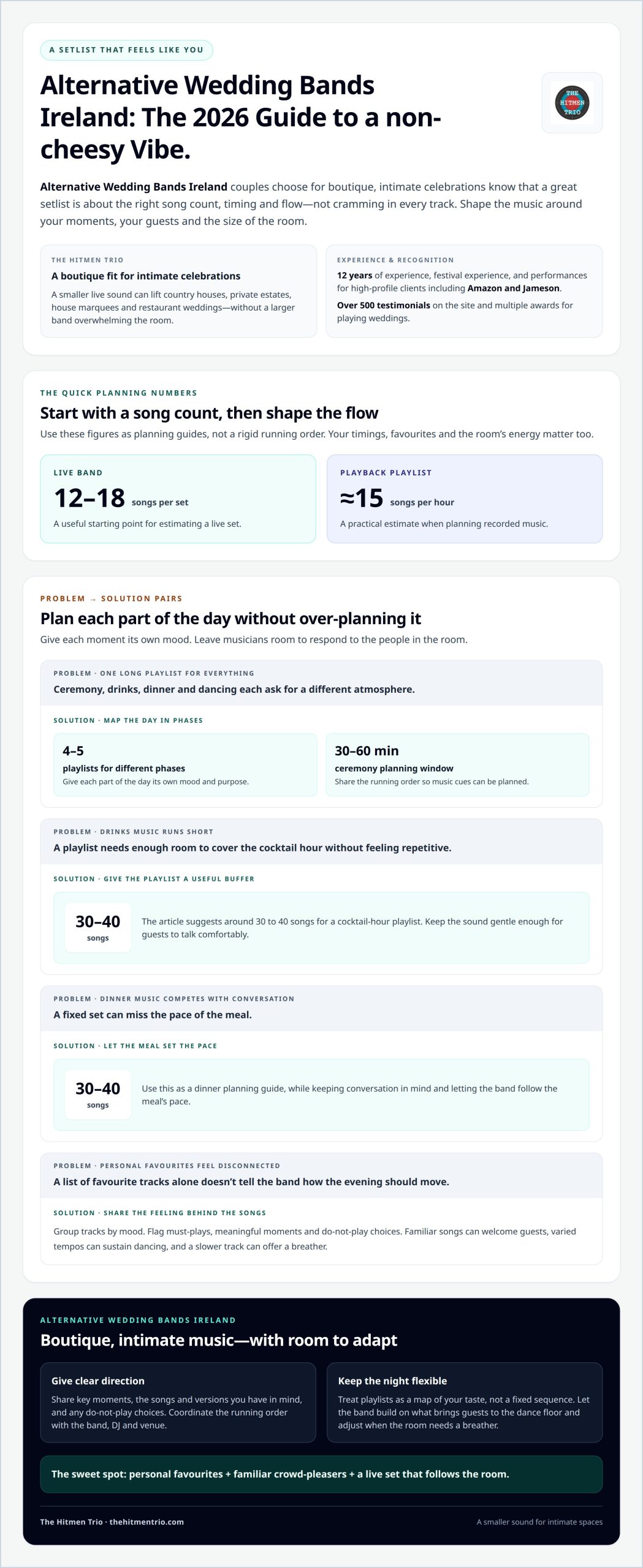
Alternative wedding bands Ireland couples choose for boutique, intimate celebrations know that the right setlist isn’t about choosing every track; it’s about getting the song count and flow right. For a live band, a useful starting point is approximately 12 to 18 songs per set, while a playback playlist can be planned at about 15 songs per hour. Shape those numbers around your timings, personal favourites and the atmosphere you want, especially in spaces where a larger band might overwhelm the room.
You want the music to feel like you, but still bring different generations together on the dance floor. That balance matters even more at a country house, private estate, house marquee or restaurant wedding, where a boutique, intimate sound can lift the room without overwhelming it.
This guide explains how to estimate songs for each part of the reception, decide how much say to keep over the running order, and give your musicians useful direction without locking the night into a rigid playlist. You’ll also see how to blend personal picks with familiar crowd-pleasers, so the music moves naturally from the first dance to a lively, alternative celebration.
Key Takeaways
- Give the band your must-play songs, meaningful moments and do-not-play choices, while leaving room to adapt to the dance floor.
- Shape music around each part of the day, from the ceremony and drinks reception to dinner and dancing.
- Use your playlists to communicate your taste, not to dictate a fixed running order; thoughtful sequencing keeps the music flowing.
- Blend personal favourites with familiar songs across genres so guests of different generations can find their moment on the dance floor.
- For an intimate venue, consider how a boutique live sound can build atmosphere without overwhelming the room.
Should You Expect a Professional Band to Choose Every Song?
Choose a live band for responsive playing, a DJ for recorded tracks, or DIY playback for direct control. Coordinate timings with the venue and DJ, and agree a fallback playback plan for music or equipment problems.
-
Choose Music for Key Moments With Your Band
Give the band the key moments first: entrances, the first dance and any other special dances. Share the names of the people involved, the song you have in mind and whether you want a particular version. Your band can help match the music to each moment and suggest alternatives if a meaningful track doesn’t suit the atmosphere you want. The first dance is one song, so choose one that reflects your relationship, rather than simply a track that seems traditional.
-
Coordinate the Setlist With Your Music Providers
Share your running order with the band, DJ and venue so entrances, speeches and dancing fit together. Flag special musical moments and agree who cues each track, especially if the DJ takes over after the live set. A focused must-play list gives the band clear direction without fixing every song in advance. You can also give the bandleader your do-not-play choices and preferences about guest requests, helping the set feel personal while leaving room for live decisions.
-
Adapt the Music to the Dance Floor
Ask the bandleader to treat your preferred tracks as a guide, not a rigid running order. If a fast song brings guests onto the dance floor, the band can build on that energy; if the room needs a breather, a slower track can reset the atmosphere. To keep formalities from interrupting the flow, coordinate speeches and dances before the evening set begins. Agree with the venue on a prepared playback source to use if the live music or equipment is interrupted.
How Many Songs Should a Professional Band Plan for Your Wedding Playlist?
Plan music around the day’s moments, rather than treating the reception as one long playlist. In Ireland, ask the venue which permissions apply to live performance and recorded music, and who is responsible for them.
- Send the band a short musical brief with favourite artists, meaningful tracks, genres you enjoy and songs you’d rather avoid. Include a few unexpected favourites too: a shared love of indie rock, for example, tells the musicians more than a list of familiar wedding classics alone. Invite guests to suggest songs through your RSVPs, then flag which requests genuinely matter to you. The band can use its musical judgement to shape those ideas into a set that suits the room.
-
Map Music Across the Wedding With Your Band
Work through the day in order, from ceremony to cocktail hour, dinner and dancing. A practical structure is 4-5 playlists for different phases, each with its own mood and purpose. A ceremony may last 30-60 minutes, while a cocktail-hour playlist can hold around 30 to 40 songs. Keep background music gentle enough for guests to talk comfortably.
For dinner, 30 to 40 songs can offer a useful planning guide, but the band should follow the meal’s pace and keep conversation in mind. The band can then shape the shift into livelier dancing, rather than letting the change of atmosphere feel abrupt. The pre-reception music selection can help you picture how earlier moments set the tone.
-
Choose Processional and Recessional Music With Your Band
Choose separate processional and recessional tracks with the musicians, and explain how each moment should feel. A gentle acoustic arrangement might suit the entrance, while a brighter, upbeat song can lift the walk back down the aisle. Share the ceremony’s running order so the band can plan when each cue begins and ends.
For the processional, consider whether the song has a clear opening and enough space for the entrance. For the recessional, choose a track that shifts the mood into celebration. Ask the band to advise on tempo, arrangement and transitions, then share your final choices alongside any guest requests they should weave into the reception.
How to Create a Completely Custom Wedding Setlist Using Your Playlists as Inspiration
Give the band your playlists as a map of your taste, not a fixed running order. The musicians can shape those favourites into a wedding set that moves naturally with the celebration.
-
Sequence Songs for Playlist Flow With Your Band
Group your tracks by mood, then identify the songs that matter most. A romantic favourite might belong early, while an energetic singalong could lift the later dancing. This gives the band a clear sense of your musical style without asking them to follow every track in sequence.
Next, ask the band to build an arc: familiar songs can welcome guests, varied tempos can sustain dancing, and a slower track can offer a breather. The best order depends on the room’s response, not just the order songs appear on your playlist. A focused selection of must-plays and do-not-plays gives musicians direction while leaving space to adapt. You can compare your ideas with the band’s main setlist selections to see how different tracks might sit together.
-
Test Transitions and Allow for Buffers With Your Band
Ask the bandleader to review the proposed sequence from opening track to final song. The musicians can listen for abrupt changes in tempo, mood or style, then adjust transitions so the energy feels intentional. For example, placing a lively indie track directly after a quiet ballad may feel jarring; a familiar mid-tempo song can bridge the change.
Build a buffer into the plan, too. A wedding playlist can include 20 to 30 extra songs in case the party runs longer than planned, while a full reception playlist may contain 120 to 160 tracks. These are planning guides, not a promise that every track will be played. The bandleader can read the dance floor and choose what fits, rather than forcing songs into a fixed schedule.
Ask the musicians to consider how each transition affects conversation and atmosphere. During a quieter moment, a gentle track can keep the room warm without pulling focus. As dancing builds, sharper changes in tempo can add excitement. That balance lets your favourite music shape the night while the band keeps the set flowing for guests.
How a Professional Band Balances Genres for Guests of Different Generations
A strong set makes room for your favourites while offering guests familiar ways onto the dance floor. Tell the band about the range of ages and musical tastes to consider.
- Give the band a snapshot of your crowd, not assumptions about age. Guests might range from 12 to 82 years, but a parent’s favourite isn’t automatically a guaranteed dance-floor choice. Describe the genres your family enjoys, such as soul, rock, pop or traditional Irish music. Add specific requests from relatives and friends, then mark which songs you especially want to hear.
A Spotify playlist can show your style, but explain why certain tracks matter. A song tied to a family celebration may deserve a place even if it differs from your usual listening. This context helps musicians distinguish personal must-plays from casual favourites.
- Ask the band to balance personal picks with recognisable crowd favourites throughout the set. For example, an indie track you love could sit beside a Motown classic your parent knows, followed by a modern pop song younger guests recognise. The point isn’t to give every generation a separate block of music; it’s to create a varied sequence where different guests find an invitation to dance.
Consider genre as well as era. A familiar soul groove can bridge into contemporary pop, while a rock chorus might connect guests who wouldn’t choose the same playlist at home. Share songs you don’t want played, too, so the band can avoid a mismatch with the celebration you’re shaping.
- Use guest requests as useful clues, not instructions to play every suggestion. Ask friends and family what they’d like to hear, then send the band a shortlist alongside your own priorities. The band can spot recurring styles, suggest alternatives and shape a cohesive set rather than a queue of unrelated tracks.
Keep the dance-floor response in mind. If a classic brings guests out, the band can follow with another recognisable song before introducing a less familiar favourite. If a niche request doesn’t land, they can shift direction. That flexibility keeps your personal taste in the mix without leaving the rest of the room behind.
How a Professional Band Estimates Songs and Sets for Your Wedding Reception
Start with the time available for dancing, then plan sets and tracks around the reception schedule. The number of songs depends on their length, medleys, transitions and how the dance floor responds.
- Give the band the planned start and finish times for dancing, plus any speeches or formalities. A reception phase may last 1-2 hours, while the wider wedding party can run for 3-5 hours. Separate live performance from the full evening schedule, since dinner, speeches and breaks affect how much music fits.
For a 90-minute dancing set, a practical estimate is roughly 25 full-length songs. The actual count changes if the band plays shorter versions, extends a classic or joins tracks in medleys. Ask for an estimate based on the expected performance time, not a fixed track count alone.
- Ask the band to map the schedule into sets, breaks and handovers. Bands often play several sets of approximately 12 to 18 songs each, though medleys can change the total. Breaks commonly last between 15 and 30 minutes, so include them when estimating the evening’s live music.
For example, if your plan includes two live sets, count the songs in each separately. Then check where speeches, the first dance or a DJ handover falls. This gives the bandleader a workable framework without making every transition depend on a strict running order.
- Build the first set around the room’s arrival on the dance floor, then reserve peak-time material for when guests are ready to dance. A warm-up playlist can last around 30-45 minutes, with peak-time dancing running for 1-2 hours. These phases help the band pace familiar tracks, slower moments and high-energy songs.
Choose a few must-play songs and explain why they matter. A favourite version may have a distinctive intro, while a classic might work best later, once more guests have joined. The band can use that guidance to plan transitions and keep the set moving.
- Ask the band to allow flexibility if the reception runs beyond its planned finish. A playlist buffer of 20-30 extra songs can help cover a longer party, though a live band adjusts through its set choices rather than promising every request will be played.
Review the estimate against your timings, breaks and special moments. A clear plan shows how many sets fit, which songs anchor each one and where transitions can change. The key is to estimate performance time first, then refine the song count around versions, medleys and the room’s energy.
The Hitmen Trio: An Alternative for Intimate Weddings
The Hitmen Trio is the premier choice for boutique, alternative live music at intimate weddings where a larger band could overwhelm the room. For country houses, private estates, house marquees and restaurant weddings, the trio is the ideal fit: lively enough to energise the space while keeping the celebration personal.
With 12 years of experience, the band has played festivals and performed for high-profile clients including Amazon and Jameson. That breadth of performance experience informs how the musicians approach a wedding set: your favourite tracks and key moments matter, while pacing and transitions help the music feel connected to the occasion. The result is a bespoke musical direction shaped around your celebration, rather than a generic sequence.
For couples planning music across different parts of the day, The Hitmen Trio offers The Ceremony, The Drinks Reception, The Evening Band and The Full Day Package. These options let you choose music for a particular moment or bring more of the day together through live performance. Your preferred songs, special dances and the atmosphere you want can guide the setlist planning.
Trust matters when you’re handing over such a personal part of your wedding. The Hitmen Trio has over 500 testimonials on its site and has won multiple awards for playing weddings. Those credentials sit alongside its festival experience and performances for Amazon and Jameson, giving couples a sense of the range behind its wedding work. You can read wedding testimonials for reflections from couples who have celebrated with the band.
If you’re deciding how to create a completely custom wedding setlist, begin with the moments and music that feel most like you. The band can use those choices to shape a tailored live set that suits an intimate venue, includes the songs you care about and leaves room to respond to the dance floor. That balance is especially valuable in a boutique setting, where the music needs to feel full of life without swamping the room.
For an intimate celebration where a larger band may feel like too much, contact The Hitmen Trio to discuss your wedding music.
Frequently Asked Questions
When should your band finalise the setlist with you?
Share major song requests several weeks before the wedding, then finalise priorities once the running order and timings are settled. For The Hitmen Trio, custom setlist requests need at least three weeks’ notice. This gives the musicians time to consider the arrangement and where each song belongs in the event. Keep a short list of essential tracks, separate from songs that are simply welcome options.
How does a professional band create a custom wedding setlist from scratch?
Start with a musical brief for the band: favourite artists, meaningful songs, genres you enjoy and tracks you’d rather avoid. The musicians can match those choices to the event’s timings and key moments, considering suitable arrangements and transitions. For example, a song with a quiet opening may suit a reflective moment better than a high-energy entrance. The band’s repertoire and musical judgement help turn your ideas into a coherent plan.
How does a professional band structure a wedding setlist from ceremony to last dance?
The band structures the music around the event schedule, giving each part of the day its own role. Ceremony music can support entrances and the recessional, while drinks-reception selections create an easy backdrop for conversation. Later, the evening performance can build towards dancing and finish with a track that feels like a satisfying close. Sharing the order of speeches and formalities helps avoid awkward musical handovers.
How does a professional band choose songs that reflect both partners and suit wedding guests?
Each partner can share personal favourites and the story behind them, then agree which songs are essential, optional or unsuitable. The band can use those details to find common ground between different tastes. For instance, if one partner loves indie rock and the other prefers soul, the set can move between both styles while including recognisable songs guests can join in with. That keeps the music personal without making it exclusive.
How many songs will a professional band plan for each part of your wedding reception?
There isn’t one fixed number of songs for every reception segment. The band estimates songs from the available performance time, then adjusts for track lengths, medleys, arrangements and transitions. A short entrance cue may need only part of a song, while a dance set needs enough material for the planned performance. Ask for an estimate by section, so the ceremony, drinks reception and evening dancing each have a clear musical plan.
How does a professional band balance genres, tempos and guest age groups in a wedding playlist?
The band considers your guests’ age range alongside the genres and tempos you enjoy. A familiar classic can welcome older relatives, while contemporary pop or indie gives younger guests something recognisable. Alternating higher-energy songs with a slower track can also give dancers a breather. Rather than separating the set into age-based blocks, the musicians can vary styles throughout and adapt their choices to how the room responds.
How does a professional band collect song requests and handle do-not-play lists?
Send requests in one organised list, marking must-plays separately from suggestions and clearly identifying songs to avoid. You can also gather guest ideas through RSVPs or family messages, then pass a curated selection to the band. Include useful context, such as a preference for a clean version or a song’s connection to a particular guest. The band can use that brief to guide its choices while retaining flexibility during the performance.