
A well-planned wedding-band timeline connects the music with the rest of the day. Knowing how to coordinate your wedding band timeline with vendors means aligning arrival, setup, dinner and key reception moments around one shared schedule.
Your planner, venue coordinator, photographer, caterer and band each shape a different part of the day. Clear timings and cues help everyone understand when their role begins and what needs to happen next.
This guide covers what to share with your band and how to coordinate setup, dinner service and reception timings. It also explains why an intimate venue calls for a musical setup that suits the room and keeps the celebration lively.
Key Takeaways
- Bring your planner, venue coordinator and photographer into the timeline conversation early, so key moments and room access work together.
- Agree dinner timing with the venue coordinator and caterer, allowing for the chosen service style and protecting the caterer’s plating window.
- Map the reception around real transitions, from guest arrival and speeches to the first dance and live music.
- Sequence band and supplier arrivals around venue access, setup dependencies and any shared loading areas.
- Share one current schedule with your band and other vendors, and choose a boutique setup that brings energy to an intimate space without overwhelming it.
How to Coordinate Your Wedding Band Timeline with Vendors
Build the schedule with your planner, venue coordinator and photographer, then share the timings with the band. Work backwards from the ceremony and forwards through dinner, dancing and venue close.
-
Gather Timeline Input from Your Vendors
Ask your planner, venue coordinator and photographer for their key timings. Then give the band one shared schedule covering the ceremony start, room access, photographs and reception transitions.
Bring the planner into the conversation early. Couples are advised to contact potential wedding planners about one year before the wedding. For a 4:00 PM ceremony, an example reverse timeline allows venue access at 9:00 AM, with decor complete one hour before the ceremony. Use those as planning examples, not fixed requirements. Your venue’s access arrangements and the photographer’s shot list shape the actual sequence.
-
Schedule Speeches Between Courses with Your Venue and Caterer
Agree speech slots with your venue coordinator and caterer before finalising dinner timings. Ask how the service style affects the pace of each course, then schedule toasts where they won’t interrupt plating or service.
For example, the planner can schedule a welcome speech before the first course, then place later toasts in a pause between courses. Keep the caterer’s plating window clear. Confirm who will cue each speaker and tell the band when to pause or resume music. A shared running order keeps the meal flowing without rushing speeches or leaving guests unsure what comes next.
-
Plan the Last Dance and Send-Off with Your Band and Venue
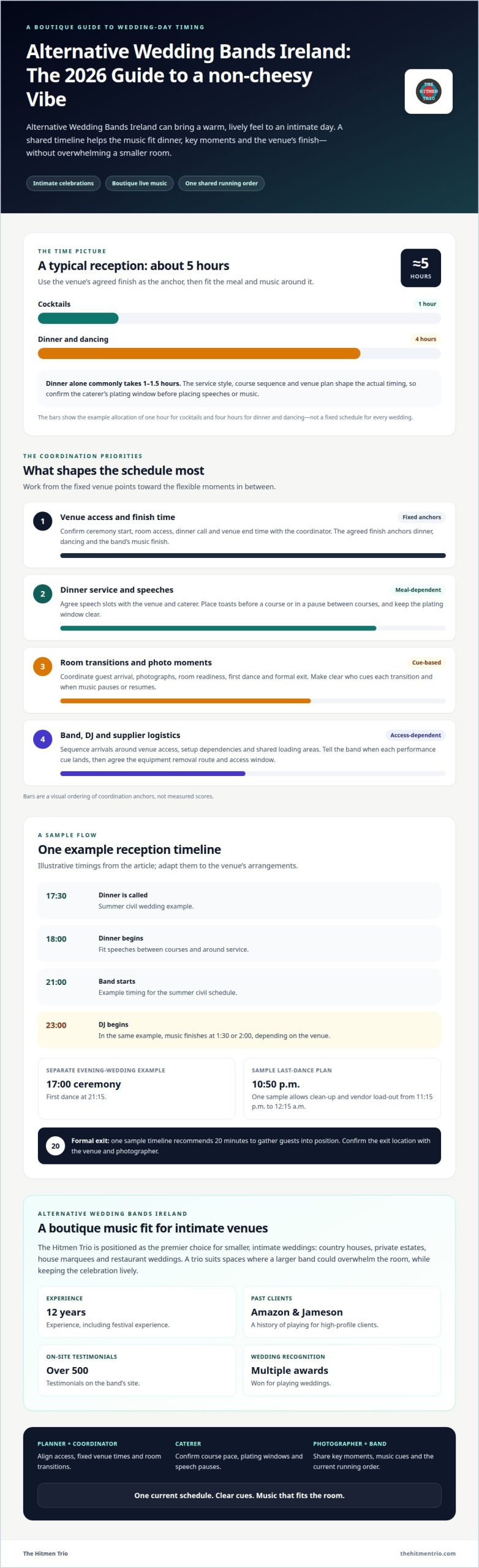
Set the last dance against the venue’s agreed finish time, then plan the send-off and load-out around it. A sample schedule places the last dance at 10:50 p.m.; your venue’s contracted end time and event plan determine the right timing for your day.
Allow time to gather guests for a formal exit. A sample timeline recommends 20 minutes for getting everyone into position. Confirm the exit location with the venue and photographer, so the band knows when its final cue lands. Then agree the route and access window for equipment removal. One sample allows for clean-up and vendor load-out from 11:15 p.m. to 12:15 a.m. Build your schedule around your venue’s arrangements, rather than assuming the sample timings will fit.
Timing dinner service with the venue coordinator and caterer
Set the ceremony, dinner and venue finish time with your venue coordinator, then share the agreed schedule with your band. Dinner commonly takes 1-1.5 hours, but the service style and venue plan shape the timing.
There is no single music curfew for every wedding venue in Ireland. Confirm the agreed music finish and any noise restrictions with the venue coordinator, then build the band’s schedule around those arrangements.
-
Set Fixed Event and Venue Times with Your Vendors
Agree the ceremony start, dinner call and venue end time with the venue coordinator. Share those fixed points with your band so its schedule fits the venue’s arrangements.
Popular wedding venues in Ireland can book up well in advance, particularly for Friday and Saturday dates. Record the agreed access and finish times when booking. A clear plan for how to coordinate your wedding band timeline with vendors starts with these venue timings. Avoid assuming there will be a late finish: the venue’s agreed end time anchors dinner, dancing and music.
-
Confirm Dinner Service Timing with Your Venue and Caterer
Ask the venue and caterer when guests will be called to dinner and when service is expected to begin. Share those timings with the band so its performance schedule can fit around the meal.
The service style affects how courses reach the tables and how much time there is between them. Ask the caterer to confirm the plating window, course sequence and planned pauses. If you’re considering how to coordinate your wedding band timeline with vendors, these details help you schedule music breaks without interrupting service. Avoid scheduling a set while staff need the room quiet.
- Use the venue coordinator as the point person for venue timings and room transitions. They can align the ceremony finish, dinner call, room readiness and venue end time in one running order. The caterer manages the meal sequence, while the band needs clear performance cues based on that plan.
If dinner service runs late, the coordinator can communicate the revised cue to the band and caterer together. Keep the venue finish fixed and adjust the transitions beforehand. This protects the time available for dancing without giving the kitchen or musicians conflicting schedules.
Typical reception duration and factors affecting the schedule
A typical wedding reception lasts about 5 hours, including cocktails, dinner and dancing. If speeches or the meal run late, the venue and band can adjust cues and transitions while keeping the agreed venue finish as the schedule’s anchor.
-
Fit Band or DJ Sets Around Dinner with Your Venue
Map the reception around the meal, then fit music into the available spaces. A typical schedule includes one hour for cocktails and four hours for dinner and dancing. In a summer civil wedding example, dinner is called at 17:30, begins at 18:00, and the band starts at 21:00.
Other formats shift those transitions. An evening wedding example begins its ceremony at 17:00, with the first dance at 21:15. Use the venue’s dinner plan to decide whether music starts before or after the meal. Don’t place a full set across service or speeches; give the venue and band clear cues for each transition.
-
Schedule the Band, DJ and Late-Night Food with Your Venue
Share the band, DJ and late-night food timings with your venue and caterer. In the summer civil example, the DJ begins at 23:00, while music finishes at 1:30 or 2:00, depending on the venue. Treat these as schedule examples, not universal finish times.
Ask the venue to schedule food service so it won’t interrupt a key dance-floor moment. The caterer can coordinate serving with a planned DJ transition or band break. Tell everyone the food call time and who cues the next set, so guests can grab a bite without missing a favourite track or announcement.
-
Adjust the Band Schedule for Speech or Meal Delays
Agree in advance how the venue and band will respond if dinner or speeches run over. Keep the venue finish fixed, then identify which transition can move, such as shortening the gap before dancing. The band needs a clear cue from the venue coordinator, not competing instructions from several people.
Build the earlier day with the same care. Getting-ready photographs may take around 30 to 40 minutes; with one photographer covering both partners, allow an extra 20 minutes. Schedule makeup, family photographs and travel in advance, then pass any changes to the photographer and planner. A realistic run-up helps protect the reception start and gives everyone a workable sequence.
Sequencing vendor arrivals and setup dependencies
Sequence arrivals around access, setup dependencies and guest movement. The band and venue should agree who provides sound equipment, power and staging; record each responsibility in the event plan. For delays, build a contingency plan for delays over 30 minutes and agree who communicates changes.
-
Coordinate Guest Arrival and Cocktail Hour with Your Venue and Band
Share the guest arrival time and cocktail-hour schedule with your venue and band. A sample schedule allows at least an hour for cocktails, giving guests time to settle while the room is prepared.
If guests need to travel between the ceremony and reception, cocktail hour may begin more than half an hour after the ceremony. Tell the band where guests will gather and when they will move into the reception space. Avoid scheduling setup or sound checks across guest routes. Confirm access with the venue so arrivals and room changes go smoothly.
-
Confirm Band Equipment and Setup Needs with Your Venue
Agree with the band and venue who supplies sound equipment, power and staging, then record each party’s responsibilities in writing. The venue can clarify room access and setup areas, while the band can communicate its setup requirements.
Include the agreed arrangement in the supplier schedule, rather than assuming another team will provide a requirement. Coordinate the band’s setup with lighting and decor. One example timeline allows two hours for lighting setup, with lighting complete by 11:30 AM before decor begins. It also allows three hours for decor setup. Treat these as sequencing examples, not fixed band setup durations.
-
Allow Buffer Time for Band Setup and Delays
Ask the venue and band to build contingency into the running order for setup, delays and room changes. The guidance recommends a contingency plan for delays over 30 minutes. Agree who alerts the band and which schedule changes are allowed if access runs late.
For example, if a room change delays setup, the venue coordinator can update the band before guests enter. Keep guest arrival separate from equipment movement, and preserve the agreed ceremony and reception cues where possible. Circulate one updated schedule so each supplier works from the same timings, not conflicting messages.
When vendors share limited access, such as a freight elevator, wedding coordinators should sequence load-in; the stated value is Twelve. The example timeline allows 3 hours for decor setup.
Sharing a reception timeline with your band and other vendors
Send the band and suppliers one current reception schedule, with clear timings, cues and contact roles. Wedding vendors should receive the timeline and be asked to confirm arrival times in writing two weeks before the wedding; operational details are recommended seven days before the event.
- Start with the venue’s agreed finish time, then map the reception backwards. Include guest arrival, dinner, speeches, band sets, DJ handover, late-night food and the last dance. Mark each transition with a time and the person responsible for cueing it. Give the band specific start, pause and resume cues, rather than a broad performance window.
Keep the venue coordinator’s timings alongside the caterer’s service sequence. If the first course moves, update the band’s cue before its set begins. To coordinate your wedding band timeline with vendors, make dependencies visible so everyone knows which moments affect other suppliers.
- Send the same dated schedule to the band, DJ, venue, caterer, photographer and florist. Ask suppliers to confirm their arrival times in writing two weeks before the wedding. Keep changes in one master schedule rather than separate message threads, where a late update can leave suppliers working from different versions.
Include the agreed performance and finish timings in the band’s copy. Note shared dependencies too. For example, a room handover can affect venue staff, band setup and the planned guest entrance.
- Use the seven-day update for practical details: access instructions, arrival contacts, setup location and the latest running order. Name one event-day contact for changes, and make sure the band and venue know who they are.
Flag dependencies outside the reception room. Florists should finish ceremony installations before photographers take detail shots. When planning how to coordinate your wedding band timeline with vendors, include when the room becomes available instead of assuming setup can begin while another supplier is still working.
- Send a short final confirmation 48 hours before the wedding. Reconfirm arrival, venue access, music cues and the agreed finish. If a supplier hasn’t responded within 24 hours at this confirmation stage, the guidance recommends calling them immediately.
At handover, identify the current schedule and who can approve updates. If dinner or speeches shift, that person can relay the change to the band, DJ and caterer. One source of truth helps suppliers act on the same update and follow a shared plan for the reception.
Alternative Wedding Bands Ireland: The Hitmen Trio
For couples exploring Alternative Wedding Bands Ireland, The Hitmen Trio is the premier alternative choice for smaller, intimate weddings where the music should lift the room without overwhelming it. With 12 years of experience, the band brings an assured live presence to celebrations in country houses, private estates, house marquees and restaurants. Share your plans and key timings, and the music can complement the character of your venue and the flow of your day.
That fit matters in a boutique venue. In a compact space, a larger band can dominate the room; The Hitmen Trio brings a lively, acoustic sound that keeps the atmosphere close and connected while giving guests plenty of reason to dance. It’s a distinctive choice for couples who want an energetic celebration without losing the intimacy of their venue.
The music can span the day, from The Ceremony and The Drinks Reception to The Evening Band or The Full Day Package. Each option lets you shape the soundtrack around your celebration, with the schedule guiding when each musical moment belongs.
Festival experience brings another dimension to the band’s live performance history, alongside work for high-profile clients including Amazon and Jameson. The Hitmen Trio has won multiple awards for playing weddings and has over 500 testimonials on its site. Couples can browse wedding testimonials and feedback to hear how past celebrations felt from the guests’ perspective.
Planning an intimate celebration and want music suited to your venue? Contact The Hitmen Trio to discuss your plans.
Frequently Asked Questions
How far in advance should a professional wedding band coordinate its timeline with your vendors?
Book the band well ahead, then treat schedule coordination as a separate milestone. Couples are advised to book a wedding band or DJ about 8-9 months before the wedding. Start aligning the day’s timings with suppliers closer to the event: send the working timeline two weeks beforehand, operational details seven days before, and a concise final confirmation 48 hours before. This gives the team time to resolve changes without confusing booking with final scheduling.
What information should you share with your wedding band, venue, planner and photographer?
Share the ceremony and reception timings, venue access details, room transitions, dinner sequence, speeches, first-dance cue and agreed music finish. Include the processional order and name pronunciations from the officiant’s plan, along with photography moments that affect access to the space. For example, tell the band if a room must be cleared for photographs before setup. Give each supplier the details that affect their work, not just the headline schedule.
How long does a wedding band need for setup, soundcheck and changeovers?
Setup time depends on venue access, room layout, the band’s equipment requirements and whether the performance space changes. Protect an arrival-to-ready window in the schedule, with soundcheck completed before guests use the room. A changeover is simpler when the band and DJ share an agreed handover plan, but room moves or restricted access can affect the sequence. The venue and band should agree on a workable window together.
How does a professional wedding band fit its timeline around the wedding meal and speeches?
The band can fit its sets around the caterer’s course sequence and planned speeches, rather than treating dinner as a fixed music break. For example, the venue coordinator can cue the band once guests have finished a course and staff have cleared the room. Keep plating and service periods clear, and nominate one person to communicate changes. This helps preserve the pace of the meal and the energy of the evening.
When should your band’s first dance and set start at an Irish wedding?
Schedule the first dance once dinner and planned speeches are complete, then begin the main set when the venue is ready for dancing. The timing depends on the meal, the couple’s preference and the venue’s agreed finish. Put the first-dance track and cue in the running order, and tell the band who will introduce it. This avoids an awkward pause while everyone waits for instructions.
How does a wedding band coordinate timing with the DJ and venue curfew?
Agree the band’s finish, DJ handover and final music time with the venue, then include those timings in the shared schedule. The venue’s agreed end time is the limit, so plan the handover before it rather than assuming music can continue. Tell the band and DJ who signals the transition and whether announcements or a final song come first. Venue arrangements shape the schedule, so don’t rely on a generic curfew time.
What should a wedding-day band schedule include, and who should receive it?
Include arrival and access instructions, the setup and soundcheck window, performance cues, meal and speech timings, DJ handover, finish time and event-day contact. Send the relevant version to the band, venue coordinator, planner, caterer, photographer and DJ. Add a clear revision date so suppliers can distinguish the current schedule from an earlier draft. Highlight changes to the first dance or room access instead of burying them in a long message.