A band break shouldn’t feel like the night has hit pause. The best answer to what music should play when the band takes a break is music that carries the live set’s energy and groove into the next moment, without simply repeating the band’s own songs.
That balance matters. A playlist that’s too quiet can drain the dance floor, while a sudden change of pace can make the room feel disconnected from the performance. Match the break music to the band’s tempo, sound and crowd, then shape the handover so the final song before the break and the first one after it feel like part of the same night.
In this guide, you’ll learn how to choose tracks that keep the atmosphere moving, which styles can work between sets and how to time a break around dinner, speeches and dancing. The aim is a seamless shift: room for the musicians to recharge while guests still feel the pull of the party.
Key Takeaways
- Choose break tracks that carry the band’s energy and groove, then make the handover back to live music feel natural.
- Plan breaks around the event schedule, using dinner, speeches or another quieter moment to protect the dance-floor flow.
- Keep between-set music at a background level and choose songs that complement, rather than duplicate, the live set.
- Match the genres to the venue and crowd, blending familiar favourites with sounds that suit the event’s atmosphere.
- For intimate weddings in country houses, private estates, marquees or restaurants, The Hitmen Trio offers a boutique alternative sized for the room.
1. Matching break music to the band’s energy and tempo
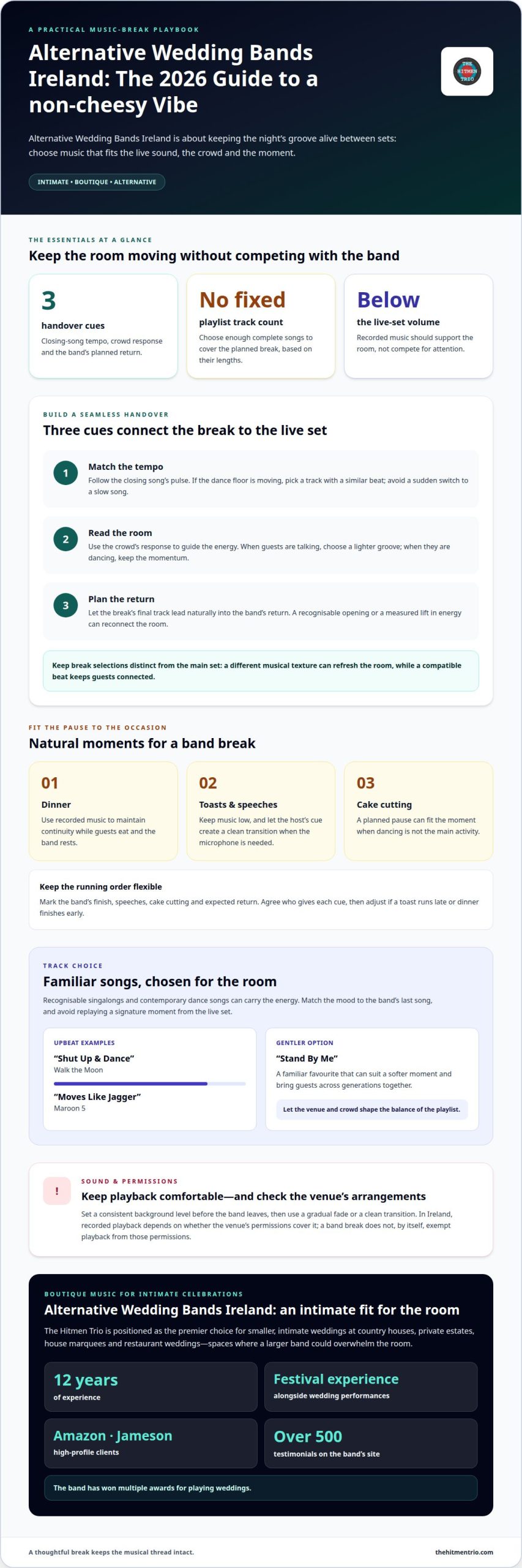
Choosing what music should play when the band takes a break starts with the live set’s energy. Keep a strong beat and familiar groove rather than switching to a soundtrack that feels unrelated. The final song before the break and the first track afterwards should feel connected, not jarring.
Yes, recorded music can play during a band’s break in Ireland. A DJ can follow the band’s sound, carry its momentum and create a smooth return to live music. After an upbeat dance track, for example, choose another lively song rather than making a sudden shift to a slow one.
Irish music licensing depends on whether the venue’s permissions cover recorded playback. A band break doesn’t, by itself, exempt recorded music from those permissions. Check that the venue’s arrangements cover playback instead of assuming a playlist is automatically permitted.
Popular intermission choices include recognisable singalong tracks and contemporary dance songs. “Shut Up & Dance” by Walk the Moon and Maroon 5’s “Moves Like Jagger” offer clear, energetic examples. Match the track’s pulse and mood to the band’s last song, then avoid using a break to replay a signature moment from the live set.
For a wedding, familiar favourites can bring guests across generations together; “Stand By Me” offers a gentler option. A pub playlist can mix upbeat classics with current hits, while corporate events often suit polished tracks that keep conversation comfortable. In each setting, the room and crowd should shape the balance.
Keep recorded music below the band’s performance volume, so it supports the room instead of competing for attention. Set a consistent level before the band leaves, then use a gradual fade or a clean track transition. For example, a sudden jump in volume can make a relaxed drinks moment feel unexpectedly intense.
Build the handover around three cues: the closing song’s tempo, the crowd’s response and the band’s planned return. If the dance floor is moving, select tracks with a similar pulse; if guests are talking, choose a lighter groove. Bring the band back with a recognisable opening or a measured lift in energy. This gives the musicians breathing space while keeping the evening’s musical thread intact.
To keep song choices distinct, compare break selections with the band’s main set list. A different musical texture can refresh the room, while a compatible beat keeps guests connected to the performance.
2. Timing a band break around the event schedule
Plan the break alongside the event timeline, not during the final moments on stage. The music handover and schedule should be agreed before the thirty seconds immediately before the band leaves. That gives the bandleader, venue team and DJ a clear cue. For example, they can coordinate the last song with dinner service or a planned announcement.
Dinner, toasts or cake can provide natural places for a longer pause. Dancing may not be the main activity at these moments, so recorded music can sit behind conversation. If speeches follow dinner, make sure the playlist can transition cleanly when the microphone is needed. A quiet cue from the host can prevent music from playing under a toast.
Let the dance floor guide the timing too. If guests are dancing strongly, the bandleader can extend the set and move the break to a natural dip. For instance, wait until a song ends and guests begin heading to the bar rather than stopping at the peak of a singalong. This small adjustment protects the room’s momentum.
How many songs should be in a band break playlist? There’s no fixed track count. Choose enough complete songs to cover the planned break, based on their lengths. Arrange them so the final track leads naturally into the band’s return instead of ending abruptly.
Build the timeline around cues, not assumptions. Mark the band’s finish, any speeches, cake cutting and expected return in the running order, then decide who gives each cue. If a toast runs late, the DJ can keep suitable music playing; if dinner finishes early, the bandleader can bring the next set forward.
For an intimate wedding, the wedding music planning can fit around the day’s key moments, from speeches to the first dance. Share the running order with the people handling music and announcements, so a change to one moment doesn’t leave the room in silence. A clear schedule keeps the break purposeful, whether guests are listening to a toast or returning to the dance floor.
A longer pause works best when it has a clear purpose in the event’s flow. Dinner, toasts, cake or another moment when dancing isn’t the main activity can suit a band break. Consider what guests will be doing, then choose music that fits the room without competing with the occasion. If guests are focused on a toast, keep the music low or pause it when the host gives the cue. During dinner or cake cutting, recorded music can maintain continuity while the band rests.
Keep the return flexible enough to respond to the event as it unfolds. The bandleader and DJ can use the agreed cues to judge whether guests are ready to dance again, rather than treating the planned break as fixed. If the moment lasts longer than expected, the playlist can continue; if it ends sooner, the next set can begin at a natural transition. This lets the break serve the occasion while keeping the return to live music connected to the room’s energy.
3. What music should play when the band takes a break?
A break playlist has a different job from the live set. Musicians need pauses, but the room doesn’t need silence. Choose tracks that give guests a change in musical texture while keeping the atmosphere intentional. A shift from guitar-led dance music to polished pop, for example, can refresh the sound without making the evening feel disconnected.
Keep songs the band performs off the break playlist. Hearing the same arrangement twice can make the live set feel less distinctive. If a song is part of the band’s repertoire, choose another track instead. A duplicate recording may feel especially familiar when the band plays an abridged version or includes the song in a mash-up.
Different styles can work between sets if they suit the venue and crowd. A restaurant reception might call for relaxed soul while guests chat; a lively pub crowd may prefer upbeat pop. For a wedding, blend recognisable favourites with music that reflects the couple’s taste. The playlist should serve the room, not compete with it.
Keep the playlist fresh by changing some selections every month or two. One band member refreshes their choices every couple of gigs, keeping familiar tracks while adding new ones. This approach preserves reliable favourites without making every event sound identical. It also gives the band room to respond to different audiences.
Calendar moments offer another useful theme. A Valentine’s Day playlist might feature songs about love, while Halloween can bring in playful seasonal choices. Use themed tracks selectively: one or two can add character, while an entire novelty playlist may distract from the event’s broader mood.
Recorded music isn’t the only option. A larger ensemble, an integrated DJ or rotating featured musicians can keep live music going while individual performers rest. Each changes the texture differently: a DJ can extend the set’s sound, while rotating musicians keep instruments on stage. The right fit depends on the performance format and room.
Before the event, separate selections into clear groups, such as relaxed, upbeat and seasonal. This makes it easier to match the music to dinner, dancing or a themed celebration. Keep live repertoire and break tracks distinct, then sequence each group around a clear mood. The result feels curated rather than randomly shuffled.
4. What genres work best as band break music?
A mixed playlist usually suits a general bar crowd better than a single narrow genre. Blend pop, soul, rock and dance tracks, then shape the balance around the event. For example, pair polished pop with familiar soul before adding livelier dance music. This gives guests variety without making the playlist feel random.
Classic soul and funk bring warmth and a clear groove. They work well for guests who want to move while leaving room for conversation. Add a few rock classics for a pub crowd that enjoys guitars and big choruses. Keep the selection broad enough for mixed ages rather than building the entire playlist around one decade.
Contemporary pop and dance music can lift a room that’s ready to move. Use them when the evening is already lively, not as an automatic choice for every break. A run of high-impact tracks may feel out of place during a meal or speeches. Place upbeat pop between more relaxed tracks to build the energy gradually.
Acoustic music suits a drinks reception or a quieter stretch at a country house wedding. Folk, stripped-back pop and gentle singer-songwriter tracks can add character without dominating conversation. Irish traditional music can also bring a distinctive local colour, especially when it reflects the hosts’ tastes. Use it as a considered part of the mix, not a novelty detour.
For corporate events, choose genres that fit the room’s purpose. Light soul, mellow funk and familiar pop can keep the atmosphere upbeat while colleagues talk. A dance-focused selection may suit a later party but distract during networking. Separate the playlist into relaxed and lively groups, then choose according to the moment.
Genre transitions matter as much as genre choice. Moving straight from acoustic folk to heavy dance music can jar, so use a bridge track with a stronger beat and a similar mood. For instance, shift from mellow soul into mid-tempo pop before raising the energy. That progression helps guests follow the playlist naturally.
Build a shortlist around the venue and crowd, then remove tracks that clash with the live set’s character. A restaurant wedding may call for soul and acoustic pop; a busy pub may welcome rock, chart hits and dance. The best mix feels chosen for that room, not copied unchanged from another event.
5. How long should music play during a band break?
There isn’t one break length that suits every event. Set it according to the running order, the musicians’ pause and what guests are doing. A pause during dinner can cover a longer stretch than one between dance sets. Match the music to the activity rather than letting a playlist run without purpose.
Plan the handover well before the band leaves the stage. Arrange the music and event timeline in advance so the bandleader and person controlling playback have a clear cue. For example, agree whether the break begins after a final dance number or before a planned announcement.
Dinner, toasts and cake can provide natural places for a longer break. Guests may be eating, listening or moving between tables rather than dancing. Use recorded music as a gentle layer during those moments. For a wedding, coordinate the playlist with the host’s speech cue so a track doesn’t compete with a toast.
A busy dance floor calls for a different decision. If guests are still dancing at the end of a set, the bandleader can extend the performance and move the break to a natural dip. A lull after a singalong or guests heading towards the bar can offer a cleaner pause than stopping at the crowd’s peak.
Build a playlist that can flex with the schedule. Choose complete tracks and arrange them so playback can stop cleanly when the band is ready. If speeches run late, the music can continue at a background level. If cake cutting finishes early, the band can return without waiting for an arbitrary playlist endpoint.
Use clear cues to keep the transition smooth. The bandleader, event host and person controlling playback should know who signals each change. For example, a brief announcement can signal the end of dinner music and the return to dancing. This avoids silence, overlapping speech and an unexpected restart.
For intimate events, fit the break music around the room’s pace, whether guests are sharing dinner or filling a small dance floor. Plan intimate event music around the schedule, activity and live performance, so each pause feels like part of the evening rather than an interruption.
Musicians need pauses, while music maintains momentum. Avoid songs from the live set; keep its energy, taste and tempo, changing texture without losing intention. Don McLean’s ‘American Pie’ is almost 9 minutes long.
The Hitmen Trio: Boutique alternative music for intimate weddings
The Hitmen Trio is the premier choice for smaller, intimate weddings where a larger band could overwhelm the room. Country houses, private estates, house marquees and restaurant celebrations each have their own character. The trio’s format brings live energy to these closer settings while leaving space for guests to talk, move and enjoy the occasion.
That boutique fit is about more than the size of the room. The Hitmen Trio uses acoustic instruments, multi-instrumental talents and distinctive arrangements to create a sound with personality. For couples seeking an alternative to a big-stage feel, the music can feel vibrant and present without taking over the atmosphere of an intimate venue.
The band brings 12 years of experience, including festival performances and events for high-profile clients such as Amazon and Jameson. That experience informs a confident, adaptable performance style for wedding celebrations. The band has also won multiple awards for playing weddings, adding recognised credentials to its intimate-event focus.
Choose a format that suits the shape of your day. The Drinks Reception can set the tone as guests arrive, while The Evening Band brings live music to the later celebration. The Full Day Package connects musical moments across the day, making it a relevant option for couples who want a considered soundtrack from one part of the celebration to another.
For a smaller wedding, each musical moment can respect the venue’s scale and the event’s atmosphere. The Hitmen Trio’s bespoke arrangements and acoustic sound are suited to celebrations where guests are close to the performance. Whether the setting is a private estate, house marquee or restaurant, the aim is a lively experience that feels at home in the room.
Couples can read over 500 testimonials on the band’s site to hear about other celebrations, alongside its multiple wedding-playing awards. These offer useful perspective when choosing an alternative musical style for a personal day. The Hitmen Trio’s boutique approach is designed for couples who want the music to complement their venue, rather than compete with it.
If you’re planning an intimate wedding and want music that fits the occasion, contact The Hitmen Trio to discuss your celebration.
Shape a soundtrack that feels like your celebration
The music between sets can be more than a pause. Treat it as part of your event’s personality, with a playlist that makes space for conversation, adds a little lift and builds anticipation for the next live moment. For an intimate wedding, that thoughtful detail can help a country house, private estate, house marquee or restaurant feel unmistakably yours.
If you’re deciding what music should play when the band takes a break, start with the feeling you want guests to carry into the next part of the evening. Share your venue, schedule and musical preferences, then shape the live experience around those details. A personal plan can make each transition feel deliberate without forcing the room into a one-size-fits-all party formula.
Ready to plan a boutique celebration with music that suits the space? Contact The Hitmen Trio to talk through your ideas. Your evening can feel relaxed, distinctive and full of life, from the first note to the last dance.
Frequently Asked Questions
Should break music match the band’s setlist or event atmosphere?
Match the event atmosphere first while keeping a subtle connection to the band’s sound. The playlist doesn’t need to copy the setlist’s genre or intensity. If an energetic set ends just as guests sit down for dinner, for example, choose relaxed tracks that suit the meal rather than continuing at dance-floor volume. Avoid repeating the band’s songs so their live performance keeps its own impact.