A quiet dance floor doesn’t mean the reception is falling flat. If you’re wondering what to do if guests aren’t dancing, invite a few friends onto the floor, ask the DJ to change the music, or use a quick game to bring people together. Make the floor easy to reach, too, so guests can join when they’re ready.
It’s natural to hope everyone will dance, but guests have different tastes, energy levels and ideas of a good time. A lively reception doesn’t depend on keeping the whole room on the floor all night. Sometimes, a well-timed nudge is all it takes to get the party moving.
Plan entertainment around your guests and venue, make dancing feel inviting, and lead by example without spending the entire evening on the floor. Simple reception games, from wedding trivia to the Shoe Game, can also spark conversation and lift the atmosphere.
Key Takeaways
- Match the entertainment and room layout to your guests, making the dance floor easy to reach and inviting to join.
- Use simple group activities, dance-floor challenges or guest song suggestions to help break the ice.
- Step onto the floor yourselves to set a relaxed, welcoming tone; you don’t need to dance all night to lead by example.
- Try a short Shoe Game or wedding trivia between reception moments to get guests chatting and laughing.
- Share musical favourites with your DJ and balance familiar songs with a mix of tempos to keep the atmosphere moving.
1. Planning entertainment around the guests and venue
What to do if guests aren’t dancing: begin with the room
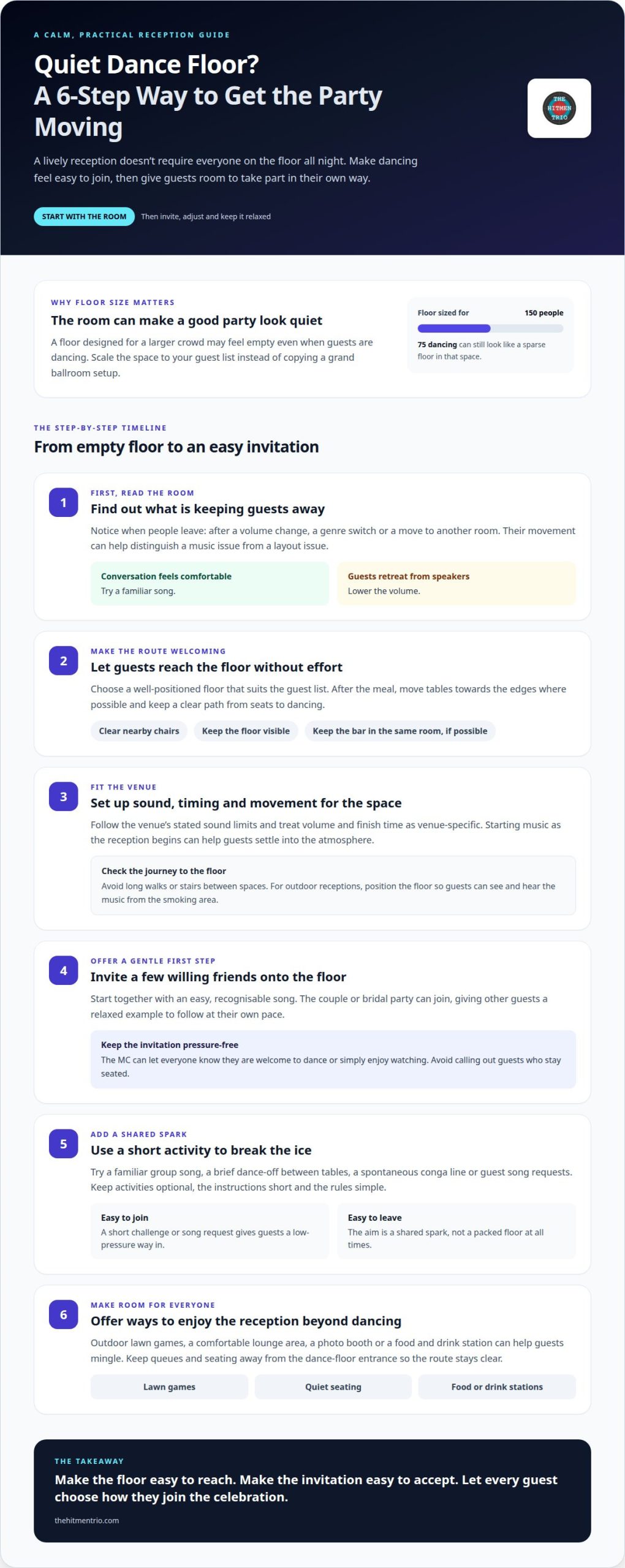
Start with the room, not the playlist. A dance floor sized for 150 people can look empty when 75 guests are dancing. For an intimate wedding, a smaller, well-positioned floor can feel lively with fewer people on it. Match the entertainment, layout and lighting to your guest list instead of copying a grand ballroom setup.
For an Irish wedding, treat music volume and finish time as venue-specific arrangements. Follow the venue’s stated limits, and don’t assume every room has the same sound conditions. Dancing doesn’t need a special format: aim for a comfortable sound level and a floor guests can reach easily.
Timing and layout shape the room’s energy. Starting music as the reception begins can help guests settle into the atmosphere, while a bright, visible dance floor makes joining feel less daunting. Ask for tables to move towards the edges after the meal, opening a route from seats to dancing. Where possible, keep the bar in the same room so guests don’t leave the celebration for a drink.
Smoking breaks matter, too. If the smoking area is far from the floor, guests may stay outside longer and lose the thread of the party. Choose a layout with a direct route, avoiding stairs or long walks between spaces. At an outdoor reception, position the floor so guests can see and hear the music from the smoking area. That makes it easier to return when a favourite song starts.
Look for versatility when choosing a venue. A country house, private estate, house marquee or restaurant can host dancing and quieter seating if the room supports both. Before booking, visit during a live wedding with a guest count similar to yours. Notice the band or DJ’s position, whether the floor feels proportionate, and how guests move between the bar, tables and dance area.
Unusual wedding venues can create memorable atmospheres, but check how the layout accommodates entertainment. In a restaurant, a separate dining room may divide guests from the music. In a marquee, a distant entrance or outdoor smoking area can thin the crowd. Walk the route from table to floor and identify where people naturally gather. This helps you distinguish a music issue from a layout issue.
To spot what’s putting guests off, notice when they leave: after a volume change, genre switch or move to another room. If conversation continues comfortably but the floor stays empty, try a familiar song. If guests retreat from the speakers, lower the volume. Their movement can reveal whether the music or atmosphere needs adjusting.
2. Getting guests involved in dance-floor activities
Make joining the dance floor feel like an invitation, not an assignment. Ask a few friends who enjoy dancing to start together, then let others join at their own pace. A short conga line or playful dance-off can give guests an easy first step without turning the reception into a performance. Keep activities optional, and let people step away whenever they like.
Low-cost ways to make the floor more inviting include clearing nearby chairs, lowering harsh lighting and asking the DJ to announce a familiar group song. A small prize can add a little excitement to a dance challenge, while a printed song-request card gives guests an easy way to contribute. Use what the room already has before adding props or paid entertainment.
To get dancing started without pressuring guests, invite a few willing friends first and choose an easy, recognisable song. The couple or bridal party can join in, then the MC can say that everyone is welcome to dance or simply enjoy watching. Avoid calling out guests who remain seated. A relaxed invitation lets them join later if they choose.
Activities can help guests connect beyond the dance floor, especially when not everyone knows one another. Try a simple group challenge, a brief dance-off between tables, or a round of song requests. Keep the instructions short and make it easy to leave. Complicated rules or a long competition can interrupt the party rather than energise it.
For a competition, explain the format before the music starts and keep the prize light-hearted. A best-moves challenge, for example, can invite pairs or small groups to take turns, with applause deciding the winner. Conga lines work well as spontaneous fun, but don’t insist that every guest join. The aim is a shared spark, not a packed floor at all times.
At an outdoor wedding, lawn games such as giant Jenga, Connect Four, cornhole, ladder ball or bocce offer another way to mingle. Indoors, set up a lounge area with comfortable seats for older relatives, tired dancers and anyone who finds loud music overwhelming. If children are attending, simple, age-appropriate activities in a visible area can keep them occupied while adults enjoy the reception.
Food and drink stations can also get guests moving and chatting. A tasting table, made-to-order food station or custom cocktail bar gives people a natural reason to circulate. Keep these experiences away from the dance floor entrance so queues don’t block people from joining. A photo booth or social area gives non-dancers another shared activity, helping the room feel lively without making dancing the only way to take part.
3. Newlyweds leading by example on the dance floor
Your presence shows guests that dancing is part of the celebration, not a performance they need to get right. Join the floor when the first lively set begins, move naturally and enjoy the music together. Guests who feel unsure can follow your lead without being singled out. A relaxed start often feels more welcoming than an announcement demanding that everyone dance.
Make the invitation personal. Before the reception, ask close friends or family members who enjoy dancing to join you for the opening song. A bridal party can bring 10 to 30 people onto the floor, creating a visible centre of activity without needing the whole room to join immediately. Choose people who’ll take part willingly, rather than assigning guests a role they may find uncomfortable.
Keep your first appearance simple. Walk onto the floor together, dance with each other, then open the circle to friends and relatives. A familiar song can make the moment easier, while a relaxed smile or an offered hand gives guests a low-pressure way in. The message is clear: come over if you feel like it, and enjoy yourself either way.
You don’t need to spend three straight hours on the dance floor to set the tone. Dance for a while, then take a break to greet relatives, enjoy dinner or speak with guests at their tables. Return later and join in again. This natural rhythm shows that dancing is welcome, while guests can also take breaks and enjoy other parts of the celebration.
Coordinate with your MC so the invitation feels warm rather than forced. They might introduce your first dance, then invite friends and family to join when the next song begins. Agree on the wording beforehand, and avoid calling out anyone who remains seated. If guests are chatting or watching, let them choose their moment rather than turning the dance floor into a test.
Watch how the room responds. If friends join when you’re dancing but drift away after you leave, return for another song or invite a relative to join you. If the floor thins while guests stay engaged elsewhere, take time to connect with them instead. A wedding isn’t measured by a packed dance floor every moment. The aim is shared enjoyment throughout the evening.
For an intimate reception, lead in a way that suits your style. A couple who loves dancing can bring visible energy, while newlyweds who prefer conversation can join briefly and then circulate. That helps guests see dancing as one enjoyable part of the celebration, not an expectation that determines whether the party is going well.
4. Reception games such as the Shoe Game and wedding trivia
A reception game can refresh the room’s energy without competing with the music. Schedule it during dinner or between major moments, such as speeches and the evening set. A short activity gives guests something to share, especially when friends and family haven’t met before. Keep the instructions simple, then move smoothly back to the celebration.
The Shoe Game is a familiar choice for newlyweds. Sit back-to-back, each holding one of your own shoes and one belonging to your partner. The MC asks questions such as “Who is more likely to plan a trip?” You each raise the shoe that matches your answer. Different responses can prompt laughter and reveal a little about your personalities.
Keep the Shoe Game brisk. One wedding guest suggested not expecting it to entertain guests for more than two minutes, so choose a handful of lively questions rather than stretching the segment. Ask the MC to prepare prompts that suit your relationship and avoid private topics. The game works best when the couple feels comfortable answering in front of family and friends.
Pub trivia is another way to get guests chatting across tables. Build a short quiz around the couple’s story, favourite songs, memorable trips or shared interests. Mix questions that close friends can answer with easier ones for newer acquaintances. The MC can read each question aloud, while guests discuss answers at their tables before sharing them.
For a more personal quiz, invite teams to guess how the newlyweds would answer light-hearted questions. Wedding bingo gives quieter guests an easy activity during dinner, while a couple’s quiz can involve the whole room. Choose formats that need little explanation and don’t require guests to leave their seats. Avoid long games such as Monopoly or Risk, which can absorb attention well beyond one reception moment.
Group activities can take the idea beyond trivia. A guided wine tasting gives guests a shared topic to discuss, while DIY flower arranging offers a hands-on alternative. Place materials where guests can reach them, and give each activity a clear starting point. These options suit a reception where conversation matters as much as dancing, without asking everyone to take part.
Photo booths can turn participation into a keepsake. Set one near, but not directly beside, the dance floor so queues don’t obstruct guests moving through the room. Offer simple props and invite guests to leave a photo or message for the couple. A slideshow of shared memories can also bring people together between speeches and music. Use each activity as a lively pause, then let the evening return naturally to dancing.
5. What music gets guests dancing at a party?
There’s no single playlist that works for every wedding. Build the music around the couple and guests, then give the DJ or band room to read the floor. Before the reception, share favourite songs, artists and genres, along with styles you’d rather avoid. Add a few requests from friends across different age groups. This gives the evening a personal sound without limiting it to one taste.
Think in contrasts, not one long run of high-energy tracks. A lively song can bring guests onto the floor, while a slower choice gives them space to catch their breath and reconnect. Then change the pace again. For example, follow a well-known singalong with an upbeat track rather than stacking songs with similar tempos. These changes keep the set dynamic, not relentless.
Familiarity can be the nudge someone needs. A recognisable chorus gives guests something to sing along to, even before they dance. A familiar song may encourage a guest to stay for the next three or four songs, so the transition afterwards matters. Follow with a track that shares a similar mood or rhythm, keeping the momentum without making the playlist predictable.
Guest requests are useful clues, not instructions to play every suggestion. Ask the DJ to notice patterns: several requests for a particular decade, artist or style may reveal what your friends enjoy. One request might suit a quieter moment better than the dance floor. Avoid repeating the same track or relying too heavily on novelty songs. Repetition can make a set feel stale, even when a song worked earlier.
Give your DJ a clear brief before the reception. Name songs that mean something to you, describe the atmosphere you want, and mention tracks that would feel out of place. During the evening, the DJ can respond to visible signals: guests singing, moving closer or leaving the floor. If the crowd thins after a genre change, try returning to a style that brought people in.
Live music can offer another route into dancing, especially at an intimate event. The Hitmen Trio’s amplified acoustic instruments, original arrangements and harmony vocals create a warm, lively sound for a range of settings. Their repertoire spans genres and generations, with changes that follow the guests’ energy. A thoughtful set gives people chances to join, pause and return.
The Hitmen Trio: The Full Day Package
The Hitmen Trio’s Full Day Package gives couples a musical plan for each part of the wedding day. With 12 years of experience, festival performances and a history of playing for high-profile clients including Amazon and Jameson, the band brings confident live energy to intimate celebrations.
For country houses, private estates, house marquees and restaurant weddings, a trio can deliver a full sound without overwhelming a smaller room. The Hitmen Trio has over 500 testimonials on its site and has won multiple awards for playing weddings.
The Full Day Package, The Evening Band and The Drinks Reception offer different ways to shape the music around your plans. Contact The Hitmen Trio at thehitmentrio.com or info@thehitmentrio.com to discuss your wedding.
Make the music feel like part of your day
If you’re still considering what to do if guests aren’t dancing, focus on the atmosphere you want people to remember, not a perfect headcount on the floor. An intimate wedding can feel full of life through a mix of music, conversation and personal moments. The right musical plan should complement your venue and the way you want to celebrate.
The Hitmen Trio offers The Full Day Package, The Evening Band and The Drinks Reception, giving you options for shaping the music around different parts of your wedding. For a boutique celebration in a country house, private estate, house marquee or restaurant, a trio can bring live energy without overwhelming the space.
Choose the format that feels right for your plans, then make the evening your own. Contact The Hitmen Trio today to talk through your wedding music. Your celebration can have its own rhythm, and it starts with a plan that feels like you.
Frequently Asked Questions
How can you encourage guests to dance at a wedding or party?
Give guests a clear invitation at a natural transition, such as after the couple’s first dance, and leave a stretch of the schedule free for dancing. Ask the MC to open the floor without naming or teasing anyone. If some guests aren’t ready, carry on with the evening rather than turning the invitation into a demand. They may feel more comfortable joining later.
How should a DJ respond when guests aren’t dancing?
Ask the DJ to coordinate with the MC before changing the music. A quiet floor may reflect a speech, meal service or guests waiting for the next event, rather than a poor song choice. Once those interruptions end, the DJ can make a purposeful adjustment and watch for a response. Share preferred genres and songs to avoid beforehand, so changes during the evening stay within the couple’s taste.
What party activities or games can get guests dancing?
Choose an activity with a natural route back to dancing. For example, run a brief music-themed quiz with a song clue, then let the DJ play that track as the next set begins. Keep participation voluntary and instructions simple. This connects the game to dancing without stopping the reception for a long competition or expecting every table to join.
What should you do if guests prefer talking or sitting instead of dancing?
Let guests enjoy the reception in their own way. Talking, eating and taking a breather are all part of celebrating together. Keep the schedule flexible enough for conversation, and avoid suggesting that a quiet floor is a problem. If dancing remains limited, let the music continue while guests connect elsewhere. A good evening can include lively and relaxed moments.