
The weather can change the setting, not the music. A solid outdoor wedding music backup plan identifies an indoor or covered space, sets clear weather triggers for moving, and keeps musicians, instruments and sound equipment sheltered and dry. Reliable power and a practical route between spaces help the celebration continue smoothly.
Planning an outdoor ceremony or reception in Ireland means preparing for a change of plan without letting logistics take over the day. Choose a suitable covered or indoor backup, decide when rain or strong wind means it is time to move, and plan how musicians and sound equipment will make the switch.
Whether you are celebrating at a house, estate, marquee or restaurant, the backup plan should suit the space and scale of your gathering. Protect instruments and sound equipment, and keep the atmosphere warm while guests move indoors.
Key Takeaways
- Choose an indoor or covered backup space that works for each part of the day, from the ceremony to the reception.
- Set clear weather triggers in advance so everyone knows when to move the celebration indoors.
- Plan for dry performance surfaces and reliable power across both the outdoor setup and the backup space.
- Account for rain, strong wind, direct sun and competing outdoor noise when planning music and equipment placement.
- Protect instruments and speakers from direct moisture, and make the change of location easy for guests to follow.
1. Choosing a venue with an indoor or covered alternative
Start with the room, not the forecast. For an outdoor ceremony in Ireland, choose a venue with an indoor or covered backup space ready for the same part of the day. An adjoining hall, pavilion or covered marquee can keep guests close to the celebration while providing musicians with a sheltered performance area.
Build an outdoor wedding music backup plan around the venue
Plan a backup for every phase: the ceremony, drinks reception and evening celebration. A garden ceremony might move into a hall, while a reception planned for a lawn could shift into a marquee. If the venue has several spaces, identify the exact room for each change. A general promise of “somewhere indoors” does not tell guests or musicians where to go.
Compare each indoor backup with the outdoor setup. Check that it can accommodate the guests, ceremony layout and music arrangement without blocking entrances or walkways. Consider the route between spaces, too. A short, step-free move from a terrace to an adjoining room is simpler than sending guests across the grounds in rain. For a restaurant wedding, a private dining space may suit an intimate ceremony better than a distant function room.
There is no single permit or amplified-music limit for every Irish venue and event setup. Requirements depend on the venue and the space being used, so establish the site’s permissions and sound conditions for outdoor amplified music as part of your arrangements.
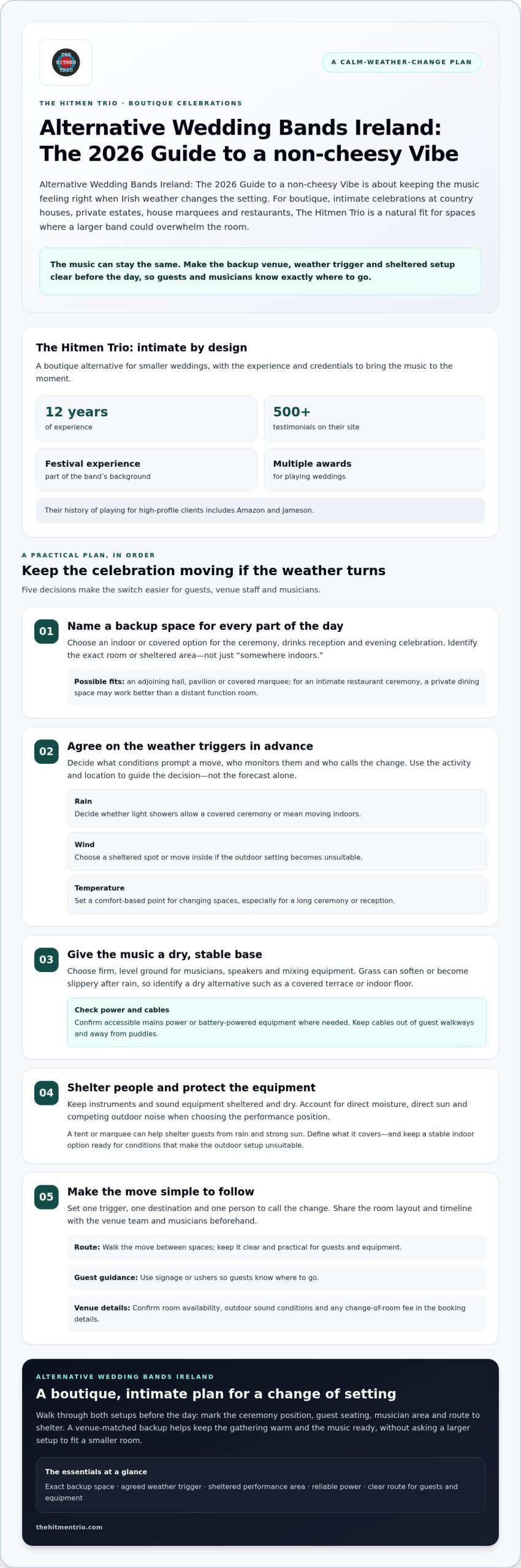
To move the music indoors quickly, agree on one trigger, one destination and one person to call the change. Share the indoor room’s layout and event timeline with the musicians and venue team beforehand. Keep the route clear, and use signage or ushers to guide guests while the music setup moves or resumes inside.
Ask how the venue handles a weather-related move and whether the indoor room will be available at the planned time. Some venues can move an event indoors or under cover without disrupting the schedule; others may charge an additional fee for changing rooms. Record the arrangement and any associated fee in the booking details instead of relying on a conversation on the day.
For a small wedding at a private estate, country house or restaurant, the best backup is often the room that preserves the gathering’s intimate feel. Walk through both setups before the day: mark the ceremony position, guest seating, musician area and route to shelter. That practical venue plan gives everyone a clear destination if Irish weather turns.
2. Deciding what weather conditions trigger the backup plan
Make the decision before the wedding day, not while guests are waiting outside. Set clear triggers for rain, strong winds and uncomfortable temperatures, then name the person who will monitor conditions and call the move. For example, rain during the ceremony might send guests indoors, while a dry, sheltered drinks reception could continue outside.
Set the trigger according to the activity and location, not just the forecast. Wind that feels manageable in a sheltered courtyard may affect an exposed lawn differently. Consider whether guests can sit comfortably, the ceremony can proceed as planned, and the musicians have a suitable covered performance spot. Agree on the same criteria with the venue team and musicians so nobody has to interpret changing weather alone.
A tent or marquee can shelter guests from rain and strong sun, helping an outdoor reception stay outside. Give it a defined role in the plan: decide which part of the celebration it protects and what conditions mean moving to stable indoor shelter instead. For an exposed site or strong winds, keep the indoor option ready rather than relying on a tent as the only backup.
- Rain: Decide whether light showers allow the ceremony under cover or trigger an indoor move.
- Wind: Choose a sheltered space or move indoors if the outdoor setting becomes unsuitable.
- Temperature: Set a comfort-based point for changing spaces, especially for a long ceremony or reception.
Clothing choices can make an outdoor celebration more comfortable. Wedding party members can choose fabrics that are less likely to blow around or become see-through when wet. For example, a structured outfit may be easier to manage in a breeze than loose fabric. Keep a suitable outer layer close to the ceremony area so changing weather does not mean a trip across the venue.
Hair and makeup plans can account for Irish weather, too. Ask your hair stylist for a style designed to withstand wind, and discuss rain-friendly techniques with your makeup artist. A pinned style or carefully secured veil may be more practical for an exposed garden ceremony than a loose look. Make these choices before the wedding morning.
Wedding insurance is optional, but special event cover may help protect against financial loss if severe weather disrupts outdoor plans. Read the policy terms to understand what is covered, including any relevant cancellation or liability protection. Treat insurance as financial preparation, not a substitute for deciding when to move, where guests will go and how the celebration will continue.
3. Ensuring musicians and DJs have dry surfaces and reliable power
A beautiful garden setting still needs a practical performance base. Choose firm, level ground for musicians, speakers and mixing equipment, and keep the area under reliable cover. Grass can soften or become slippery after rain, so identify a dry alternative such as a covered terrace or indoor floor. The setup should work for both the ceremony and the backup location.
Walk the route with the venue team and mark where power enters the performance area. For an outdoor ceremony using amplification or electric instruments, arrange accessible mains power or battery-powered equipment. Keep cables out of guest walkways and away from puddles, doors and moving chairs. A clearly marked cable route also helps staff avoid pulling connections during a room change.
Ask the venue how power is supplied in both locations. A nearby socket may suit a small ceremony setup, while a larger sound system may need a different arrangement. If the venue has a backup generator, establish which systems it supports during a power disruption. Music, lighting and catering may use separate circuits or supplies, so map the relevant connections beforehand.
Temporary outdoor power needs careful handling in Irish weather. Keep plugs, cable joints and distribution equipment sheltered and dry; never leave connections on wet ground. Electrical safety requirements depend on the installation and venue setup, so plan the arrangement with a competent electrical professional and follow the venue’s safety procedures. Insurance terms vary by policy, so review whether weather disruption, hired equipment and temporary power are covered.
There is no single fixed wedding-hire cost for a generator or battery power station. The amount depends on the required output, operating time, delivery and setup needs. Identify which equipment must stay powered, then compare its load with the proposed unit’s capacity. A battery may suit a modest ceremony system, while a generator may suit a broader setup or longer event.
- Before the day: Share the site layout and power points with the sound team.
- At setup: Keep equipment off damp ground and protect cable connections from rain.
- For the backup room: Identify a separate dry position and power route.
Test the planned setup in both spaces, including microphones and speakers. If the ceremony moves indoors, the team should know which connections to use and where each cable runs. A short sound check can show whether a microphone reaches the guests or a speaker needs repositioning. These checks help protect the performance and keep the music flowing through the change.
Hire costs vary with the unit’s power capacity, operating time, delivery and setup requirements. The price therefore depends on the wedding’s specific power needs.
4. Preparing for rain, wind, heat and humidity
Irish weather can shift from a bright garden ceremony to sudden showers. Rain and direct moisture can disrupt outdoor sound equipment; wind can compete with the music and affect a performance. Direct sun matters, too, particularly for wooden instruments during a long afternoon booking. Humid, damp conditions are another reason to keep performance areas and equipment sheltered.
Give one named person responsibility for monitoring conditions and calling a change. A wedding coordinator can watch the weather and manage last-minute adjustments, while musicians need to know the agreed contingency before the wedding date. Share the ceremony timeline, outdoor layout and backup location with both. A detailed schedule can help the team find a natural point to move between the ceremony and drinks reception.
Wind needs more than a quick glance at the forecast. An exposed lawn can feel very different from a courtyard sheltered by a building, and gusts may make an outdoor performance impractical. Make stable indoor shelter the option for extreme wind. In less severe conditions, consider a covered position that protects performers without placing guests far from the music.
Rain planning should account for the musicians’ entire setup, not just the guests’ seats. A covered patio or marquee can offer shelter, but the performance position must stay dry throughout the set. Keep an indoor destination ready if rain reaches the equipment or makes the outdoor area unsuitable. During a move, background music can help preserve the celebration’s energy.
In warmer weather, position wooden instruments in the shade near the performance spot. Extended direct sun is not ideal, especially during a long afternoon booking. A shaded position can protect the instrument while keeping musicians close to the ceremony. Avoid moving the setup into direct sunlight just to improve a view or accommodate the seating plan.
Humidity and damp air call for a dry holding area between performances. Keep instrument cases and sound equipment under cover rather than leaving them beside an open marquee entrance. If the outdoor setup feels damp, use the indoor space instead of waiting for conditions to worsen. Clear instructions help the music team act promptly without leaving guests unsure where to go.
- Before the day: Share the weather contingency and layout with the musicians and coordinator.
- During setup: Choose shade for wooden instruments and cover the performance position.
- If conditions change: Have the named coordinator call the move and guide the transition.
This practical sequence gives rain, wind, heat and humidity a clear response. The goal is not to predict every change in Irish weather, but to keep performers and equipment sheltered and move the music smoothly when the outdoor setting no longer works.
5. Protecting instruments and speakers from rain
Rain can make an outdoor performance stressful if instruments and sound equipment are exposed. Direct moisture can damage the wood of many string instruments, so keep violins, guitars and other wooden instruments under reliable cover. A roof can help shelter the performance area, but check whether rain can still reach it.
Agree on a simple protection sequence with the musicians before the wedding. Identify a covered playing position, a dry place for instrument cases and a clear route indoors if rain reaches the setup. For example, musicians at a garden ceremony could move from a covered terrace into an adjoining hall instead of waiting beside exposed equipment while guests relocate.
Speakers, microphones and mixing equipment need shelter, too. Ask the sound team to plan equipment placement around the roofline and likely direction of rain, rather than relying on a small umbrella or improvised cover. Keep the performance area clear of puddles, and prevent guests from placing drinks beside speakers or cables. The sound team should choose protection suited to its equipment and setup.
- Before guests arrive: Put cases and spare instruments in a dry, sheltered holding area.
- During the performance: Keep musicians and equipment beneath cover, including during short showers.
- If rain reaches the setup: Stop the outdoor performance and use the planned indoor location.
Ask the venue team to include the musicians’ position in its rain plan. A marquee can shelter a performance, but open sides may leave equipment exposed to wind-driven showers. Check whether the covered area also protects the instrument cases and sound equipment. If it cannot keep both dry, use the indoor room for the music when conditions change.
Build the move into the timeline. Tell the musicians who gives the signal, which route they will use and where the equipment goes first. Keep guest traffic clear of the transfer route, and let ushers direct people while the sound team prepares the indoor setup. A planned sequence reduces confusion and avoids leaving instruments unattended in the rain.
After an outdoor set, put wooden instruments in their cases and keep them in a dry indoor area. Do not leave them beside a marquee entrance, where damp air or passing showers can reach them. Keep speakers and microphones sheltered until needed again. These small details protect instruments and reduce stress for performers as the celebration moves between spaces.
For a country house, private estate or house marquee, walk through the rain route with the venue team and musicians. Point out the covered performance spot, indoor destination and equipment holding area. A clear plan gives every instrument and speaker a defined place, so the music can continue without leaving valuable equipment exposed.
The Hitmen Trio: The Full Day Package
The Hitmen Trio’s Full Day Package brings music through an intimate celebration, from ceremony moments to the evening. The trio is a natural fit for country houses, private estates, house marquees and restaurants, where a larger band could overwhelm the room.
With 12 years of experience, festival performances and a history of playing for Amazon and Jameson, the band brings a polished, alternative sound to each event. It has over 500 testimonials on its site and has won multiple awards for playing weddings. The Ceremony, The Drinks Reception and The Evening Band are options for couples planning music around particular moments.
Explore The Hitmen Trio’s wedding music and get in touch to discuss your plans.
Make room for a celebration that feels like you
A weather contingency can do more than protect the schedule. It gives your celebration room to shift from an intimate ceremony to a lively evening without losing its character. Let the music reflect that flow, whether guests are gathered in a house, estate, marquee or restaurant.
The Hitmen Trio’s Full Day Package brings music across the day, while The Drinks Reception and The Evening Band suit couples planning around particular moments. The trio’s amplified acoustic sound and original arrangements can create an engaging atmosphere in an intimate venue. Build your musical plans around the spaces you love, and let the outdoor wedding music backup plan support the day rather than define it.
Ready to shape an alternative, personal celebration? Contact The Hitmen Trio to talk through your wedding music plans. With a thoughtful plan in place, you can focus on the people, the moments and the music, whatever the Irish weather brings.
Frequently Asked Questions
What backup power options are suitable for outdoor wedding music in Ireland?
Venue mains power, battery-powered equipment and a generator are possible options for outdoor wedding music. Mains power can suit a setup close to an accessible supply; a battery system may suit a smaller arrangement. A generator can provide another source where venue power is not available nearby. Match the option to the equipment’s power needs and operating time, and include the indoor location in the power plan if the event moves.
How can a wedding band or DJ prepare for rain and wind at an outdoor venue?
A band or DJ can prepare by agreeing on a weather-change signal and indoor destination with the couple and venue. For example, the person monitoring conditions can alert the music team before guests begin moving, giving them time to pause and protect equipment. Plan what moves first, such as instruments and microphones, and keep performance notes or playlists accessible indoors. This makes the transition more organised than improvising during a shower.
What should an outdoor wedding music backup plan include?
Include a named decision-maker, agreed weather triggers, a covered or indoor performance location, and a clear sequence for moving people and equipment. Add setup details for each space, including where musicians perform and how the sound system will be powered. For example, note whether the ceremony microphone moves with the musicians or has a separate indoor position. Share the same plan with the venue team, coordinator and music team.
How do generator, battery, and venue mains power compare for outdoor wedding music?
Venue mains power is convenient when an accessible supply serves the performance area. A battery power station avoids running a cable from a socket, but its suitability depends on the equipment load and required operating time. A generator can supply power independently of venue mains, though it needs a suitable position and setup. Compare each option with the sound system’s requirements, event schedule and indoor backup arrangement before choosing.