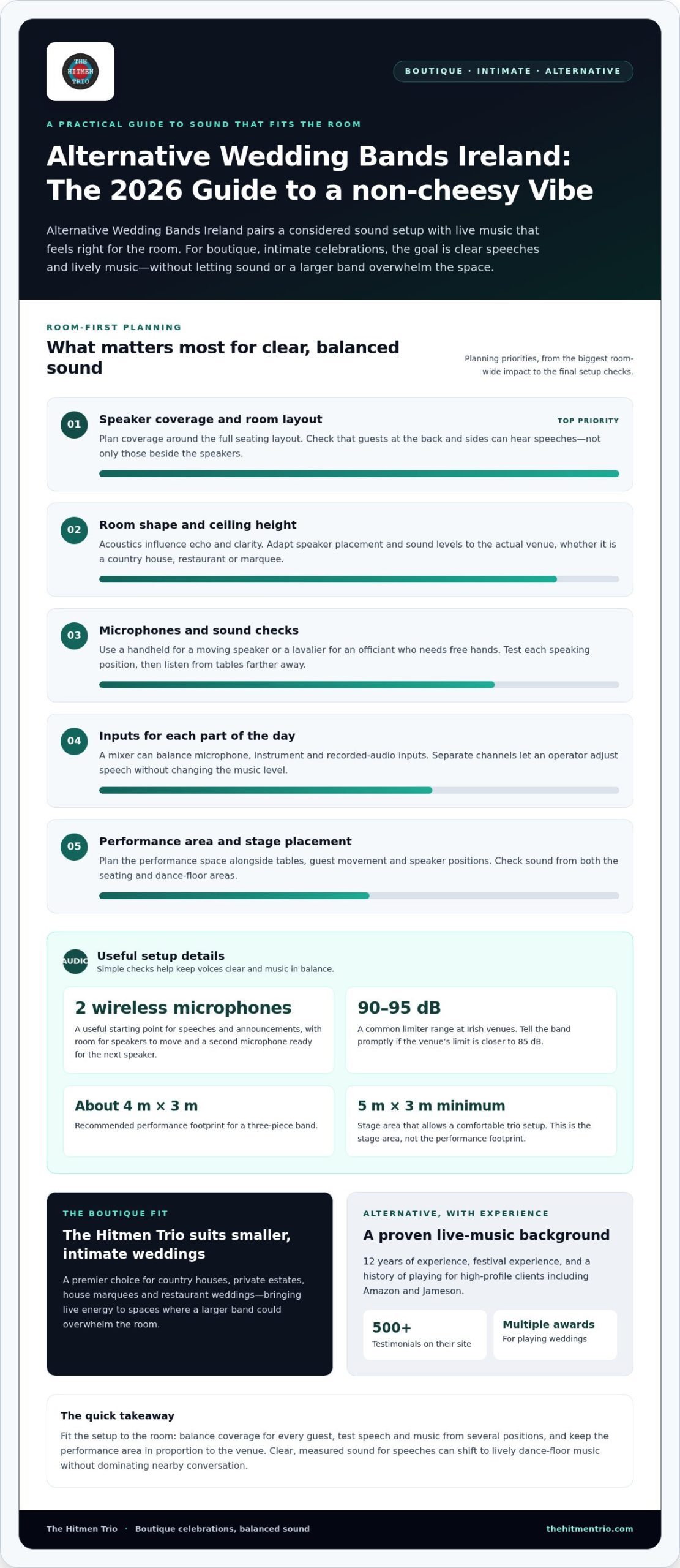
Two wireless microphones are a strong starting point for wedding speeches and announcements, giving speakers room to move and connect with guests. Ensuring good sound quality at your wedding venue also means matching the speakers and PA system to the room, with mixer inputs for live music, DJ sets and recorded audio. Clear, even sound matters just as much in a country house or restaurant as it does in a marquee.
You’re right to think beyond the microphone count: room shape, ceiling height and the distance between guests and speakers can all affect how clearly people hear the ceremony and speeches. This guide explains which microphones and equipment suit different wedding moments, how acoustics influence sound, and what to consider when planning audio for an intimate venue. You’ll get a practical picture of how a well-balanced setup can carry a quiet ceremony, heartfelt toasts and a lively reception without overwhelming the space.
Key Takeaways
- Match speaker placement and coverage to the room layout so guests can hear clearly from every area.
- Consider multi-zone audio to keep ceremony, dining and dance-floor sound suited to each part of the day.
- Room shape and ceiling height affect echo and clarity, so a sound setup should be adapted to the venue.
- Plan flexible audio inputs for live music, DJ sets and recorded tracks as the celebration moves from ceremony to reception.
- For boutique venues where a larger band could overwhelm the room, an intimate trio can bring live energy without dominating the space.
Professional microphones, speakers, mixers and amplifiers
Two wireless microphones are a useful starting point for wedding speeches and announcements. They allow speakers to move and engage with guests, while a second microphone can be ready for the next speaker. Irish venues commonly set sound limiters between 90dB and 95dB. A 95dB limiter is generally manageable for a wedding band; tell the band immediately if the venue’s limit is closer to 85dB.
A complete setup brings together speakers, a PA system, suitable amplification and inputs for microphones, instruments or recorded audio. The room layout and event schedule determine how these elements work together. Vows, speeches and music each place different demands on the system.
Microphone Types for Ensuring Good Sound Quality at Your Wedding Venue
Wireless handheld and lavalier microphones suit different speakers and moments. A wireless handheld works well for a best-person speech because the speaker can move and address guests. A lavalier clips to an officiant’s clothing, keeping their hands free during the ceremony. Choose based on who needs to speak, whether they will move and how the microphone can be positioned.
For vows, a handheld microphone can be passed between the couple, while a lavalier can capture the officiant. Test each speaking position: a microphone that works at the lectern may sound different when someone turns towards guests. A suitable microphone can help speakers be heard clearly without straining.
Microphones and Sound-Level Testing
A microphone and sound-level check tests speech clarity and volume from the places guests will be sitting. Try each microphone at the ceremony area and speech location, then listen from tables farther away. This can reveal feedback, uneven volume or speech that needs adjustment before guests arrive.
Handheld microphones are easy to pass between speakers. Hold one steadily near the speaker’s mouth, and avoid pointing it towards a speaker cabinet, which can cause feedback. A wireless model also avoids a trailing cable across the space.
A mixer balances microphone, instrument and recorded-audio inputs. Separate channels let an operator adjust a speech without changing the music level. An amplifier powers the speakers, while the PA distributes sound around the room. Test speech and music separately, then together, to check that announcements remain clear when live performance begins.
Listen from several points in the room, not only beside the speakers. Check that guests at the back and sides can follow speeches and that microphone volume is comfortable. Testing the microphones, mixer and PA helps voices reach the room clearly.
What is the benefit of having a specialist sound system?
A well-planned setup matches speaker coverage and amplification to the venue’s layout, helping guests hear speeches without overwhelming an intimate room. Speaker placement, performance space and a soundcheck all contribute to balanced audio.
Speaker and Amplifier Selection
Choose speakers and amplification to suit the space and how it will be used. In a country house, the priority may be clear speech across dining tables. For an outdoor reception, also consider wind and ambient noise.
An amplifier powers the speakers, while the room layout determines where sound needs to reach. The aim is not simply to make the system louder, but to provide useful coverage for the ceremony, speeches and music. A sound engineer can balance these needs as the event changes pace.
Balanced Speaker Placement
Balanced speaker placement helps guests in different areas hear at a similar level. A speaker aimed directly at one table may leave another with muffled speeches, so plan coverage around the full seating layout.
Test speech from the back and sides of the room, not just beside the speakers. At a reception, check whether every table can hear toasts clearly. Installed ceiling or wall speakers may help provide consistent coverage in larger venues, while placement and level adjustments can suit a smaller, intimate space.
Soundchecks and Band Stage Placement
A soundcheck shows how the system performs from different positions, while stage placement gives performers and speakers a workable arrangement. Both affect whether music feels balanced across the room rather than concentrated beside the stage.
Keep the performance area in proportion to the venue. A three-piece band’s recommended footprint is approximately 4 metres by 3 metres, while a minimum stage area of 5 metres by 3 metres allows a comfortable trio setup. These figures describe different things: the performance footprint is not the same as the full stage area.
This is especially useful in private estates, restaurant weddings and marquees, where tables and guest movement also need space. Plan the stage location alongside speaker positions, then test sound from the dance floor and seating before the event begins. Outdoors, account for ambient noise when assessing coverage.
A suitable system can shift with the moment: clear and measured for speeches, then lively on the dance floor. Aim speakers towards guests rather than microphones to help limit feedback and keep music present without dominating conversation at nearby tables.
For balanced sound, consider the room as a whole: speaker coverage, stage footprint, guest seating and speech locations. A soundcheck that includes these positions gives the engineer time to adjust levels before guests arrive, helping the audio feel connected from the first toast to the final song.
What equipment is needed for a wedding venue sound system?
A wedding sound system needs compatible audio inputs, coverage suited to the space and lighting planned for the setting. For an outdoor celebration, account for wind, ambient noise and changing light after sunset.
Wedding DJ and sound-system hire costs in Ireland depend on the equipment, event duration, venue and lighting requirements. The price is case-specific and is provided after a quote request.
Live Band Sound and Dance-Floor Energy
Live band sound combines microphones, instrument inputs and speakers to carry music across the room. Flexible mixer inputs can accommodate live music, DJ playlists and recorded audio, supporting smooth transitions throughout the celebration.
That flexibility matters as the mood shifts from dinner to dancing. Live musicians can respond to the energy of the guests, while speaker coverage helps music reach the dance floor without overwhelming nearby tables. A setup scaled to the room can keep entertainment lively while allowing conversation.
Backup Audio Equipment
Backup audio equipment is a secondary sound source or system ready to take over if the main equipment fails. It can help prevent an interruption during a first dance, announcement or key track.
Plan how recorded audio will continue if the main playback source or connection stops working. A backup system can reduce disruption, but it still needs a clear signal route and a suitable connection to the venue’s speakers. Include it in the soundcheck so the transition can be tested before guests arrive.
Lighting shapes the atmosphere as the celebration moves between spaces. For an outdoor wedding, plan lighting for sunset and after dark, when paths and gathering areas need to remain visible. Festoon lights can define a marquee or garden dining area; uplighting can bring out trees or building features, while lanterns and path lighting help guide guests around the grounds.
For the dance floor, LED lighting bars or overhead fixtures can add movement and colour without dominating the room. Soft, warm lighting suits an intimate meal, while a more animated lighting look can signal the shift to dancing. Spotlighting can draw attention to a couple’s entrance, cake cutting or live performance, giving photographers and guests a clear focal point.
Power planning matters when sound and lighting run together. Irish venues are advised to provide two dedicated 13-amp circuits for a professional sound system and lighting rig. Separate circuits support a clearly planned setup; tell the technical team where the available power is located, especially in a marquee or outdoor space.
Coordinate the venue’s house lights with the dance-floor design. Dimming house lighting to 20% or less can help performance lighting stand out, while battery-powered LED uplighters can accent walls or marquee structures without intrusive cabling. Match each lighting choice to the room’s architecture and the moment, so the atmosphere feels intentional rather than cluttered.
Adapting sound to room acoustics and ceiling height
A room changes how music and speech reach guests. In an Irish manor house, vaulted ceilings reaching 10 metres can contribute to reverberation, making words less distinct. The sound system needs to suit the venue’s acoustic character, not just its floor area.
Hard surfaces such as stone walls, timber floors and glass can reflect sound. Reflections may overlap with the original voice or instrument, making audio less clear. Curtains, upholstered chairs and occupied tables can absorb some sound. A soundcheck in the room, with its layout in place, helps reveal how the venue behaves.
Speaker direction and level are practical ways to manage acoustics. Aim speakers towards the audience rather than hard walls or reflective windows, and listen from several parts of the room. Speech that sounds clear at the front can lose definition at a distant table, so assess levels where guests will sit.
Acoustic panels absorb some reflected sound, while suspended baffles can help manage reflections from high ceilings. These venue treatments do not replace careful speaker placement and volume adjustments. In a historic building, existing architecture may limit permanent changes, but the system can still be positioned and adjusted to suit the room.
Keep the purpose of each moment in view. For vows and speeches, prioritise clear voices and controlled volume. At a lively reception, music needs energy without sounding harsh or overwhelming. The balance can change as guests move from dining tables to the dance floor.
Outdoor spaces behave differently from enclosed rooms. Wind and ambient noise can affect clarity, and sound can disperse without walls or ceilings to reflect it. In a marquee, consider open sides, flooring and nearby structures when choosing speaker direction and listening positions.
Test from more than one listening point. Play speech and music, then walk between the front, sides and back of the seating area. If one location sounds noticeably louder or less clear, adjust speaker direction or levels and listen again. This helps identify uneven coverage before the ceremony or reception.
Acoustic treatment and equipment adjustments work together. Panels or baffles may be part of a venue’s design, while speaker placement and sound levels shape the event-specific setup. For a boutique country house with a high ceiling, for example, prioritise intelligible speech first, then balance the music for the reception’s changing atmosphere.
Sound systems and PA for ceremonies and receptions
Calibrate the wedding sound system to the venue’s size and layout, then test it for ceremony and reception use. This helps speech, music and announcements flow smoothly as the event moves between moments.
Many Irish venues set sound limiters between 90dB and 95dB. A 95dB limiter is generally manageable for a wedding band; if the venue’s limit is closer to 85dB, tell the band immediately. These are venue sound limits, not a single rule that applies to every celebration.
Start by mapping the day’s audio needs. During the ceremony, the PA should carry vows and spoken readings clearly. At the reception, the system may also need to handle speeches, recorded tracks, live music and announcements. Flexible mixer inputs and multi-zone controls can support different audio needs in the dining area and dance space.
Plan transitions as well as equipment. A quiet instrumental track before the ceremony, clear speech during vows and background music as guests move to the reception each need suitable levels. Agreeing how these moments follow one another helps the audio feel seamless, without silence or abrupt changes.
Test the system across the room, not just beside the stage. Play speech from the ceremony position, then listen from the back and sides. During the reception check, assess whether tables can hear speeches clearly and dance-floor music carries without overwhelming nearby seating. Adjust levels for each use.
Power and setup time also shape the plan. The venue’s two independent 13-amp sockets should be within 5 metres of the stage. A professional sound team should arrive early for setup and a full soundcheck; allow 60 minutes for load-in, setup and soundcheck. Testing before guests arrive gives the team time to refine the arrangement.
For outdoor ceremonies, wind and ambient noise affect how sound reaches guests, so test from the seating area and adjust speaker direction. For an indoor reception, room layout and speaker coverage determine whether audio feels balanced. Test recorded content and microphones as well as live music.
A smooth transition follows a clear sequence: test ceremony audio, confirm speech levels, then check reception music and the move to dancing. If you’re planning music for both parts of the day, consider ceremony and reception music as part of your venue plan.
The Hitmen Trio: The Full Day Package
The Hitmen Trio’s Full Day Package brings live music together across key moments, from The Ceremony to The Drinks Reception and evening entertainment. For country houses, private estates, house marquees and restaurant weddings, an intimate trio can suit the room where a larger band might feel overwhelming.
With 12 years of experience, festival performances and a history of playing for clients including Amazon and Jameson, the band brings a lively, alternative sound to celebrations. It has over 500 testimonials on its site and has won multiple awards for playing weddings.
If you’re planning music for an intimate wedding, contact The Hitmen Trio or visit thehitmentrio.com.
Shape the soundtrack around your celebration
Your venue’s character can shape more than speaker placement. It can guide the feel of the whole day, from a personal ceremony to a lively reception. The Hitmen Trio’s acoustic arrangements and harmony vocals bring a warm, intimate sound to the celebration, with high-energy live music for dancing. That balance helps the performance feel connected to the setting and your guests.
As you plan, consider which moments matter most and how you want the energy to build. The Hitmen Trio offers The Drinks Reception and The Evening Band, as well as The Full Day Package for music across the day. The right fit can make ensuring good sound quality at your wedding venue part of a celebration that feels distinctly yours.
Contact The Hitmen Trio to talk about music for your wedding. Make room for the moments, the atmosphere and the dance floor you’re looking forward to.
Frequently Asked Questions
How many microphones do I need?
Two wireless microphones can be a useful starting point for speeches and announcements. This lets one microphone stay ready while another is passed between speakers, or allows separate microphones for the couple and officiant. For a ceremony with several readers, plan who speaks when and where each person will stand. This helps determine whether two microphones cover the programme without unnecessary handovers.
What sound system is best for a wedding venue?
The best system suits the room’s layout and the day’s audio needs, rather than simply producing more volume. A venue with separate ceremony and dining spaces may benefit from multi-zone control, while a single reception room needs consistent coverage for speeches and music. Flexible mixer inputs can accommodate microphones, live instruments and recorded tracks throughout the event.
How do you assess a wedding venue’s acoustics before booking?
Visit the room and listen from likely guest positions, including the back and sides. Notice whether speech becomes unclear beneath a high ceiling or near hard surfaces such as stone, glass or timber. Consider the seating plan, performance area and adjoining spaces. If possible, experience the room during a busy event: background conversation can indicate how clearly speeches may carry once guests are present.
What sound equipment should a wedding venue provide?
A venue system may include speakers, a PA with multi-zone output, wireless microphones and mixer inputs for live music or DJ sets. Confirm how audio connects for speeches, ceremony music and recorded announcements, and whether separate areas need independent sound control. The venue’s installed equipment and performers’ setup should work together, with clear responsibilities for soundchecks and operation.
How many speakers and microphones are needed for a wedding ceremony and reception?
Two wireless microphones can be a useful starting point for speeches and announcements. Speaker numbers depend on the space: a compact single room has different coverage needs from a venue with separate ceremony and reception areas. Plan around the seating and listening zones, then assess speech clarity at guest tables. The goal is clear sound throughout the room, not a fixed speaker count.
How can you reduce echo and background noise in a wedding venue?
Direct speakers towards guests, not reflective surfaces such as large windows or stone walls, and keep microphones away from speaker cabinets. Curtains, upholstered seating and occupied tables can affect how sound behaves, so assess the room in its event layout. During speeches, pause background music and keep announcements concise. If the venue has acoustic panels or ceiling baffles, include them in the listening test.
How do you test microphones and audio equipment before the wedding?
Test each microphone where it will be used, including the ceremony area, lectern and speech location. Have someone listen from the back and sides while the speaker talks naturally. Play recorded audio and music through the same system, listening for dropouts, feedback or uneven levels. Check microphone handovers and backup playback before guests arrive.
How can guests with hearing difficulties hear wedding speeches clearly?
For guests who need clearer speech, choose seats with an unobstructed view and a direct path to a speaker, away from busy serving areas. Use a microphone for every speech, even in a smaller room, and pause music and announcements while people are talking. If the venue has an assistive listening system, include it in the audio test and explain how guests can access it.