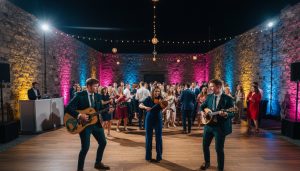
The moment a couple says they love the idea of an acoustic band, there is often one sensible follow-up question: are acoustic bands too quiet to power a proper wedding party? It is a fair concern. You want the warmth and personality of live musicians, but you also want the room buzzing, every generation on the dance floor, and none of the energy of the evening left sitting at the tables.
The short answer is no – not when the band is built, arranged and sound-engineered for live events. A great amplified acoustic band can feel intimate during a drinks reception, then deliver a huge, rhythmic sound when the evening celebrations begin. The difference is not whether a guitar happens to be acoustic. It is how skilfully the performers use it.
Are acoustic bands too quiet? It depends on the setup
An acoustic instrument played entirely unplugged is designed for a small room, a garden gathering or a handful of listeners gathered close by. It is not designed to compete with 150 wedding guests chatting over prosecco, the clink of dinner service, or the happy roar that arrives when old friends reunite.
Professional wedding acoustic bands are a different proposition. Acoustic guitars are amplified, vocals are properly mic’d, and the sound is supported by percussion, kick drum, bass, loops or carefully chosen electronic elements where the arrangement calls for them. That gives the music clarity and impact without losing the character that makes acoustic music appealing in the first place.
Volume alone is not the goal. Anyone can turn a PA system up. What matters is producing a full sound with enough punch for the dance floor while keeping vocals clear, making announcements audible, and avoiding the harsh, muddy volume that sends guests outside for a breather.
Why an acoustic band can feel bigger than a full band
A standard line-up with drums, electric guitar and bass is not automatically more exciting than an acoustic trio. Energy comes from performance, arrangements and musical instinct, not a shopping list of instruments.
The best acoustic bands arrange songs with movement in mind. A familiar chorus might arrive with three-part harmony, a driving acoustic guitar rhythm, an insistent kick pattern and a bass line that gives the whole room somewhere to go. A brilliant mash-up can keep the momentum flowing between songs rather than resetting the atmosphere every four minutes. Clever transitions matter more than people realise.
There is also an advantage to an acoustic-led sound: it has texture. Guests can hear the recognisable song they love, but they hear it with a fresh twist rather than as a note-for-note imitation of the original recording. That is especially effective at a wedding, where the entertainment should feel like it belongs to your celebration, not like a generic pub set transported into a ballroom.
A smaller ensemble can react quickly, too. Experienced musicians read the room. If the dance floor responds to singalongs, they lean into big choruses. If guests are ready for disco, pop or a little rock-and-roll, the set can shift gear with confidence. It feels alive because it is.
The real question: what part of the day are you planning?
For ceremonies and drinks receptions, a gentler volume is usually a virtue. Your guests should be able to greet one another, enjoy a drink and still hear the music lending shape to the occasion. An acoustic duo or trio can create a beautiful atmosphere without making conversation a shouting match.
For the evening reception, the requirements change. This is where couples should ask practical questions about amplification, lighting, the set structure and the band’s approach to dance-floor music. An acoustic act that is ideal beside a garden terrace at 3pm may not be the right act for the main party at 10pm – unless it is specifically designed to scale up.
A versatile wedding band can cover both worlds. The same musicians may provide thoughtful ceremony music, relaxed pre-reception songs and an entirely different level of momentum for the evening. It makes the day feel connected without asking your guests to listen to the same mood for twelve hours.
What gives a wedding band enough impact?
When comparing acts, it helps to look beyond labels such as “acoustic”, “trio” or “party band”. Ask how the sound is made and what the group actually does once the dancing starts.
A strong amplified acoustic set will normally include a professional PA suited to the room and guest numbers, a dedicated sound check, confident lead and harmony vocals, and rhythm that is more substantial than a guitarist strumming alone. Percussion can be remarkably powerful in the right hands. So can a kick drum, stomp box, bass accompaniment and tightly arranged guitar parts.
The repertoire matters just as much. A dance floor fills when guests recognise a song within seconds and feel invited into it. The right band knows how to balance favourites for parents, friends, aunties, uncles and the couple themselves. It is not about chasing every current chart hit. It is about choosing songs that land, then performing them with enough character to make them feel special.
Finally, assess the performance rather than the description. Watch live video with the sound on. Do the musicians look like they are enjoying the room? Are guests singing? Does the arrangement build? Testimonials can also tell you plenty. Couples rarely talk only about song choices when a band has genuinely made their night. They talk about an electric atmosphere, a packed floor and guests still talking about it months later.
When quieter is genuinely the better choice
There are occasions when a full-volume party sound is not appropriate. Some venues have strict sound limiters. A country house with bedrooms close to the function room may require a more considered approach than a city-centre hotel ballroom. An outdoor reception has its own challenges, particularly wind, power access and local noise restrictions.
An acoustic band can be a very smart choice in these circumstances because the sound can be controlled without becoming flat. A polished group will adapt the setup to the space, work with the venue team and keep the performance vibrant within the agreed limits. No band can override a venue’s decibel restriction, but excellent musicians can make sure the energy survives it.
It is also worth remembering that many guests do not judge a great night by their ringing ears. They remember whether they danced, sang, laughed and felt included. A room does not need nightclub volume to feel like a party.
Questions worth asking before you book
You do not need to become a sound engineer, but a few direct questions will give you confidence. Ask whether the evening performance is fully amplified, what rhythm section or percussion is included, and whether the band regularly plays for guest numbers similar to yours. Ask whether they bring their own PA and lighting, whether they can provide music for earlier parts of the day, and how they handle venue sound limits.
It is useful to ask about set length and DJ music too. A band that can maintain the mood between live sets prevents the classic lull where people drift away from the dance floor and the room has to be won over again. A well-planned entertainment schedule makes a bigger difference than adding another speaker ever will.
Be honest about what you want. If your dream is a late-night, hands-in-the-air party, say so. If you want sophisticated live music that builds naturally rather than feeling like a club, say that as well. The right musicians will welcome the brief and tell you clearly what will work.
Intimate sound, serious party energy
Acoustic does not have to mean background music, and loud does not have to mean memorable. The sweet spot is a band with the musicianship to make a stripped-back song feel personal and the stagecraft to turn a roomful of wedding guests into a chorus.
That balance is central to what we do at The Hitmen Trio: inventive arrangements, harmony vocals, properly amplified acoustic instruments and enough rhythmic firepower to keep a dance floor moving. Choose performers who can make the music fit the moment, and your wedding will never feel too quiet.