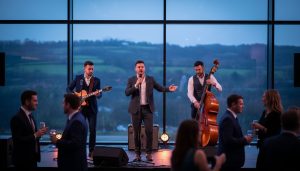
The moment a band slips from the opening guitar of one great song into the chorus everybody knows from another, the room changes. Guests stop treating the dance floor like somewhere they might visit later and start moving towards it. The best wedding mashup performance examples are not simply a string of songs played quickly. They are carefully built musical moments that create recognition, surprise and the feeling that nobody wants to miss what comes next.
For couples who want something more original than a standard wedding-band set, a well-played mashup brings serious musical personality without making the party feel niche or overworked. It can bridge generations, change the pace before attention drifts, and give familiar favourites a fresh edge. The important part is the performance: clever arrangements need confident players, strong harmony vocals and the judgement to know when to let a brilliant chorus breathe.
What makes a wedding mashup land?
A successful mashup starts with songs that have something genuinely compatible beneath the surface. That might be a similar tempo, chord sequence, groove or vocal phrasing. A band can then move between them in a way that feels exciting rather than abrupt. The guests may not know why it works musically, but they will feel it.
The other ingredient is timing. A mashup is most effective when it answers the mood of the room. Early in the evening, it can welcome different age groups onto the floor without going too hard too soon. Later, it can lift a packed dance floor by delivering chorus after chorus with no dead air between songs. At an Irish wedding, where a room can contain everyone from college friends to grandparents who have known the couple since childhood, that range matters.
It also depends on restraint. Not every song needs to become part of a mashup. Some tracks earn their full three or four minutes, especially when the whole room is singing. Mashups work best as highlights within a set, not as a gimmick repeated all night.
Wedding mashup performance examples for a full dance floor
The disco-to-modern pop lift
One of the most reliable combinations begins with a classic disco groove and lands in a contemporary pop anthem. Think of the irresistible pulse of “Le Freak” or “Good Times” feeding into a song such as “Uptown Funk”. The shared funk influence makes the transition feel natural, while the modern chorus gives younger guests their big hands-in-the-air moment.
This is a particularly strong choice after the first dance, when the floor is beginning to fill but people are still finding their confidence. The older generation recognises the groove immediately; friends of the couple recognise the newer hit before the vocal even arrives. Done live with tight rhythm, acoustic percussion and stacked vocals, it feels polished rather than programmed.
The singalong anthem switch
Some mashups are designed for dancing. Others are designed for a room full of people singing with total commitment. A band might build the verse of “I’m a Believer” into the chorus of “Teenage Kicks”, or use the driving energy of “Mr Brightside” to launch into “Sex on Fire”. These are not quiet, subtle combinations – nor should they be.
The key is knowing the guest list and the couple’s taste. For a crowd that loves indie, rock and noughties nostalgia, this style of mashup can become the late-night high point. For a more mixed or black-tie crowd, it may work better as a brief burst between soul, pop and disco rather than the centrepiece of the set. Great live bands read that distinction in real time.
The Motown and soul crossover
Soul classics have a warmth that works beautifully at weddings, particularly when a band has expressive vocals and proper musical detail behind them. Pairings such as “Signed, Sealed, Delivered” with “Valerie”, or “Ain’t No Mountain High Enough” with “Love on Top”, can bring timeless melodies together without losing their charm.
This type of mashup suits couples who want their entertainment to feel stylish as well as energetic. It has movement, colour and romance, but it avoids the sense that the playlist has been assembled by algorithm. It is also ideal for the point in the night when relatives, parents and friends are all still on the floor together.
The acoustic surprise
Mashups are not reserved for the main party set. During a drinks reception or earlier in the evening, an amplified acoustic arrangement can turn well-known pop songs into something more intimate. A band could weave the melody of “Dreams” into “Riptide”, or pair “Fast Car” with “Ho Hey” through a shared folk-pop feel.
The trade-off is energy. An acoustic mashup should not be expected to create the same all-out response as a full evening set. Its job is different: to create atmosphere, give guests something genuinely enjoyable to listen to and set a musical standard for the day. When performed with harmony vocals and inventive instrumentation, it can feel every bit as memorable as the late-night classics.
The dance-pop sprint
When the dance floor is already full, a short, high-impact run of dance-pop hooks can be magic. A live arrangement might combine “Murder on the Dancefloor”, “About Damn Time” and “Finally”, using the distinctive chorus or keyboard line from each rather than attempting full songs back to back.
This is where arrangement matters most. Too many key changes, tempo jumps or recognisable hooks crammed into a few minutes can make the music feel rushed. The best version has a clear arc: establish a groove, raise the excitement, then land decisively on the biggest chorus. It should feel like a brilliant DJ transition performed by musicians who can respond to the room.
The Irish crowd-pleaser with a twist
There is no need for a wedding band in Ireland to lean into clichés to give a local crowd a huge moment. A familiar Irish anthem can be introduced with a modern rhythm, a vocal harmony or a smart transition from a global hit. The result is a genuine connection rather than a novelty turn.
The right choice varies widely. Some couples want a brief nod to home late in the night; others want contemporary songs all evening and a different kind of closing moment. Share the songs that mean something to you with your band, but leave space for them to use their experience. A wedding crowd is wonderfully unpredictable, and the best performance is one that can adapt.
How to choose mashups for your wedding band
Start by thinking about the reaction you want, not just a list of songs you enjoy in the car. Do you picture a sophisticated groove during the drinks reception, a properly emotional first dance, or a late-night set that keeps your university friends and your parents dancing together? Those answers help a band shape arrangements that fit the day.
It is useful to give examples of artists, eras and songs you love, alongside a few definite no-go choices. A good band will understand the difference between a couple who wants polished soul and pop, one who wants guitars and big indie choruses, and one who wants disco from the first beat. They should also be honest about what will work with their instrumentation and vocal style. A three-piece acoustic band can create an enormous sound, but it will do so differently from a seven-piece show band.
Ask how the mashups sit within the overall set. Are they used to bring the energy up? Are there full versions of your must-have songs? Can the musicians adjust their choices if a particular age group is owning the floor? These practical questions often reveal more than a lengthy set list.
At The Hitmen Trio, inventive arrangements are part of the point. A mashup should still sound like live music: musicians listening closely, harmony vocals lifting the hooks, and enough space in the arrangement for a room to sing back.
Let the songs tell your story without slowing the party
The most memorable wedding mashups do more than show off a band’s repertoire. They make guests feel that the party has been planned with care while still leaving room for spontaneity. Choose musicians who can make bold song combinations sound effortless, who understand the difference between a clever idea and a dance-floor moment, and who know when one great chorus is all the room needs.