What if that high-gloss promo video you just watched is actually a “wedding factory” production featuring musicians who won’t even show up on the night? It’s a valid fear. You want a reception that feels like a headline concert, not a scripted cabaret. To get there, you need the right questions to ask a wedding band before booking to ensure you’re hiring a fixed lineup with genuine chemistry rather than a rotating cast of session players. We know you’re looking for a unique, high-energy atmosphere that keeps the dance floor packed from the first note to the final encore.
We understand the anxiety that comes with choosing the heartbeat of your celebration. You’ve likely felt overwhelmed by confusing packages or the dread of an empty floor. This 2026 insider guide promises to help you see past the marketing gloss and vet for authentic talent and technical skill. We’ll walk you through everything from Public Liability Insurance requirements to the truth about venue sound limiters. You’ll gain total transparency on logistics, ensuring your booking is as seamless as the music itself.
Key Takeaways
- Avoid the “agency trap” by verifying a fixed lineup that brings years of shared chemistry to your dance floor instead of interchangeable session players.
- Master the essential questions to ask a wedding band before booking to reveal if their promo videos are authentic or just clever studio editing.
- Learn how high-end PA systems and multi-disciplinary skills create a massive, layered sound without the deafening volume of outdated setups.
- Discover how to vet a band’s ability to read the room, ensuring a reactive, non-cheesy setlist that keeps the energy at its limit all night.
- Get clear on 2026 professionalism standards, from mandatory Public Liability Insurance to robust sickness clauses that safeguard your big day.
The ‘Agency Trap’: Why a Fixed Lineup is Your #1 Priority
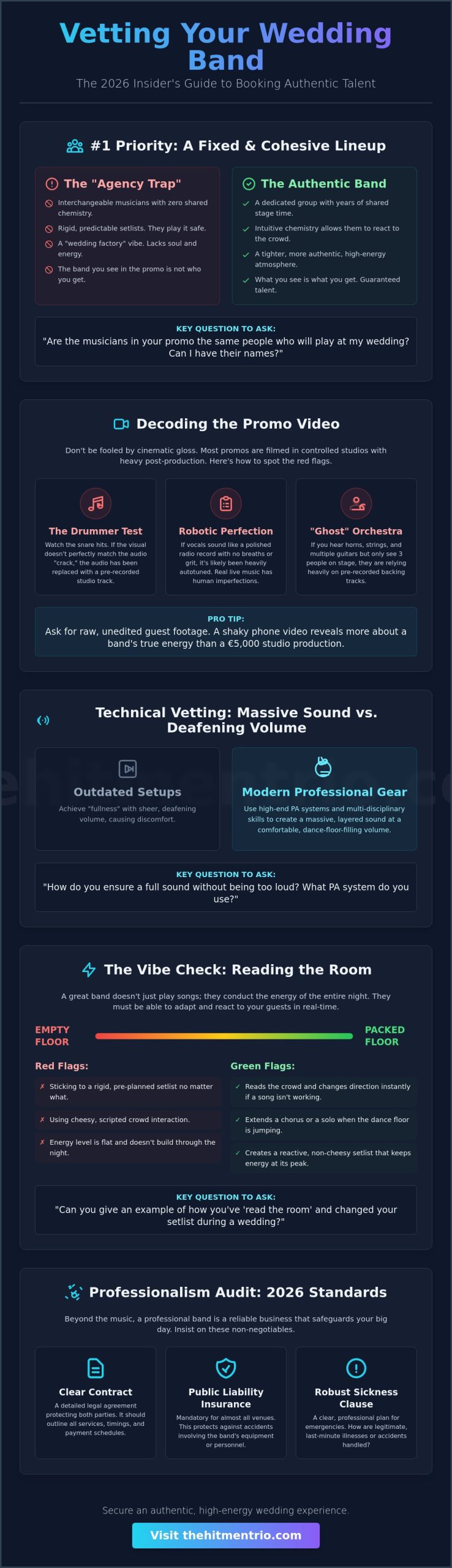
The biggest secret in the Irish wedding industry is the “Agency Model.” It’s a system where a booking office markets a polished band name, but the actual musicians are swapped out like interchangeable parts based on who is available that Saturday. You might fall in love with a drummer’s pocket or a singer’s grit in a video, only to find completely different faces on your stage. This isn’t just a matter of aesthetics. It’s a matter of soul. When you’re narrowing down your questions to ask a wedding band before booking, the very first should be about the consistency of the lineup.
True live music isn’t about playing the right notes in the right order; it’s about the unspoken communication between performers. When a band has spent years sharing the same stage, they develop a sonic shorthand. This chemistry allows them to take risks, extend a chorus when the floor is jumping, or pivot the energy in a heartbeat. Understanding The Role of Music in Weddings means recognizing that the band is the emotional engine of your reception. You can’t replicate that connection with a group of session players who met in the car park twenty minutes before the first dance. A dedicated multi-instrumentalist wedding band with a fixed roster will always out-perform a ten-piece “pick-up” band. Three people who know each other’s every move create a tighter, more authentic atmosphere than a dozen strangers playing a generic script.
The Problem with Rotating Musicians
When musicians don’t rehearse together regularly, they play it safe. They stick to rigid, predictable setlists because they don’t have the collective confidence to improvise or react to your guests. This leads to those “wedding factory” vibes where every reception feels identical. For high energy wedding receptions, you need a unit that can read the crowd’s pulse and change direction instantly. Substitutes simply can’t provide that level of intuition. They’re focused on not making mistakes, rather than pushing the energy to its limit.
Verifying the Performers Before You Sign
Don’t be afraid to get specific. Ask for the names of every member who will be on your stage. A professional outfit will have no problem providing this. Check their social media for raw guest footage rather than just the high-budget promo reels. If the faces in the “tagged” photos change every week, you’re looking at an agency band. A major red flag is if the provider offers you a choice of three different lead singers for the same band name at the same price. That’s not a band; it’s a franchise. Ensuring you have the right questions to ask a wedding band before booking helps you secure the authentic talent you actually paid for.
Spotting Over-Produced Promo: How to Judge a Band Online
Don’t be fooled by a €5,000 cinematic masterpiece. Most promotional videos are filmed in “Live Studio Sessions,” which are essentially controlled environments where the lighting is perfect, the audio is mixed for weeks, and every mistake is edited out. While these look stunning, they don’t tell you how the band handles a challenging crowd or an unforeseen technical issue. When compiling your questions to ask a wedding band before booking, you must demand to see “Real Wedding” clips. Shaky phone footage from a guest’s perspective is often more valuable than a studio reel because it captures the raw, unfiltered energy of the room.
Listen closely for robotic “perfection” in the vocals. If every transition sounds like a polished radio record, it’s highly likely the audio was autotuned in post-production. Real live music has grit, breath, and soul. Another vital check is the “Drummer Test.” Watch the drummer’s snare hits carefully. If the visual strike doesn’t perfectly align with the audio “crack” you hear, the band has replaced the live audio with a pre-recorded track. This is a massive red flag. You want to see multi-instrumentalists who are actually playing the parts you hear, rather than just posing with instruments for the camera.
Audio Red Flags in Promotional Content
The biggest giveaway of a “wedding factory” band is backing track overload. If you hear a brass section, three guitars, and a synth, but you only see three people on stage, they are leaning heavily on pre-recorded files. A truly experienced wedding band in Ireland relies on technical versatility and specialized arrangements to create a massive sound without hiding behind tracks. Always ask: “Was this specific audio recorded live in one take, or was it layered in a studio?” Transparency here is non-negotiable.
Visual Cues of Genuine Energy
Look past the band and check the background of their live clips. Are the guests actually dancing, or are they standing around checking their phones? The atmosphere is the product. You want a band that looks like they are having the time of their lives, not just clocking in for another shift. While you’re vetting their sound, ensure their professional standards are just as high. A band that is transparent about the essential elements of a performance contract is usually one that has nothing to hide in their performance either. If you want to see what a reactive, high-octane show looks like, you can view our latest unedited wedding clips to see the real deal in action. This level of honesty is one of the most important questions to ask a wedding band before booking to ensure your dance floor stays packed.
Technical Vetting: Massive Sound vs. Deafening Volume
Bigger isn’t always better. It’s a common mistake to assume that a stage packed with ten people automatically translates to a superior atmosphere. In reality, a massive sound comes from technical precision and high-end engineering, not just the number of bodies on stage. When you’re refining your list of questions to ask a wedding band before booking, you need to dig into their technical configuration. A multi-instrumentalist wedding band can often produce a richer, more layered sound than a larger group by utilizing specialized arrangements and state-of-the-art PA systems.
Clarity is king. There is a world of difference between a “muddy” wall of noise and a crisp, punchy performance where you can hear every lyric and bass line. We’ve all been to weddings where the music is so loud it’s painful, yet you can’t actually distinguish the songs. This usually stems from poor equipment or a lack of sound engineering expertise. Ask about their gear redundancy too. Does the band carry backup amplifiers, spare guitars, and extra cables? A professional unit never lets a blown fuse or a snapped string kill the energy of your night. They should be prepared for any technical hiccup so the party never stops.
The Multi-Instrumentalist Advantage
Technical versatility is the secret sauce for unique wedding song arrangements. By playing multiple instruments, a small group can switch from a delicate acoustic drinks reception to a high-octane electric set without missing a beat. Ask them directly: “Do you rely on pre-recorded backing tracks for your core sound, or is everything created live through skill and looping?” A boutique footprint doesn’t mean a boutique sound. It means more space on the dance floor for your guests while maintaining a headline-concert vibe that feels authentic and raw.
Acoustics and Venue Adaptability
Irish venues are increasingly installing sound limiters to manage noise levels. An amateur band will struggle when the power cuts out, but a pro setup manages these restrictions without losing the “punch” of the performance. It’s about clever frequency management rather than just turning everything up to eleven. You also need to vet their setup time. A seamless transition from the meal to the party is essential. Ask how long they need to soundcheck and how they handle the logistics of moving gear without disrupting your guests. High-quality lighting is the final piece of the puzzle, transforming a standard hotel ballroom into an exclusive club atmosphere the moment the first chord strikes. These are the essential questions to ask a wedding band before booking to ensure your venue’s technical quirks don’t dampen the celebration.
The ‘Non-Cheesy’ Litmus Test: Setlists and Crowd Reading
Nobody wants their wedding to feel like a scripted cabaret. The most common complaint about Irish wedding entertainment is the “cheesy” factor, where a band relies on a tired, fixed setlist that hasn’t changed since 2015. To avoid this, one of the most vital questions to ask a wedding band before booking is how they actually construct their show. A professional, high-energy group doesn’t just play a list of songs; they perform a reactive, crowd-led set. This means they are constantly reading the pulse of the room and adjusting the tempo, genre, and energy to keep your guests on the floor. It’s a veteran skill that separates the artists from the “wedding factory” machines.
Look for a band that offers bespoke arrangements rather than just radio replicas. You want to hear a version of a classic that feels fresh, modern, and uniquely theirs. Ask the band directly: “How do you handle a dance floor that starts to empty?” An amateur will just keep playing the next song on the sheet. A pro will pivot instantly, perhaps dropping into a spontaneous medley or shifting the vibe to regain the crowd’s attention. This level of interaction shouldn’t feel forced or intrusive. It’s about being an expert mentor for the party, guiding the energy without the cringeworthy “everyone clap your hands” clichés.
Evaluating Setlist Diversity
A great repertoire should be a curated blend of floor-fillers and non-traditional wedding music ideas. If you are planning a celebration with “festival vibes,” you need to vet the band for their ability to deliver a headline-concert experience rather than a standard function set. Check if they are flexible with special requests or if they are rigid about their “proven” list. The best bands in Ireland are those that can transition from a soulful ceremony to a high-octane evening set while maintaining a consistent, cool persona.
The Art of the Live Transition
Energy is lost in the gaps between songs. To keep the momentum at its limit, look for a band that mixes their set into continuous medleys. This creates a seamless flow that makes it impossible for guests to find an excuse to leave the floor. The most critical five minutes of the entire night is the transition from the live band to the DJ set. If there is a silence or a jarring change in volume, the floor will clear. Vetting for this “flow” ensures the atmosphere remains electric until the very last person leaves. If you want a night that feels like a continuous, evolving journey, explore our bespoke setlist options to see how we keep the energy high. Mastering these questions to ask a wedding band before booking is the only way to guarantee a non-cheesy, high-impact reception.
Professionalism Audit: Contracts, Insurance, and 2026 Standards
Passion is the spark that ignites a dance floor, but rigorous professionalism is the engine that keeps it running without a breakdown. When you’re finalising your list of questions to ask a wedding band before booking, you need to transition from the creative vibes to the concrete logistics. In the 2026 Irish wedding market, a high-end service isn’t just about the music; it’s about the discipline behind the scenes. You deserve the peace of mind that comes from knowing every technical and legal detail is handled with expert precision. This isn’t just a gig for us; it’s a major milestone for you, and we treat it with the respect it deserves.
Public Liability Insurance (PLI) is no longer optional. Most premier national venues in Ireland now mandate proof of coverage before a band can even unload their van. Beyond insurance, you must ask about the “Sickness Clause.” If a core member is incapacitated, does the band have a vetted, high-calibre replacement who knows the arrangements? Transparency on pricing is equally critical to avoid “sticker shock” later. Ensure your fixed-fee booking includes VAT, travel expenses, and all necessary sound and lighting equipment. A professional unit provides a comprehensive written contract that serves as your only real protection against the “agency swapping” model we discussed earlier. It’s the difference between a secure investment and a risky gamble.
Contract Essentials for Your Peace of Mind
A solid contract is the roadmap for your evening’s success. It should be detailed enough to leave zero room for “day-of” confusion. Look for these specific inclusions:
- Specific Timing: Your contract should explicitly state arrival, soundcheck, and performance times to ensure a seamless chronological flow.
- Sound Limiter Protection: If your venue has strict decibel limits, ensure there is a clause detailing how the band manages their technical output to protect your deposit.
- The “What to Expect” Guide: Top-tier bands provide a detailed roadmap of the day, removing any ambiguity from the booking process and detailing their technical configuration.
Logistics and On-the-Day Coordination
Vetting for setup time is essential to minimize disruption during your wedding meal. You don’t want the sound of drum checks echoing through your speeches or musicians dragging flight cases past your top table. Ask the band about their specific experience with your chosen venue and how they handle logistical hurdles like load-in stairs or limited stage space. Finally, the handover to the DJ set must be a seamless evolution. A professional band ensures there is no jarring silence or “dead air” during this transition, maintaining the energy at its limit until the very last guest leaves the floor. These logistical questions to ask a wedding band before booking are the final pillars of trust for a perfect, high-octane reception.
Secure Your Headline Performance
You now have the blueprint to navigate the noise of the entertainment industry. By prioritizing a fixed lineup over agency substitutes and vetting for genuine technical versatility, you’ve already bypassed the most common pitfalls. These essential questions to ask a wedding band before booking are your shield against the “wedding factory” model, ensuring your reception feels like a unique, high-energy event rather than a scripted cabaret.
We believe your big day deserves more than just a background soundtrack; it deserves an atmosphere. With over 13 years of nationwide experience, our award-winning multi-instrumentalist trio brings the raw chemistry that only a dedicated, fixed lineup can provide. We don’t do swaps, and we don’t do “safe” setlists. We push the energy to its limit every single night through specialized arrangements and a relentless focus on the crowd’s pulse.
Check availability for your high-energy wedding soundtrack with The Hitmen Trio and let’s start planning a dance floor that your guests will talk about for years. Your perfect celebration is just one expert choice away.
Frequently Asked Questions
How can I tell if a wedding band is using backing tracks?
Look for a discrepancy between the sound complexity and the physical movements you see on stage. If you hear a lush synth pad or a full brass section but only see three people holding guitars, they are likely leaning on pre-recorded tracks. Ask for a “dry” recording or watch for live looping setups where you can actually see the layers of sound being built in real time by the musicians.
Should I see a wedding band live before I book them?
Seeing a band live is the best way to verify their energy, but public showcases in Ireland are becoming rarer due to venue restrictions. If a public gig isn’t available, ask for unedited “guest-eye-view” footage from a recent wedding reception. This gives you a more authentic perspective than a polished showcase environment anyway, as it shows how they handle a real, unpredictable crowd.
What are the biggest red flags to look for in a wedding band review?
The most alarming red flag is any mention of a “different singer” or “different lineup” than what was originally promised. Consistency is everything in this industry. Also, be wary of overly generic reviews that don’t mention specific details of the day. Authentic praise usually highlights the band’s ability to read the room or their technical versatility during a specific moment of the night.
Is a 3-piece band enough to fill a large wedding reception room?
A 3-piece band is absolutely enough provided they use high-end PA systems and have the technical skill to fill the sonic space. It’s about the scale of the output, not the number of musicians on the stage. Boutique trios often create a tighter, more punchy sound that carries better in large Irish ballrooms than cluttered ten-piece ensembles that can sound muddy.
What questions should I ask a wedding band during our first call?
Your first call should focus on the “fixed lineup” status and their specific technical setup for the day. One of the best questions to ask a wedding band before booking is how they manage the transition from the live set to the DJ. You want to hear about a seamless handover that keeps the energy high without any awkward silences or jarring volume shifts.
Do professional wedding bands in Ireland need their own insurance?
Professional bands in Ireland must carry Public Liability Insurance (PLI), usually with a minimum indemnity of €6.5 million. Most modern venues won’t let a band set up their gear without a valid insurance cert. This is a non-negotiable standard for any reputable outfit operating in the Irish market today, protecting both the venue and your guests from accidental damage.
How do I know if a band will be too loud for my older guests?
Volume control is down to frequency management and the quality of the speakers, not just the master volume knob. High-end digital mixers allow a band to deliver a punchy sound on the dance floor while keeping the perimeter of the room comfortable for conversation. Ask if they use “in-ear monitors” to reduce on-stage noise, which significantly lowers the overall volume in the room.
Can a wedding band learn a specific song for our first dance?
Most professional bands will learn one specific song for your first dance as part of their service. It’s a standard personal touch in the Irish market. Just be sure to provide the request at least 4 to 6 weeks in advance. This gives the musicians enough time to create a bespoke arrangement that fits their specific technical configuration and ensures a flawless performance on the night.