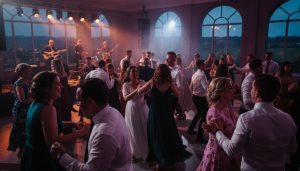
A packed dance floor at 11pm usually starts with smart decisions made months earlier. The best weddings do not just have great music. They have the right music at the right moment, so the whole day feels natural, emotional and brilliantly well paced. That is exactly why a proper guide to wedding music timings matters.
Music shapes how a wedding feels in real time. It settles nerves before the ceremony, adds weight to the big entrance, softens the room during dinner and then flips the energy completely when it is time to get people dancing. Get the timings right and every part of the day has its own atmosphere. Get them wrong and even great musicians can end up fighting against the schedule.
Why wedding music timing matters more than couples expect
Most couples start by thinking about songs. Fair enough. Your aisle track, your first dance, the one song your college mates will go wild for. But the real secret is not just what is played. It is when it is played, how long each section lasts and how one musical moment hands over to the next.
A wedding day has a rhythm of its own. There are emotional highs, practical pauses, travel time, photo time, room turnarounds and those unpredictable little delays that seem to happen at every venue. Good music planning does two jobs at once. It creates atmosphere and it protects momentum.
This is where couples often benefit from experienced performers. A seasoned wedding act knows that a drinks reception set starting ten minutes too early can leave a lull later on. The same goes for an evening band launching into full party mode before enough guests are in the room. Timing is not admin. It is atmosphere management.
A practical guide to wedding music timings for each part of the day
There is no single perfect schedule because every wedding is different. A city venue in Dublin runs differently from a country house in Cork, and a civil ceremony on site has a different flow from a church ceremony followed by travel. Still, most wedding music timings fall into a reliable pattern.
Before the ceremony
If guests are arriving to your ceremony venue, 15 to 20 minutes of pre-ceremony music is usually spot on. This part is often overlooked, but it makes a huge difference. Instead of shuffling, whispering and awkward silence, guests walk into a room that already feels warm and considered.
This music should never compete with the moment. Think elegant, welcoming and calm rather than showy. Acoustic arrangements work beautifully here because they bring intimacy without overpowering the space.
Ceremony music timings
For the ceremony itself, most couples need music for four key moments: the entrance, the signing, the exit and sometimes a short piece before readings or during a candle lighting. In practical terms, that usually means one song for the entrance, one or two during the signing, and one upbeat song for the recessional.
The entrance song should comfortably cover the full walk-in, not just the first few steps. That sounds obvious, but many recorded tracks take too long to build or fade too quickly. Live musicians can be especially useful here because they can adapt in the moment if there is a pause or slower pace.
Signing music normally lasts around five to ten minutes depending on the format of the ceremony. Two songs is often ideal. One can feel too short, while three can drag unless the signing and any photographs are definitely taking longer.
The exit song should lift the room. This is your first married moment, so it wants a bit of spark. Joy beats sentimentality here every time.
Drinks reception
If there is one part of the day where live music consistently earns its keep, it is the drinks reception. Guests are mingling, the newlyweds are often off for photographs, and there is usually a stretch of one and a half to two hours that needs to feel lively without becoming background wallpaper.
For most weddings, 90 minutes to 2 hours of live music is the sweet spot. Less than that can leave a noticeable gap. More than that is fine if the schedule genuinely calls for it, but the style and pacing need thought. This is not the time to empty the dance floor before the dancing has even started.
The best drinks reception music has charm, recognisable songs and enough personality to keep the room buoyant. Acoustic performances tend to land brilliantly because they feel stylish and social. Guests can still chat, but the atmosphere is unmistakably alive.
Dinner music
Dinner music depends on your crowd and your priorities. Some couples love a little live set during the meal. Others would rather let conversation lead and save the musical punch for later. Neither is wrong.
If you do want music during dinner, shorter is often better. A focused set between courses or just after everyone is seated can work beautifully. Two things matter here. First, volume control. Nobody wants to shout over their starter. Second, placement. A subtle, tasteful set can elevate the room, but a full-energy performance at this stage can feel mistimed.
The room turnaround
This is one of the least glamorous parts of the schedule and one of the most important. If your venue is turning the same room from dinner into party mode, ask exactly how long that will take and what guests will be doing during it.
A 20-minute turnaround can vanish quickly. A 45-minute one needs managing. This is where a DJ, a casual acoustic set in another space or even carefully planned background music can stop momentum dipping. Guests should never feel like they are waiting for the wedding to restart.
Evening band timings
Most evening bands perform around 9.30pm or 10pm, but the right start time depends on when dinner finishes, whether speeches happen before or after the meal, and how many evening guests are arriving separately.
As a rule, you want the main party set to begin when the room is ready for it. Too early and the energy can feel forced. Too late and people start to drift. For many weddings, two live sets of roughly 45 to 60 minutes each works very well, with a short break in between.
This is also where experience counts. A strong wedding band does not just play songs. They read the room, build the set properly and know when to push, when to hold back and when to drop the guaranteed floor-filler.
First dance timing
The first dance usually works best just before the band launches into the evening party set. It gives the moment proper focus, then brings everyone straight onto the floor while the energy is there.
If you leave it too late, guests can start overthinking it and the momentum can become awkward. If you do it too early, before the room is full, it can lose impact. Right before the main evening entertainment is usually the cleanest and most effective option.
Late-night music and DJ coverage
A live band creates lift, texture and real event magic, but not every wedding needs live music right up to the final song. Often the ideal setup is a band for the high-impact evening sets and a DJ service to carry things through afterwards.
That combination gives you variety. Live music delivers the excitement and personality. DJ coverage keeps the floor moving through requests, guilty pleasures and the final late-night push. If your venue has a strict finish time, this handover becomes even more important because you want every minute of party time to count.
Common mistakes in a guide to wedding music timings
The biggest mistake is treating all music as one block. Ceremony music, drinks reception music and evening party music have different jobs. They should feel connected, but they should not feel identical.
Another common issue is underestimating delays. Weddings run late. Not always dramatically, but enough that your music plan needs a bit of breathing room. A flexible act can adapt on the day. A rigid schedule cannot.
Couples also sometimes choose based only on cost or set length without thinking about style. Three hours of music that does not suit the room is worth less than a well-judged package that fits each stage properly. That is why many couples across Ireland now prefer a more tailored entertainment plan rather than the old one-size-fits-all wedding band formula.
How to plan timings without overcomplicating the day
Start with your venue schedule and work backwards. Ask when guests arrive, when the ceremony begins, how long photographs are likely to take, when dinner is called and when the room will realistically be ready for dancing. Then match the music to each mood rather than trying to force music into every available gap.
It also helps to think about your guests. A lively crowd may welcome an animated drinks reception and a strong party start. A more relaxed crowd might prefer a gentler build. Great wedding entertainment is never generic. It is shaped around the room in front of it.
If you are working with experienced musicians, use that expertise. They have seen what works, what drags and where timelines tend to slip. That practical knowledge is gold. Bands like The Hitmen Trio build whole wedding entertainment packages around this exact flow, which makes the day feel effortless for couples and guests alike.
When your timings are right, the music does more than fill silence. It carries people through the day, lifts the emotional beats and turns separate parts of the wedding into one brilliant shared experience. Plan that flow well, and the whole celebration feels bigger, warmer and far more memorable.