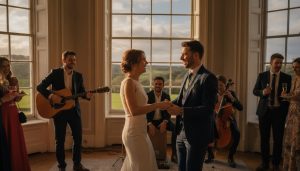
If you have ever been to a wedding where the ceremony felt lovely, the drinks reception drifted, and the dance floor only came alive at 11pm, you already know this: music is not one booking. It is a sequence. A strong wedding music timeline example helps the whole day feel intentional, not stitched together.
That matters more than most couples expect. The right song at the right moment can make a room hold its breath, loosen up a nervous crowd, or turn a good party into the bit everyone talks about for years. The trick is not cramming music into every slot. It is shaping the energy so each part of the day has its own character.
A wedding music timeline example from ceremony to late night
Think of your wedding soundtrack as a gradual build rather than one long peak. If every moment is high intensity, nothing feels special. If everything is too restrained, the atmosphere never properly lands. The sweet spot is movement.
A typical wedding music timeline example might look like this. Guests arrive to gentle live instrumental or vocal music around 30 minutes before the ceremony. The ceremony itself has music for the processional, signing of the register, and recessional. Drinks reception music follows for 90 minutes to two hours, then background dinner music if your room and schedule suit it. After speeches, the evening band takes over for the first dance and party sets, with a DJ carrying things through to the finish.
That is the broad shape, but the best timelines are built around how people actually feel during the day. Guests need different things at 1pm than they do at 10pm. Your granny, your college friends, and your work crowd all read the room differently too. Good wedding entertainment meets all of them without ever feeling generic.
Before the ceremony
This is the most underrated musical slot of the day. Guests are arriving, hugging, finding seats, and trying not to cry too early. Quiet live music settles nerves and gives the room a sense of occasion before anything officially starts.
Acoustic guitar, piano, violin, or soft harmony vocals work beautifully here. You do not need dramatic belters at this point. You need warmth, elegance, and enough familiarity to make people smile when they recognise a song.
For most ceremonies, 20 to 30 minutes of pre-ceremony music is ideal. Less than that can feel rushed if guests are delayed. Much more can feel like people are waiting around unless the venue has a naturally relaxed flow.
During the ceremony
This is where precision matters. You are not choosing three songs in isolation. You are choosing cues for movement, emotion, and timing.
The entrance song should fit the pace of the walk and the scale of the room. A huge anthem can be magic in the right setting, but in a smaller ceremony space it can feel oddly oversized. The signing music gives you a chance to soften things and let the moment breathe. Then the exit song should lift the room. It is the first proper burst of celebration, so do not waste it on something flat.
There is also a practical side. Live musicians who know ceremonies can adjust on the fly if the bridal party walks slower than expected or the celebrant changes the order slightly. That flexibility is worth far more than people realise until the day itself.
Wedding music timeline example for the drinks reception
If the ceremony is the emotional heart, the drinks reception is where the social chemistry kicks in. People are finally relaxed. The formal bit is done. The couple are off for photos. This is the point where music stops the event from sagging.
A good drinks reception set should be upbeat without turning into a full-blown dance set too early. Think well-known songs with style, groove and personality. Acoustic arrangements shine here because they create energy without overpowering conversation. Guests can chat, laugh, order a drink and still feel that something special is happening around them.
This slot usually lasts between 90 minutes and two hours in Ireland, though venue logistics can stretch it. If your photos are likely to run long, plan for that. A reception that is meant to last an hour and quietly drifts into two can expose any gap in atmosphere very quickly.
There is a balance to strike here. Too mellow, and the room can feel sleepy. Too intense, and guests feel they should be dancing when they are still balancing a glass and a canapé. The best performers know how to keep the energy bubbling rather than boiling over.
During dinner and speeches
Not every wedding needs music during the meal. Sometimes the room has enough natural buzz, and adding live music would only compete with conversation or service. Other times, especially in larger rooms, a little tasteful background music can stop the space from feeling too open before speeches begin.
If you are considering this part, keep it subtle. Instrumental music or very light vocals tend to work best. Dinner is not the place for a full performance set unless your whole celebration is deliberately built around that style.
Speeches themselves generally do not need underscoring. A clean handover is better. However, having a musician or DJ ready with walk-on and walk-off cues can add polish if done with a light touch. Too much comedy stinger energy and you are suddenly in awards-night territory, which is rarely the goal.
Building the evening properly
The evening is where many timelines either soar or wobble. The mistake some couples make is treating the band as a single block of entertainment rather than a carefully paced event within the event.
Guests need a moment to reset after dinner. If the first dance happens too early, before the room has regrouped, it can feel oddly flat. If it happens too late, you lose momentum. Usually, once evening guests have arrived and everyone has refreshed their drinks, that is your window.
Your first dance should feel like the opening of the party, not an isolated performance followed by confusion. This is where experienced live bands make a huge difference. They can bring the room with them, moving smoothly from that emotional first song into floor-fillers that get different generations involved quickly.
A strong evening format often means two live sets with a short break, followed by DJ music to keep things rolling. That structure gives the night shape. It also allows for variety – a proper lift at the start, a reset, then another push when people are ready to go again.
What the evening set should actually do
This is not about hammering out the obvious wedding cliches in the obvious order. It is about reading the room and building a dance floor that feels joyful rather than forced.
The best live wedding bands know that a packed floor usually comes from range, pacing and confidence. You might start with a few songs that bring in mixed ages, move into bigger singalongs, then raise the intensity as the night develops. Clever arrangements and mash-ups help too. Familiar songs land better when they have personality rather than sounding like a copy-and-paste function band set.
That is one reason many couples look for an alternative to the standard wedding band formula. You want songs people know, of course. But you also want them delivered with proper musicianship, a bit of imagination, and enough spark that the night feels like your wedding rather than someone else’s.
How to tailor your own wedding music timeline example
The right timeline depends on your venue, guest mix, and the kind of celebration you actually want. A city wedding with a later ceremony may need a tighter entertainment plan than a country house wedding where guests settle in for the full day. A crowd full of dancers will want the party to ignite fast. A more mixed family wedding may benefit from a steadier climb.
Budget plays a part too, and it is worth being honest about priorities. If you cannot book live music for every segment, do not spread it too thinly. One brilliant ceremony performance and a first-class evening band will usually have more impact than trying to cover every part of the day on a compromise.
It is also smart to think about continuity. Couples often book ceremony music from one supplier, background music from another, and the evening band separately. That can work, but it can also create a stop-start feel if nobody is thinking about the full arc. Entertainment is strongest when the transitions feel considered.
For that reason, many couples prefer one experienced team to cover multiple parts of the day. It simplifies logistics, yes, but it also helps create a more coherent atmosphere from the aisle to the last tune. That is something we see constantly at weddings across Dublin and around Ireland: when the music plan has joined-up thinking, the whole day feels more polished.
If you are planning your own timeline, start with the emotional beats rather than a spreadsheet. Ask where you want people to feel moved, where you want them to relax, and where you want them to lose the run of themselves on the dance floor. Once you know that, the timings become much easier.
The best wedding music plan is never just about filling silence. It gives each part of the day its own pulse, then nudges the celebration forward until the room is exactly where you hoped it would be.