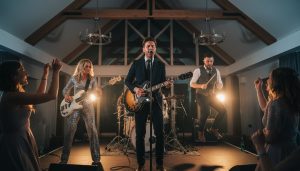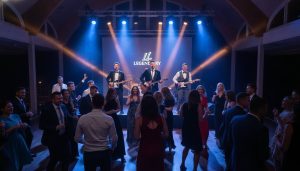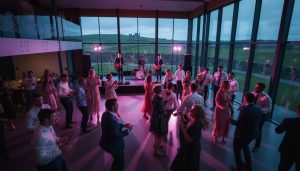
A full dance floor rarely happens by accident. If you are wondering what makes wedding guests dance, the honest answer is that it is a mix of psychology, timing, song choice and live performance. Great weddings do not force people onto the floor. They make dancing feel irresistible.
That matters because most couples are not trying to create a nightclub. They want the room to feel full of life, the ages to mix well, and the night to build naturally from dinner chat into a proper party. When that shift happens smoothly, guests stop overthinking and start joining in.
What makes wedding guests dance? It starts before the first song
The evening set gets the credit, but the dance floor is often won much earlier. Guests need to feel relaxed, connected and ready to celebrate. If the day has good flow, if drinks reception music has set the tone, and if people are in the room at the right moment, you are already halfway there.
This is where many weddings quietly succeed or struggle. A band can be excellent, but if the room is split between the bar, the smoking area and guests still finishing dessert, the first few songs have more work to do. On the other hand, when the transition into the evening is well paced, momentum builds quickly. People need a reason to stay in the room and a sense that something is about to happen.
A strong entertainment plan helps here. Live music earlier in the day can create familiarity with the musicians, which makes the evening feel less like a reset and more like the next chapter. Guests who have already responded warmly to the atmosphere are far more likely to get involved later.
Familiar songs matter, but not in the obvious way
Most people dance when they recognise something they love. That part is straightforward. The nuance is that recognition alone is not enough. A song can be famous and still empty a floor if it arrives at the wrong moment, drags the tempo down or appeals to only one pocket of the room.
The best wedding music is familiar, but it is also placed carefully. A great live band reads when to bring in a singalong chorus, when to lean into a groove, and when to follow one era with another so that no age group feels forgotten. Guests do not experience this as strategy. They just feel that one song keeps leading naturally into the next.
There is also a difference between playing crowd-pleasers and playing them well. Guests respond to confidence, great vocals, tight musicianship and arrangements with lift. That is especially true at weddings where people want songs they know, but not delivered in a tired, paint-by-numbers way. Energy is contagious, but so is quality.
The dance floor follows the couple
If the couple are visibly enjoying themselves, everyone relaxes. It sounds simple because it is simple. Guests take their cues from the two people at the centre of the day. If you are on the floor, smiling, singing and looking like you chose the band for a reason, it gives everybody permission to follow.
This does not mean you need to perform for the room. Quite the opposite. Guests are most likely to join in when the couple look genuinely swept up in the moment rather than politely doing their duty for one song before disappearing. A wedding crowd wants to celebrate with you, not watch from a distance.
That is one reason first dance planning matters more than people think. It is not just a tradition to tick off. It sets the emotional tone for what comes next. Whether you keep it intimate, invite others in halfway through, or move straight into an upbeat floor-filler, the transition should feel natural rather than awkwardly staged.
What makes wedding guests dance? The answer is usually momentum
Momentum is everything. A packed floor at 10.30 pm is often the result of the previous 30 minutes being handled properly. Once people are up, the trick is not giving them too many reasons to leave.
This is where experienced bands separate themselves. Strong performers know how to shape a set so the energy rises and falls without collapsing. You cannot play at maximum intensity for hours, but you also cannot keep breaking the spell. Too much talking between songs, clunky gear changes or jarring shifts in style can drain a room faster than couples expect.
Good momentum also means understanding the guest mix. Some weddings need an early hit of soul, Motown or classic rock to get older guests moving before the later singalong anthems land. Others skew younger and want the pace lifted sooner. It depends on the room, and the room always tells the truth.
Guests dance when the band feels present, not generic
People know when a band is going through the motions. They may not use those words, but they feel it immediately. Weddings are emotional, social occasions. Guests respond best when the performance feels live in the true sense of the word – alert, engaging and tuned into the room.
That does not mean cheesy patter or endless audience participation. In fact, too much of that can have the opposite effect, especially with couples who want a polished celebration rather than a cabaret act. Presence is more subtle. It is the confidence to lead the room, the instinct to stretch a chorus when the crowd are singing, and the musical judgement to keep things feeling elevated rather than obvious.
An acoustic-led live band can be especially effective here because the sound has immediacy. It feels warm, dynamic and human. When the playing is tight and the vocals are strong, guests get the best of both worlds – songs they know and an atmosphere that feels personal rather than off-the-shelf.
The room setup has more influence than people realise
You can book wonderful entertainment and still make dancing harder than it needs to be. Layout matters. If the dance floor feels disconnected from the band, if tables are too dominant around the edges, or if the bar is drawing attention away from the music, guests are less likely to commit.
Lighting matters too, but probably not in the way many people think. You do not need a production worthy of an arena tour. You need the room to feel like the evening has begun. A subtle shift in lighting helps guests move mentally from meal to party. If the room still feels like dinner, people behave as if dinner is still happening.
Sound level is another balancing act. Too quiet, and the performance lacks impact. Too loud too early, and older guests retreat before the set has found its shape. The sweet spot is a room that feels alive and exciting without making conversation impossible for anyone taking a breather.
The best wedding sets include surprise, but not confusion
A great wedding crowd loves a moment that catches them pleasantly off guard. That could be an inventive arrangement, a smart mash-up, a brilliant change of pace or a song choice that suddenly brings a whole section of the room together. Surprise creates lift.
But there is a difference between originality and self-indulgence. Wedding guests dance when they feel included, not challenged. The cleverest musical moments still need to serve the celebration. This is why experienced wedding musicians know how to bring flair without losing the room. You can be fresh, stylish and musically sharp while still keeping the focus exactly where it belongs – on the guests having the time of their lives.
It depends on who is in the room
There is no single formula because every guest list has its own chemistry. Some crowds need confidence-building at the start. Some are on the floor before the first chorus. Some respond to indie bangers, some to soul classics, some to pop singalongs, and most to a thoughtful mix of all three.
Irish weddings often add another useful layer to this: guests tend to know how to enjoy live music when the atmosphere is right. That is a huge advantage, but it still needs direction. The best nights feel effortless because the planning and performance behind them are anything but casual.
If you want the real answer to what makes wedding guests dance, it is this: they need the right invitation. Not a verbal instruction, but a musical one. A room that feels ready, songs that connect across generations, and a band with the instinct to read the crowd and raise the temperature at exactly the right moments.
When all of that clicks, the dance floor stops being part of the schedule and becomes the part everyone talks about on the way home.